
Decomposition by Physarum polycephalum
A CAROLINA ESSENTIALS INVESTIGATION Save to Library Save to Library Total Time: 2.75 hr Prep: 1.5 hr Activity: 1.25 hr

A CAROLINA ESSENTIALS INVESTIGATION Save to Library Save to Library Total Time: 2.75 hr Prep: 1.5 hr Activity: 1.25 hr
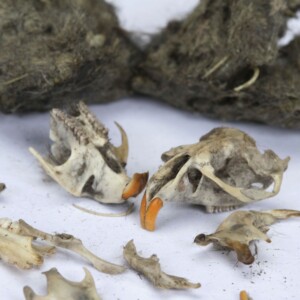
A CAROLINA ESSENTIALS INVESTIGATION Total Time Prep: 15 mins Activity: 30-45 mins Life Science Grade Level 5-12 Middle/High School Quick

Home Save to Library Save to Library share 10-15 minutesPrep Time 10-25 minutesClass Time Materials $1 Bill Beaker, 250 mL

Student-designed investigations that use Wisconsin Fast Plants® to study ecosystems are powerful, three-dimensional learning experiences. In this webinar, we share
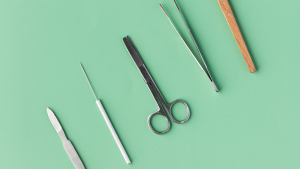
In-Booth Demonstration Life Science 6-12 Middle / High School Carolina’s Perfect Solution® cow eye dissection introduces students to the anatomy
In Booth Demo Life Science 9-12 High School Your students may never look at strawberries the same way again! This
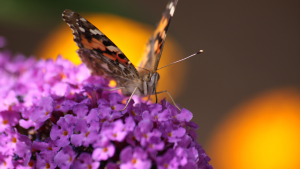
SUBJECT: Life Science GRADE: K–12 ACTIVITY TYPE: In Booth Demo Students gain an understanding of the life cycle of the

A CAROLINA ESSENTIALS ACTIVITY Save to Library Save to Library Total Time Prep: 30 mins Activity: 20 mins Physical Science,
Workshop Biotechnology 9-12 High School What is lactose intolerance, and how does it relate to human evolution? Students remove lactose

In Booth Demonstration Biotechnology 9-12+ High School / College Understanding how to use a micropipette properly and with precision is
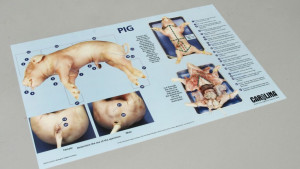
In-Booth Demonstration Life Science 9-12+ High School / College Carolina’s Perfect Solution® pig dissection allows students to hone their dissection
Workshop Resource Life Science 6-12 Middle / High School Data analysis provides evidence for posing scientific arguments and generating models.
SUBJECT: Life Science GRADE: Middle/High School ACTIVITY TYPE: Workshop Resource Nurture students’ curiosity! Investigate methods used by scientists to estimate

Workshop Resource Life Science 6-12 Middle / High School Understanding the stages of meiosis and clarifying chromosome behavior has always
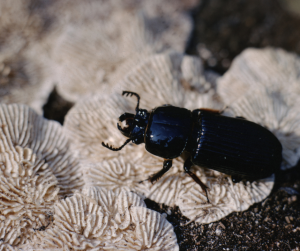
Workshop Resource Life Science K-12 Elementary / High School Add action and excitement to your science class with live organisms!

Workshop Resource Chemistry 6-12 Middle / High School Looking for lab activities that work every time, not just periodically? Explore

Workshop Resource Life Science K-12 Elementary / High School Experience the versatility of Wisconsin Fast Plants®. These quick-growing plants engage

Workshop Resource Life Science 6-12 Middle / High School Don’t think you have the nerves for physiology? Learn about easy,