Few things stimulate more fun and excitement than animal behavior—whether studying mammals, geese, or reptiles among the various vertebrates—and yet few things seem more difficult to study. Fortunately, the schoolyard offers a perfect setting for birding, observations, and studies of bird behavior. Nature studies help improve student observation practices, foster data collection and analysis skills, and can enhance artistic skills such as drawing and photography. Nature studies are tailor-made STEAM lessons for students at all grade levels.
Bird studies are an easy starting point for animal behavior activities, allowing students to design independent research projects, ask questions, gather data, and contribute to national databases for even broader studies. These studies employ the NGSS Science and Engineering Practices and directly support the Disciplinary Core Ideas of Structure and Function, Growth and Development, Ecosystem Dynamics, Social Interactions and Group Behavior, Variation of Traits, Adaptation, and Natural Selection. Here are some suggested ways to engage students in schoolyard birding.
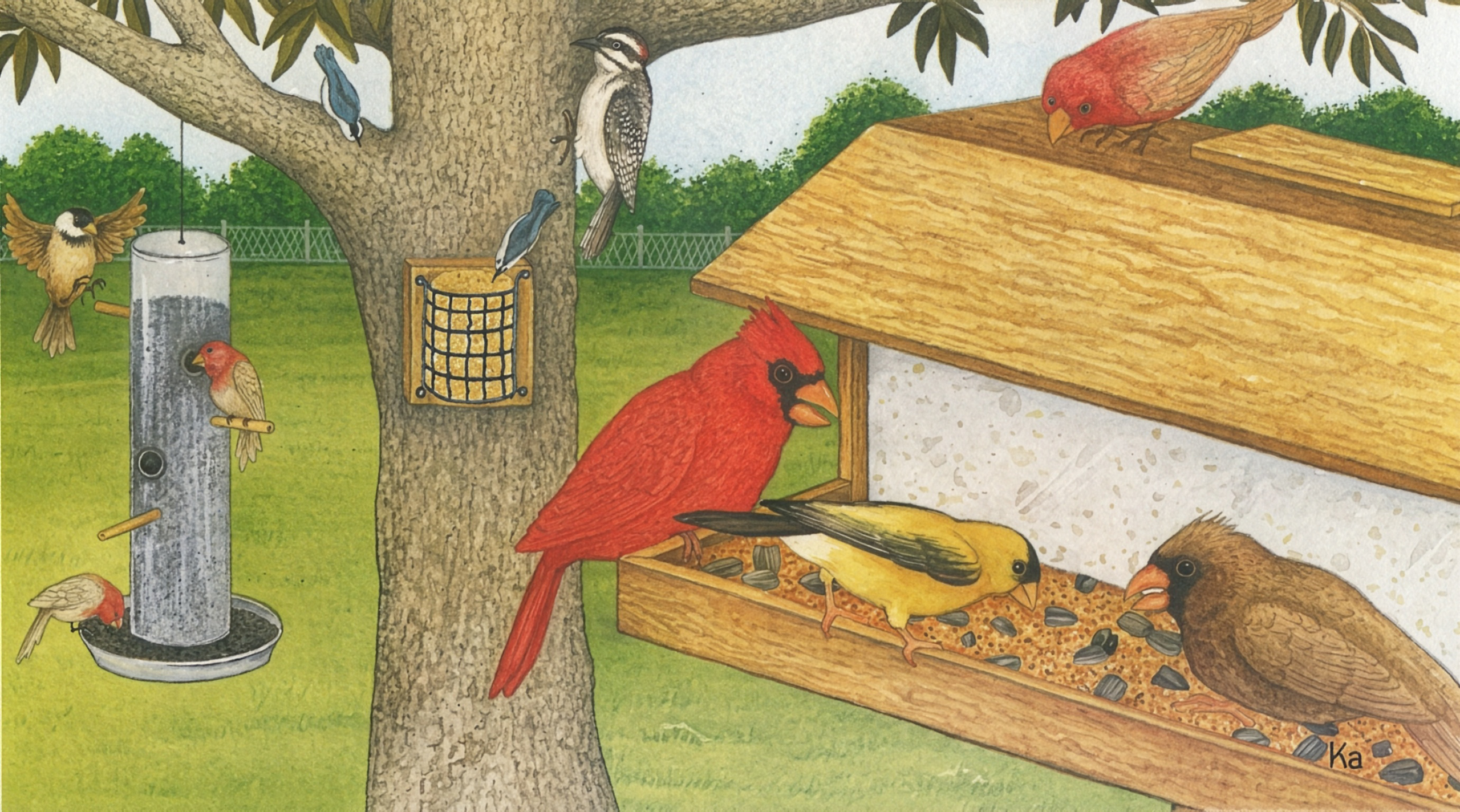
A well-placed bird feeder is one of the simplest but most effective means of bringing bird behavior into the classroom (Fig. 1). A bird feeder with a steady supply of food can provide year-round opportunities for observing behavior. For example, the ways in which birds select and open seeds are behaviors that all students can enjoy while improving their observational skills.
In most schoolyards the best strategy is to attract seed-eating birds, though you may also spot aerial insectivores such as swifts overhead. A simple platform feeder stocked with a commercial birdseed mix will appeal to many bird species, though a specialized nectar feeder is required if you hope to attract hummingbirds. Our experiences and some recent research suggest you will get the best results with black oil sunflower seeds. To expand your offerings and attract more species, place the feeders at different elevations or spread millet or cracked corn on the ground beneath your feeding station. If possible, locate the feeder close to vegetation that will allow some cover for the birds.
Another great way to expand the number of birds visiting your station is to offer a birdbath. The birdbath is highly attractive to many avian species within the class Aves. Not only can you observe how different birds drink, but you may also witness occasional bathing parties. Different bathing patterns are used by different kinds of birds, but in a typical sequence the bird stands in the water with its breast submerged and rapidly flicks its wings in and out of the water. Be sure to note the technique for wetting the back feathers, including the smaller coverts and insulating down feathers that overlay the base of the wings. Washing and preening (using the beak) are important activities for proper feather care, maintaining the structural integrity of the keratin struts within the feathers.
A bird feeder places birds in an artificial situation in that a never-ending, concentrated source of food is available. The density of birds around a feeder is much higher than would normally be found in nature, which may occasionally attract predatory raptors and other birds of prey to the area. The high density of individual birds, as well as of species of birds, at a common feeding site ensures numerous displays (movements or sounds that affect the behavior of other animals around the bird). The purpose of most of the behaviors you observe at the feeder is to send a message to a competing bird. The theme of these messages centers around aggression. In other words, this part of the feeder is mine: you will have to go elsewhere!
It will not take long for students to realize that different species of birds use different techniques for opening sunflower seeds. Size and shape of the beak, along with the structure of bird feet and the powerful flight muscles attached to the keel of the sternum—absent in flightless birds such as ostriches—are key aspects of bird anatomy and adaptations that determine the strategy a bird uses. For example, a cardinal can easily open a sunflower seed using only its beak, but a titmouse must place the seed between its feet and peck it open.
Species also differ in how they select seeds. Few birds are more finicky than the white-breasted nuthatch, which may examine many seeds before it flies away with one to its liking. A blue jay, on the other hand, will sit at a feeder and, seemingly without any selection process, place a number of seeds in its throat (for later processing by its gizzard and digestive system) before flying away. Several of our students wondered if the number of seeds a blue jay packs into its throat increases as the weather turns colder. To their surprise, they found that the number of seeds taken averaged between 7 and 11 regardless of the time of year.
Many songbirds, or passerines, have crest raise (Fig. 2) in their repertoire of behaviors. This display is frequently used when two birds meet. Look for one of the birds to raise the feathers from their follicles on top of the bird’s head or other parts of the bird’s body. In some birds such as titmice and cardinals, this behavior is very easy to see because the birds are already crested. Birds lacking crests also perform the display, but it is more subtle.
In their normal position, a bird’s wings are folded over the tail feathers, with the humerus, ulna, scapula, and coracoid of the forelimb bird skeleton tucked close to the body. In wing droop (Fig. 2) the tips of the wings fall below the tail. This is a common behavior but one often overlooked by humans. Wing droop can last for several seconds and is usually performed by the more aggressive bird. Watch for this behavior in settings other than at bird feeders. We enjoy watching for wing droop among robins feeding on the ground.
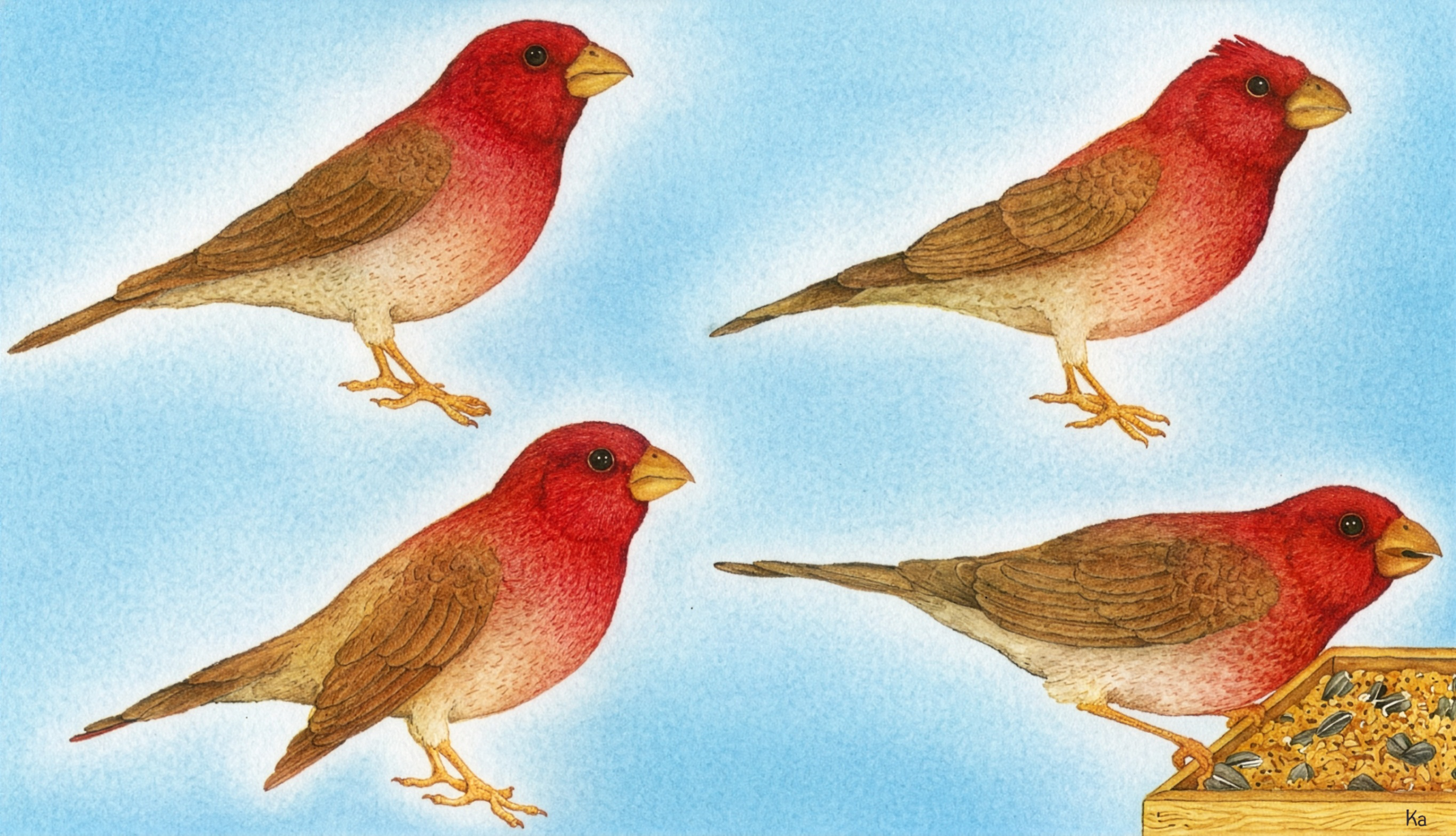
Head forward (Fig. 2) is a more dramatic display that is both common and easy to spot. Essentially, the more aggressive bird in the interaction looks as if it is going to peck the other bird. Head forward is a good display in which to stress that the aggressive behaviors of many animals are actually intended to avoid physical combat. Fighting is very energy-expensive, especially when a missing feather or two, particularly the primary flight feathers, can greatly reduce the ability of a bird to fly. Solving conflicts symbolically is a common evolutionary force in producing behavior patterns.
In perch taking, a dominant bird flies directly at a subordinate bird and takes its perch. This is very common at bird feeders. Does the same bird always remain dominant? Are some species of birds more aggressive than other species? Is size a factor in perch dominance? Do the birds make any sounds during this display? Behavior watching always seems to stimulate more questions than it answers!
Start listening and looking for territorial behavior in late winter and early spring. Males sing to claim territory and attract females. Note the time of day the male is singing and where he is perched. Students soon learn that males are often predictable about where and when they sing. Chasing and other aggressive displays are associated with the defense of territories.
The robin is a good choice for observing territorial displays.
Attack/run. One robin runs toward another. Be sure to note the body position of the attacker.
Tail-lift. The robin raises its tail and lowers its head toward an intruder.
Pushing. One bird continually makes short hops toward another. Note how the less aggressive bird responds to this display.
The cardinal is also a good choice for observing territorial behavior.
Chases. As winter flocks break up, males begin trying to establish territories by chasing their rivals. Note intensity and duration of these chases as the season progresses.
Countersinging. One male tries to match the phrases that another male sings. Students may also discover that, unlike most species, female cardinals countersing with males during courtship.
Courtship involves all the behaviors that isolate and attract the attention of a potential mate. Courtship displays frequently draw attention to a striking feature of the male’s plumage. In addition to visual signs, courtship displays may also involve vocalizations. In some courtship displays the male demonstrates a skill by bringing food or flying in a striking manner. The formation of a pair bond starts once the male and female begin to show an interest in each other. Because of the amount of energy required to raise the young, pair bonding is normally a prerequisite for reproductive success.
Mate feeding is another courtship display that we have occasionally seen at bird feeders. One day while we were diligently discussing the antiparallel structure of DNA, a female student in the back of the room screamed out, “He gave her a seed! The male cardinal gave the female a seed!” The antiparallel structure of DNA was temporarily dropped in favor of a discussion on cardinal courtship behavior.
Two common species whose courtship displays are easily observed are mourning doves and pigeons. Mourning doves start their courtship displays in late winter, providing a good opportunity for students to witness some exciting behaviors. In both species it is common for a mated pair to preen each other about the head. This behavior may be preceded or followed by copulation, involving the brief contact of each bird’s cloaca. Perch cooing is another courtship behavior of the male mourning dove. Look for a bird sitting upright with his tail bobbing and his throat puffed out as he manages internal air flow through his respiratory system to fill his air sacs. Listen for a long cooing call.
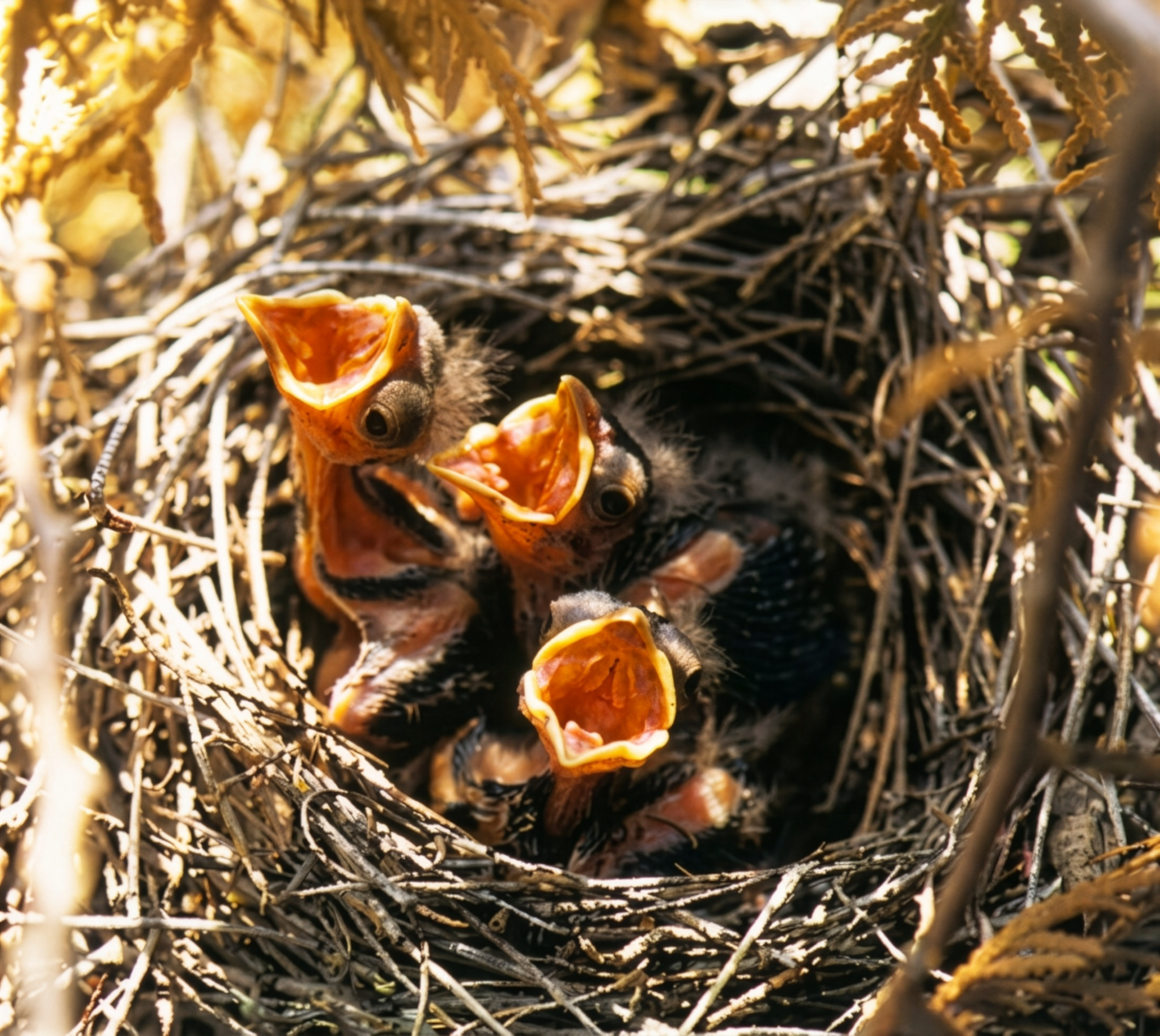
With a little patience, students should have no difficulty in locating a nest-building project. In most species of birds, the majority of the nest building is done by the female. Watch for birds gathering grasses, twigs, mud, or other common nesting material, or flying back and forth from place to place with building materials in their beaks. Many songbirds nest low enough (Fig. 3) that keeping detailed records of their nest-building behavior is fairly easy. Encourage students to use binoculars so they will not approach too closely to the nest and possibly disturb the activities of the birds. Students are normally respectful of the hardworking engineers they are observing, but setting some standards for conducting research is an important part of any science project.
A wealth of data can be accumulated from a bird-behavior project, similar to those found at the Cornell Lab of Ornithology Bird Academy, and a variety of strategies can be used to organize the data.
Descriptions of your observations can include location of the display, species and sex of the participating birds, and countless other ideas that you will have once observations begin. Your students’ observations can simply include descriptions of interactions, or attempts can be made to quantify behaviors. Observations that have been quantified are much more useful scientifically as well as valuable for classroom comparisons over the course of a school year.
Becoming a skilled observer and developing quality questions about the natural world require practice. Bird behavior studies can be a challenging and stimulating force to help students improve their observational, organizational, and writing skills. By utilizing problems from the natural world, such as those found in ornithology, our educational systems can produce more sensitive citizens who better understand the processes of science.
This article was originally published in Carolina Tips®, Vol. 53, No. 1 (print version, January 1990); it was revised April 2026.
Further Reading
Burton, Robert. Bird Behavior. New York: Alfred A. Knopf, 1985.
Stokes, Donald. A Guide to Bird Behavior, Vol. I. Boston: Little, Brown and Company, 1979.
Stokes, Donald, and Lillian Stokes. The Bird Feeder Book. Boston: Little, Brown and Company, 1987.
Stokes, Donald, and Lillian Stokes. A Guide to Bird Behavior, Vol. II. Boston: Little, Brown and Company, 1983.
Birds of the World – Cornell Lab of Ornithology
General Information Database – Migratory Bird Data Center
Bird Migration Explorer – National Audubon Society
John G. Byrd and Fred W. Holtzclaw
From Anderson County Schools, 361 West Broad Street, Clinton, Tennessee 37716;
and Oak Ridge Schools, 200 Fairbanks Road, Oak Ridge, Tennessee 37830

Carolina is teamed with teachers and continually provides valuable resources–articles, activities, and how-to videos–to help teachers in their classroom.
Get the latest news, free activities, teacher tips, product info, and more delivered to your inbox.