CAROLINA LABSHEETS
A phenotype is an expressed trait. Most phenotypes studied in introductory genetics classes are visually conspicuous traits such as wing shape or eye color. In this activity, students investigate a phenotype that is not so conspicuous, and they perform a simple chemical test to reveal the underlying basis of the phenotype.
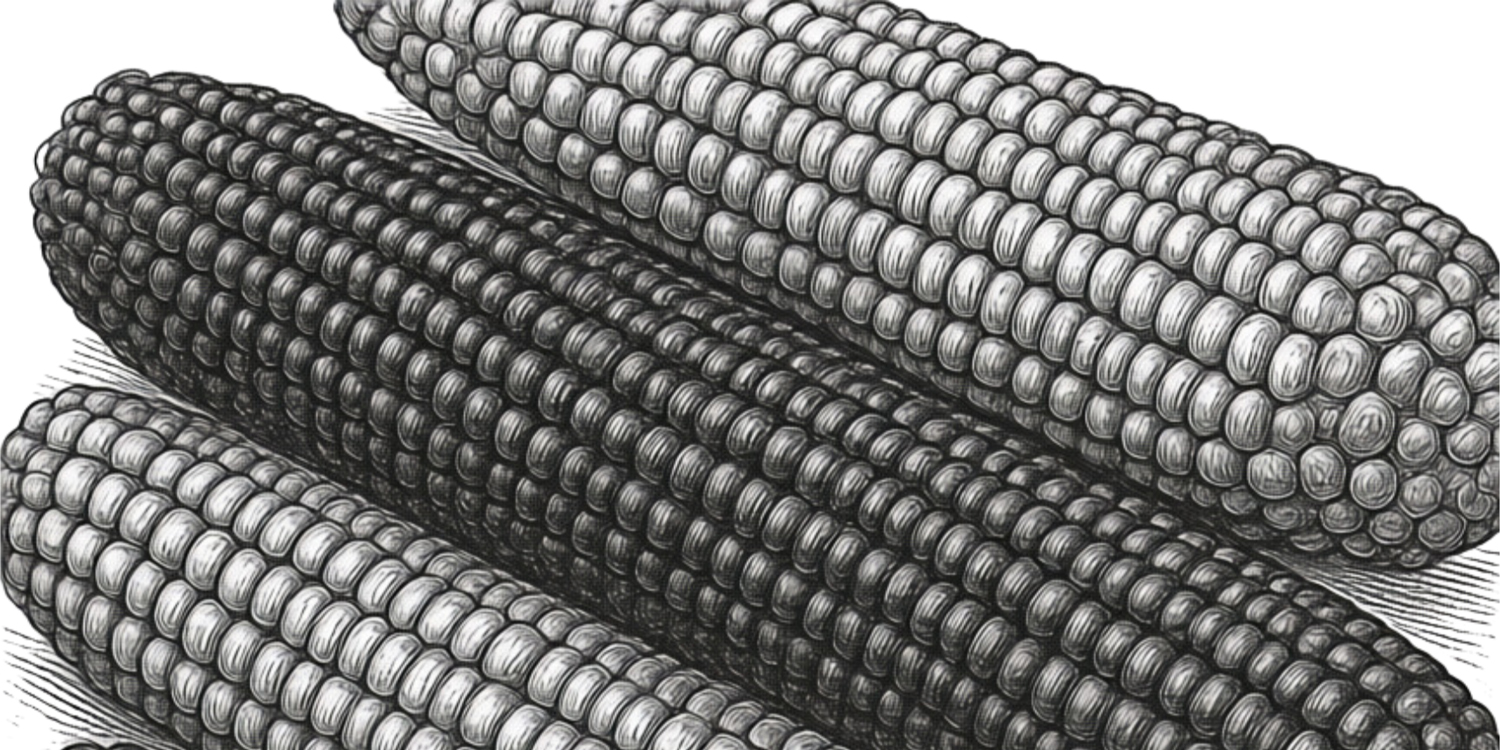
Corn plants normally produce both amyloid and amylopectin starches, which accumulate in the endosperm of the seeds. A recessive mutation called “waxy,” (location 59 on chromosome 9), when homozygous, blocks amyloid starch production such that only amylopectin starch accumulates in the endosperm. This corn is called the waxy phenotype because the seeds have a dull, waxy appearance, compared with normal starchy seeds, which are more translucent. Testing with iodine clearly distinguishes between the two. Amyloid starch reacts with iodine to give a blue-black color, and amylopectin (waxy) starch reacts to give a reddish-brown color. In practice, the endosperm of wild-type starchy seeds will stain almost black, while the endosperm of waxy seeds will be much paler.
The F2 ears used in this activity show a 3:1 ratio of starchy seeds to waxy seeds and can be analyzed as a monohybrid cross, although that is not the purpose of this lab activity. The genotypes of the seeds are wx+/wx+ (homozygous starchy endosperm) wx+/wx (heterozygous starchy endosperm), and wx/wx (homozygous waxy endosperm).
This activity assumes that students are familiar with the iodine test for starch. If they are not, consider either testing a beaker of starch solution with iodine as a class demonstration, or have students test starch solution with iodine as a pre-lab activity.

The Corn Genetics Set is an engaging, classroom-ready resource designed to help students explore Mendelian genetics, inheritance patterns, and Punnett square outcomes through real corn ear examples.
Newsprint to cover and protect the work surface during sanding. Beakers or cups for the iodine solution. (Iodine penetrates many plastics, so store iodine solution in glass only.) Trays help contain any iodine stain that drips from the seeds. Iodine–Potassium Iodide (869051) or Lugol Solution (872793) may be used instead of the iodine solution.
Ensure that students understand and adhere to safe laboratory practices when performing any activity in the classroom or lab. Demonstrate the protocol for correctly using the instruments and materials necessary to complete the activities, and emphasize the importance of proper usage. Use personal protective equipment such as safety glasses or goggles, gloves, and aprons when appropriate. Model proper laboratory safety practices for your students and require them to adhere to all laboratory safety rules. Avoid contact of iodine solution with the eyes, face, nose, or mouth. Iodine solution will stain skin and clothes.
Ensure that none of your students is sensitive or allergic to grain dust or to corn in general. Students with sensitive skin or allergies may need to wear laboratory gloves and dust masks.
Students may work individually or in pairs.
Remove the wrappers from the ears of corn. Cut a 2” square of sandpaper for each group.
Each student group needs the following:
Optional: This LabSheet activity can be done by itself or in conjunction with our Testing for Segregation of Alleles LabSheet. As mentioned in the introduction, the F2 ears used in this activity can be analyzed as a monohybrid cross. Have students research and report on the biochemical pathways involved in starch production. They might also research the types of starches produced by other grains such as rice, sorghum, and wheat and by starchy, nongrain crops such as potatoes and cassava. How do these starches react when tested with iodine?
Note: The students will probably first describe the outward appearance and then the test results. Remember that one goal of this activity is for students to learn that phenotypes include many traits besides those affecting outward appearance.




Get the latest news, free activities, teacher tips, product info, and more delivered to your inbox.