

Cells are the building blocks of all organisms.
Cells are the building blocks of all organisms.

Lorem ipsum dolor sit amet, consectetur adipiscing elit. Ut elit tellus, luctus nec ullamcorper mattis, pulvinar dapibus leo.
Lorem ipsum dolor sit amet, consectetur adipiscing elit. Ut elit tellus, luctus nec ullamcorper mattis, pulvinar dapibus leo.
Lorem ipsum dolor sit amet, consectetur adipiscing elit. Ut elit tellus, luctus nec ullamcorper mattis, pulvinar dapibus leo.
Lorem ipsum dolor sit amet, consectetur adipiscing elit. Ut elit tellus, luctus nec ullamcorper mattis, pulvinar dapibus leo.
Lorem ipsum dolor sit amet, consectetur adipiscing elit. Ut elit tellus, luctus nec ullamcorper mattis, pulvinar dapibus leo.
Lorem ipsum dolor sit amet, consectetur adipiscing elit. Ut elit tellus, luctus nec ullamcorper mattis, pulvinar dapibus leo.
Lorem ipsum dolor sit amet, consectetur adipiscing elit. Ut elit tellus, luctus nec ullamcorper mattis, pulvinar dapibus leo.
Cells are the building blocks of all organisms. The properties, organelles, and characteristics of a cell determine its role within the organism. Understanding the relationship between the cell’s structure and its function is an important topic in any biology course.
Observing single-celled organisms is a great way to introduce cells in your lab. Although prokaryotic cells lack a nucleus and membrane-bound organelles, they allow students to learn about basic cell morphology, reproduction, and evolution. Introduce eukaryotic cells to students with protists, popular microorganisms. Students can observe nuclei, organelles, and movement under the microscope!
Plant cell structure and function can be explored in a variety of ways. We have live materials, models, manipulatives, and microscope slides to help. Students observe what makes plant cells unique, such as the cell wall and chloroplasts, while learning the functional importance of each.
Lorem ipsum dolor sit amet, consectetur adipiscing elit. Ut elit tellus, luctus nec ullamcorper mattis, pulvinar dapibus leo.
Lorem ipsum dolor sit amet, consectetur adipiscing elit. Ut elit tellus, luctus nec ullamcorper mattis, pulvinar dapibus leo.
| TOPIC | Higher Ed | K -12 |
|---|---|---|
|
Micropscopy |
|
|
|
Modeling |
|
|
|
Measuring |
|
|
|
Graphing |
|
|
|
Analyzing Data |
|
|
|
Calculating Rates |
|
|
|
Ratios |
|
|
|
Designing Experiments |
|
|
|
Claim-evidence-reasoning |
|
|
Lorem ipsum dolor sit amet, consectetur adipiscing elit. Ut elit tellus, luctus nec ullamcorper mattis, pulvinar dapibus leo.
| TOPIC | Higher Ed | K -12 |
|---|---|---|
|
Micropscopy |
|
|
|
Modeling |
|
|
|
Measuring |
|
|
|
Graphing |
|
|
|
Analyzing Data |
|
|
|
Calculating Rates |
|
|
|
Ratios |
|
|
|
Designing Experiments |
|
|
|
Claim-evidence-reasoning |
|
|
Lorem ipsum dolor sit amet, consectetur adipiscing elit. Ut elit tellus, luctus nec ullamcorper mattis, pulvinar dapibus leo. Lorem ipsum dolor sit amet, consectetur adipiscing elit. Ut elit tellus, luctus nec ullamcorper mattis, pulvinar dapibus leo.
Lorem ipsum dolor sit amet, consectetur adipiscing elit. Ut elit tellus, luctus nec ullamcorper mattis, pulvinar dapibus leo.
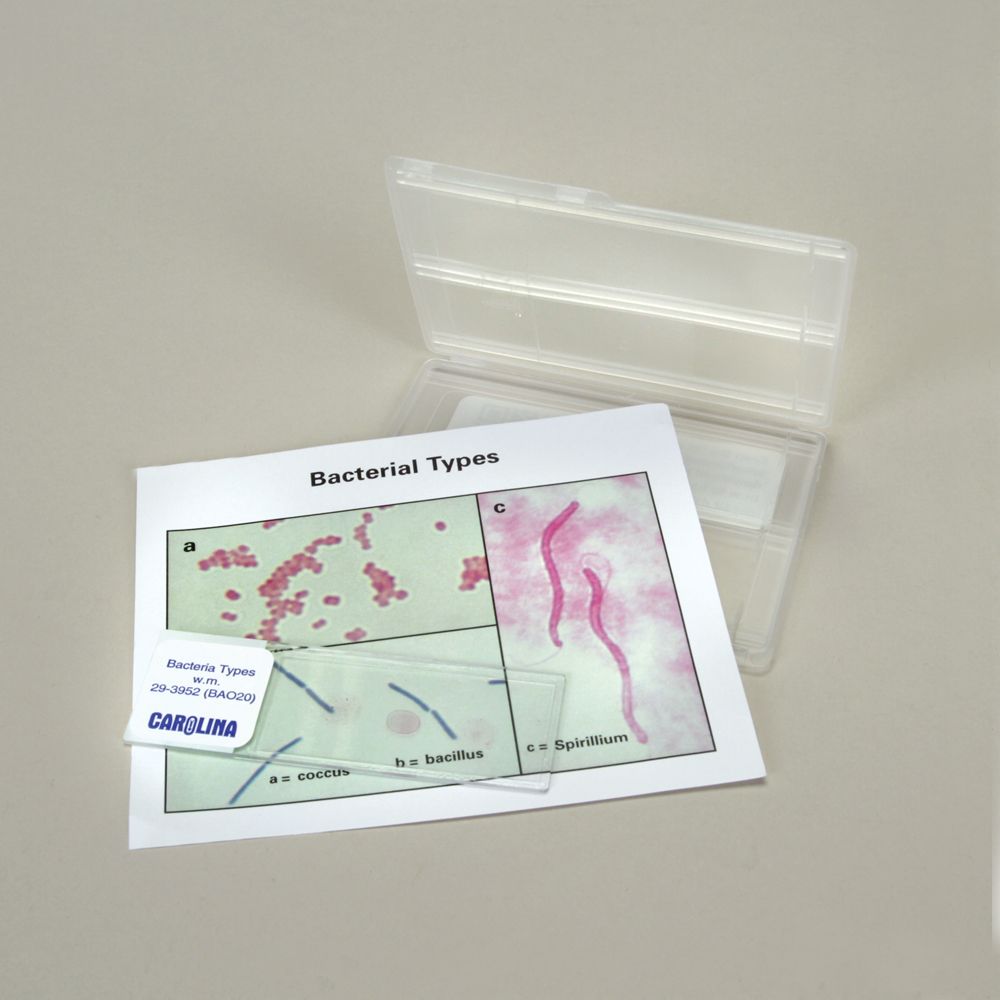
Microscope slide shows 3 typical bacterial forms in separate smears. Unit includes a self-study card and labeled photograph with descriptive text.
Microscope slide shows 3 typical bacterial forms in separate smears. Unit includes a self-study card and labeled photograph with descriptive text.

The Discovering Plant Cells Set includes slides of the 2 most commonly studied examples of plant cells (onion bulb epidermis and privet leaf).
The Discovering Plant Cells Set includes slides of the 2 most commonly studied examples of plant cells (onion bulb epidermis and privet leaf).

Models are powerful tools for teaching science as they provide useful simplifications of structures and processes, helping to make the unseen seen and the complex simple. Your students will enjoy learning about plant cells with this colorful model. It covers all the main parts of the plant cell, including the cell membrane, cell wall, chloroplasts, nucleus, chromosomes, and mitochondria. For more advanced learners, you can extend the model with the included optional organelles to study rough ER, smooth ER, and Golgi apparatus.
Models are powerful tools for teaching science as they provide useful simplifications of structures and processes, helping to make the unseen seen and the complex simple. Your students will enjoy learning about plant cells with this colorful model. It covers all the main parts of the plant cell, including the cell membrane, cell wall, chloroplasts, nucleus, chromosomes, and mitochondria. For more advanced learners, you can extend the model with the included optional organelles to study rough ER, smooth ER, and Golgi apparatus.
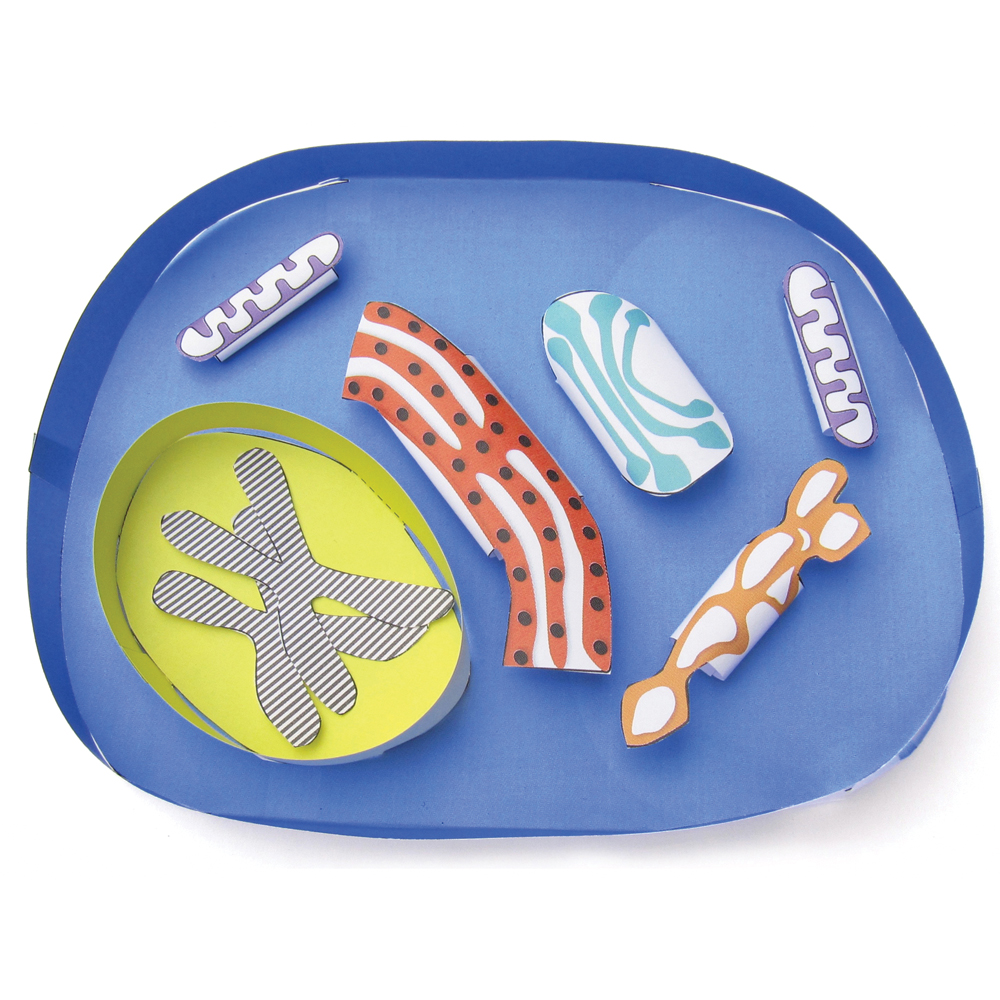
Use this easy-to-assemble model to teach students about the animal cell. This colorful model and accompanying information cover cell parts, including the cell membrane, nucleus, chromosomes, and mitochondria. For more advanced learners, optional extensions include rough endoplasmic reticulum, smooth endoplasmic reticulum, and Golgi apparatus.
Use this easy-to-assemble model to teach students about the animal cell. This colorful model and accompanying information cover cell parts, including the cell membrane, nucleus, chromosomes, and mitochondria. For more advanced learners, optional extensions include rough endoplasmic reticulum, smooth endoplasmic reticulum, and Golgi apparatus.
Lorem ipsum dolor sit amet, consectetur adipiscing elit. Ut elit tellus, luctus nec ullamcorper mattis, pulvinar dapibus leo.

Introduce students to the concept of “form fits function” by familiarizing them with different kinds of cells, their organelles, and the specific jobs each organelle performs. Students work in pairs to build a model animal cell using common materials. Each cell component is identified to indicate which organelle it represents.
Introduce students to the concept of “form fits function” by familiarizing them with different kinds of cells, their organelles, and the specific jobs each organelle performs. Students work in pairs to build a model animal cell using common materials. Each cell component is identified to indicate which organelle it represents.

The Discovering Animal Cells Set includes slides of the 2 most commonly studied examples of animal cells (human cheek cells and Amphiuma liver).
The Discovering Animal Cells Set includes slides of the 2 most commonly studied examples of animal cells (human cheek cells and Amphiuma liver).
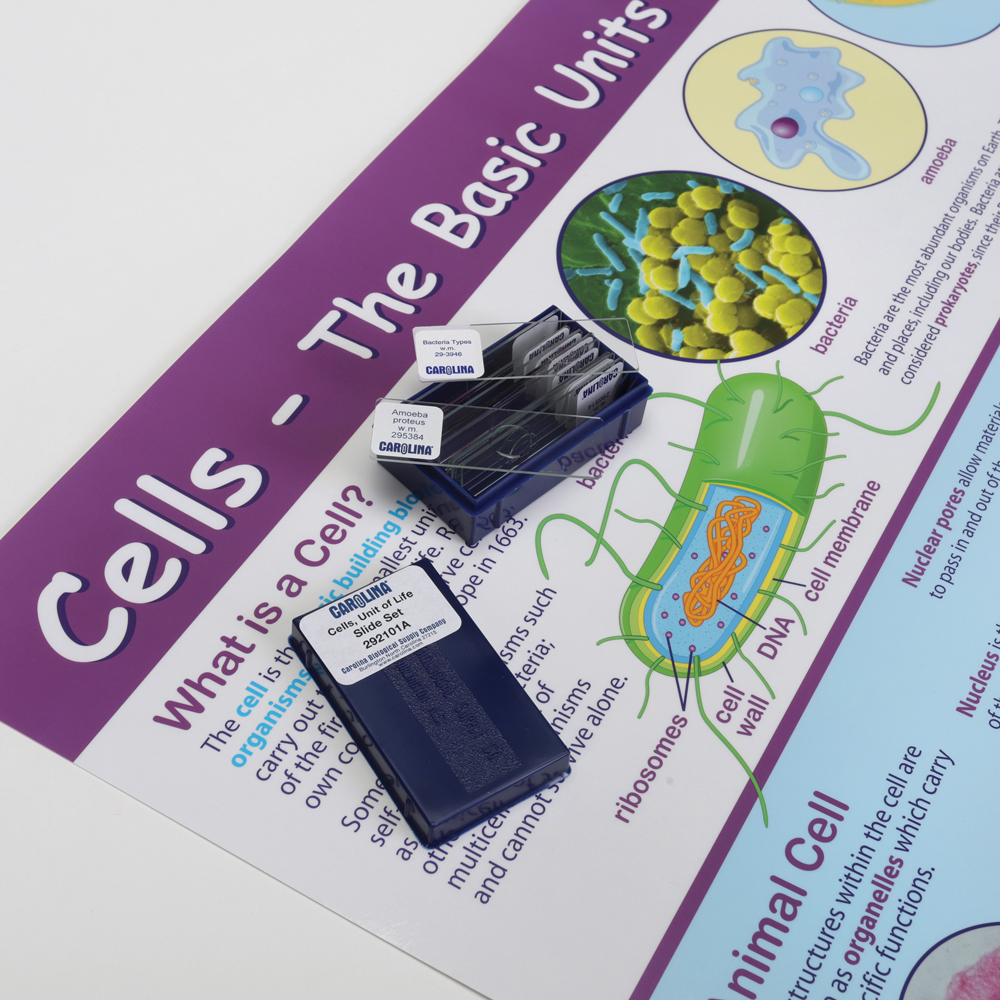
Students easily compare animal and plant cells, single-celled organisms, and specialized cells using this set of 10 slides and helpful poster. They can explore the cell membrane, cytoplasm, and nucleus within a typical animal cell and look at the structure of typical plant cells, identifying the cell wall, chloroplasts, and vacuoles. Students can also observe examples of specialized cells, including blood, skin, and nerve cells. The laminated poster provides full-color, labeled images and descriptive insight into cellular structure.
Students easily compare animal and plant cells, single-celled organisms, and specialized cells using this set of 10 slides and helpful poster. They can explore the cell membrane, cytoplasm, and nucleus within a typical animal cell and look at the structure of typical plant cells, identifying the cell wall, chloroplasts, and vacuoles. Students can also observe examples of specialized cells, including blood, skin, and nerve cells. The laminated poster provides full-color, labeled images and descriptive insight into cellular structure.

Introduces the cell, its basic structure, and general concept. Includes Amoeba, Euglena, onion, elodea tips, cork, microscope slides, coverslips, forceps, razor knives, toothpicks, pipets, Protoslo®, stain, and teacher’s manual with reproducible student guide.
Introduces the cell, its basic structure, and general concept. Includes Amoeba, Euglena, onion, elodea tips, cork, microscope slides, coverslips, forceps, razor knives, toothpicks, pipets, Protoslo®, stain, and teacher’s manual with reproducible student guide.
Lorem ipsum dolor sit amet, consectetur adipiscing elit. Ut elit tellus, luctus nec ullamcorper mattis, pulvinar dapibus leo.

Set consists of 6 individually labeled cultures: Amoeba, Euglena, Paramecium, Stentor, Volvox, Spirostomum.
Use this Lab Sheet to guide you through the activity.
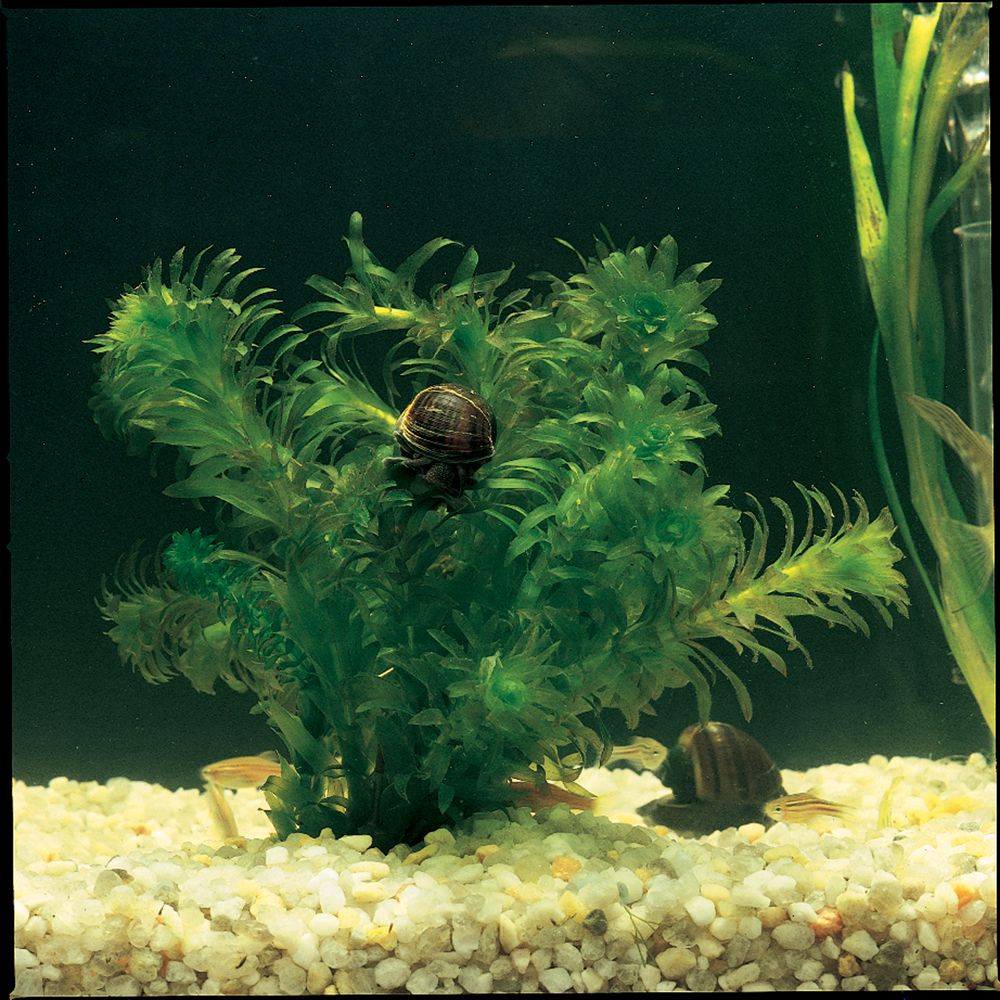
In this lab, students observe Elodea leaves under magnification. They will see cell walls and chloroplasts. From the movement of chloroplasts they will infer that cyclosis, or protoplasmic streaming, is occurring. They also will observe that most chloroplasts are pressed tightly against the cell wall and should infer from this that much of the cell is occupied by a vacuole.
In this lab, students observe Elodea leaves under magnification. They will see cell walls and chloroplasts. From the movement of chloroplasts they will infer that cyclosis, or protoplasmic streaming, is occurring. They also will observe that most chloroplasts are pressed tightly against the cell wall and should infer from this that much of the cell is occupied by a vacuole.

Students explore the cell as the basic unit of life. Using a guided-inquiry technique, they first view cells with a microscope (not included). They then study Euglena, Paramecium, and elodea samples and observe their responses to different environmental conditions. As a final assessment, students design their own experiment to test cellular responses to environmental changes of their choice.
Students explore the cell as the basic unit of life. Using a guided-inquiry technique, they first view cells with a microscope (not included). They then study Euglena, Paramecium, and elodea samples and observe their responses to different environmental conditions. As a final assessment, students design their own experiment to test cellular responses to environmental changes of their choice.
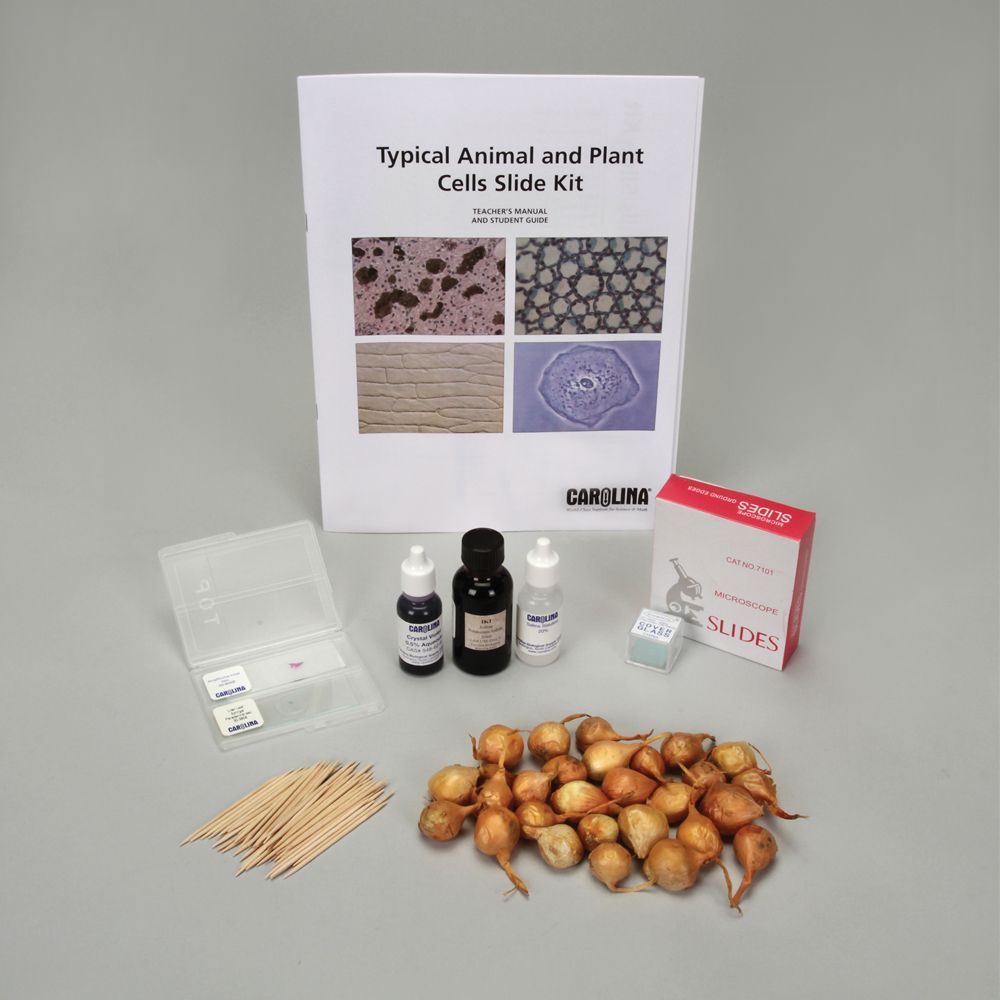
This kit demonstrates the typical similarities and differences between animal and plant cells. Students prepare slides of their own cheek cells and an onion bulb epidermis.
This kit demonstrates the typical similarities and differences between animal and plant cells. Students prepare slides of their own cheek cells and an onion bulb epidermis.


Get the latest news, free activities, teacher tips, product info, and more delivered to your inbox.
