
Hints to Help Students Do Well on the AP® Environmental Science Exam

Advanced Placement (AP) courses have been offered in high schools across the nation since 1965. The push for students to take these advanced courses has caused the programs to grow exponentially. These courses are of a higher level, and after taking an exam at the end of the course, many students get college credit. The […]
Top 10 Tips from AP Summer Institute Instructors to Prepare Students for an AP Exam

Test day may be several weeks or even several months away, but it is crucial to start preparing early for the AP exams rather than later so that you’re not rushing through test preparation in May. Here are some tips you can use to incorporate test preparation and practice into your curriculum throughout the year or semester.
Writing Strategies for AP® Exams

Teachers and students continue to face unprecedented challenges due to the coronavirus pandemic. This situation has impacted AP® students, teachers, and courses. Given the tumultuous nature of the past two school years, students need more help and practice now than ever before. As you focus on the science content, do not overlook the importance of […]
Advanced Placement® Exam Preparation and Test Taking Tips

5… 4… 3… 2 … 1 … Test day! Students are counting down the days until AP® exams begin. What can you do to help students with the final push to test day? Take a look at these helpful resources that we’ve compiled to help you cover all the bases. General test taking tips Throughout […]
Case Study: The Impact of Honeybee Populations

When preparing to teach your class about populations and the interdependence of organisms, consider incorporating the honeybee into your lesson plans. This small, undervalued insect is a keystone species in many environments. But we often overlook our dependence on honeybees’ survival, even while their interesting community behavior and the important ecosystem services they provide are […]
The Slime Mold Physarum polycephalum, a Single-Celled Organism for Student Investigations
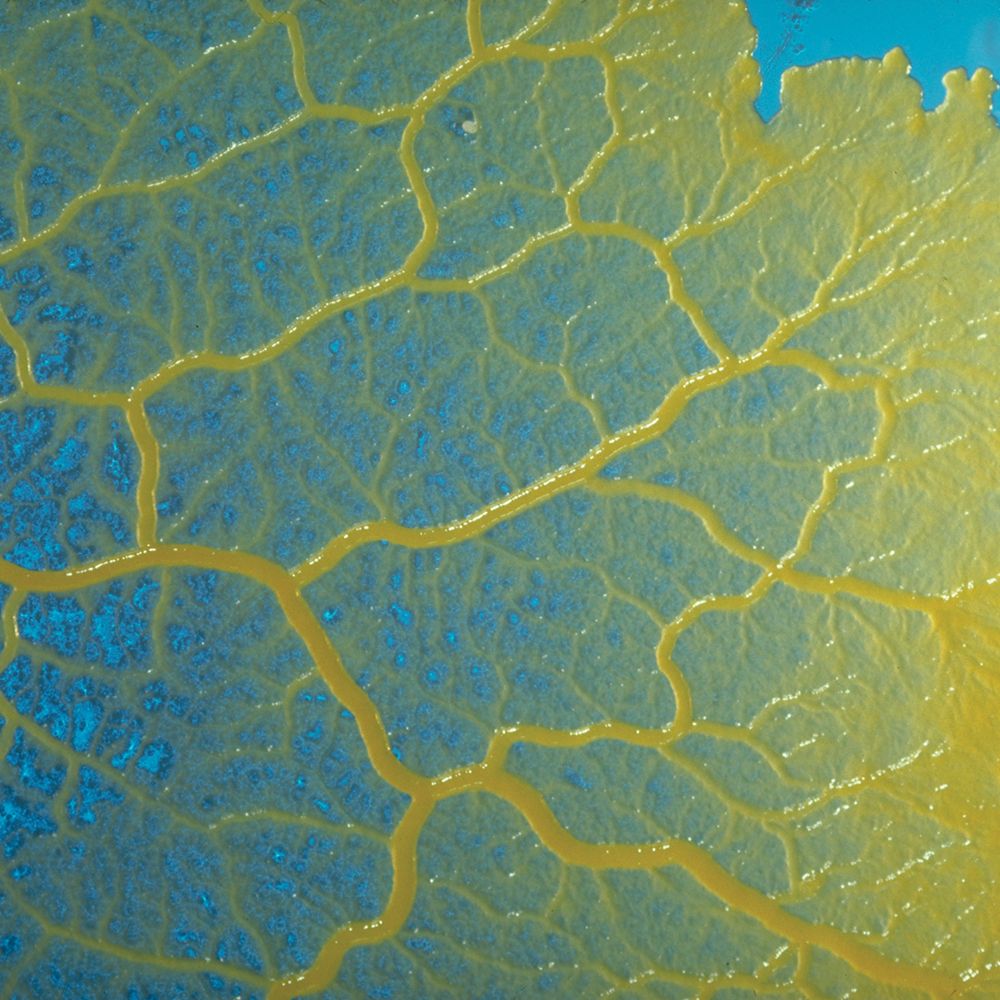
The slime mold Physarum polycephalum is a single-celled organism that can convert to multiple forms and that displays surprising complexity in its behavior. In one of its forms, the single cell can become very large—more than 30 cm in diameter in a laboratory setting. In nature, Physarum polycephalum is found in multiple environments; however, the organism is most commonly […]
Teaching Genetics for Middle School Learners
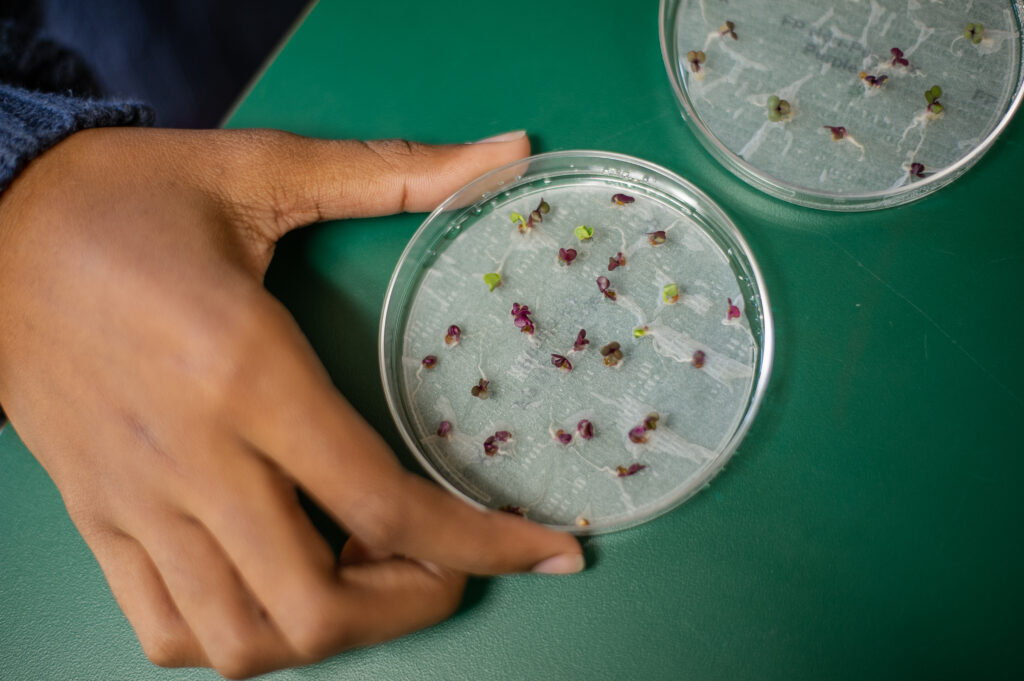
Teaching genetics to middle school students? Middle school genetics, aligned with Next Generation Science Standards* (NGSS), focus on the relationship between what can be observed (phenotype) and a general understanding of the underlying genetics. Rather than diving deep into cellular specifics, middle school genetics is taught at the organism level with a focus on phenotypes […]
BioBuilder

Carolina Biological Supply Company is proud to partner with BioBuilder, an award-winning team at MIT creating innovative STEM education focused on synthetic biology. BioBuilder approaches this exciting field with unique labs, connecting real-world questions in agriculture, medicine, biofuels, and environmental remediation with classroom content. BioBuilder believes that authenticity generates engagement in STEM, and BioBuilder labs […]
Meet the Casper Fish

Many researchers use zebra fish (Danios) for genetic and developmental studies. Zebra fish make excellent model research organisms since they are vertebrates, and their embryonic development is similar to human embryonic development. This means that you can easily view their internal organs, including the heart, gallbladder, circulatory system, brain, spine, eggs in females, and the […]
Mendelian Genetics

Mendelian genetics is the core content for all genetics studies. Concepts of genotypes and phenotypes are established, parental and filial generations are defined, and patterns of inheritance explained. Mendel’s laws guide further, more complex studies in genetics. Carolina offers kits with your choice of 3 different organisms—Wisconsin Fast Plants, genetic corn, and Daphnia—all with a minimum […]