Also known as the traffic light reaction, indigo carmine produces a colorful demonstration.
In this activity, a redox indicator (indigo carmine) changes color as a result of electron transfer. The introduction of oxygen through swirling causes the indigo carmine to turn green as it is oxidized.
Upon standing, the indigo carmine is reduced by the glucose, causing the indicator to turn yellow. A semiquinone intermediate causes a red color between the yellow and green. You can influence the rate at which the color changes. Higher temperatures and greater concentrations cause the color change to occur more rapidly.
Topics covered: oxidation-reduction reactions, reversible reactions, indicators, rates of reactions
Watch as a solution changes from green to red to yellow in this holiday color demonstration.Watch as a solution changes from green to red to yellow in this holiday color demonstration.
Standards
This activity addresses the following AP® Biology concepts:
SYI-1
Living systems are organized in a hierarchy of structural levels that interact.
SYI-1.A
Explain how the properties of water that result from its polarity and hydrogen bonding affect its biological function.
SYI-1.A.3
The hydrogen bonds between water molecules result in cohesion, adhesion, and surface tension.
Procedure
Preparation
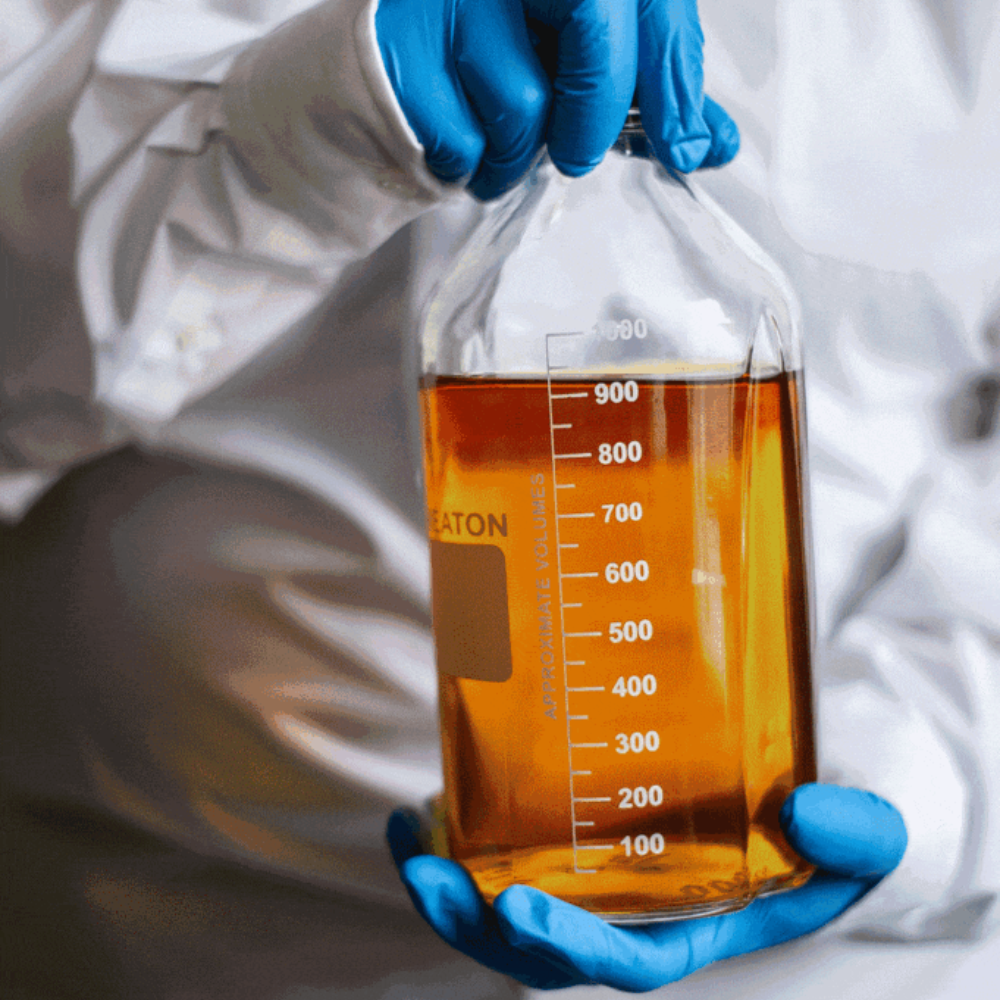
In a 600-mL beaker add 7.5 g of glucose to 375 mL of water. Stir the mixture until the glucose is dissolved.
Add a very small amount of indigo carmine to the glucose and water mixture. The solution will turn dark blue.
In another 600-mL beaker add 3.75 g of sodium hydroxide to 125 mL of water. Stir the mixture until the sodium hydroxide is dissolved.
Procedure
Pour the sodium hydroxide solution into the 1,000-mL Erlenmeyer flask.
Add the glucose solution to the flask. Swirl them to mix. The solution should turn green.
Allow the solution to rest. It should turn a yellow or red color. If the solution is yellow and you would like to have it change from red to green, swirl it very gently until it starts to change color.
Once the solution is red, swirl it vigorously to get it to change to green. Upon resting, the solution will again turn yellow or red.
Safety
Use caution when swirling solutions with indigo carmine. This dye will stain skin and clothing. To prevent spills, place a solid rubber stopper in the flask and press downward with the palm of your hand while swirling the flask to add oxygen.
840346 Carolina Chemonstrations® for Use with AP® Chemistry: Reaction Rates Kit
Buy the Kit
Introduce or review the factors affecting reaction rates in preparation for the AP® Chemistry Exam.