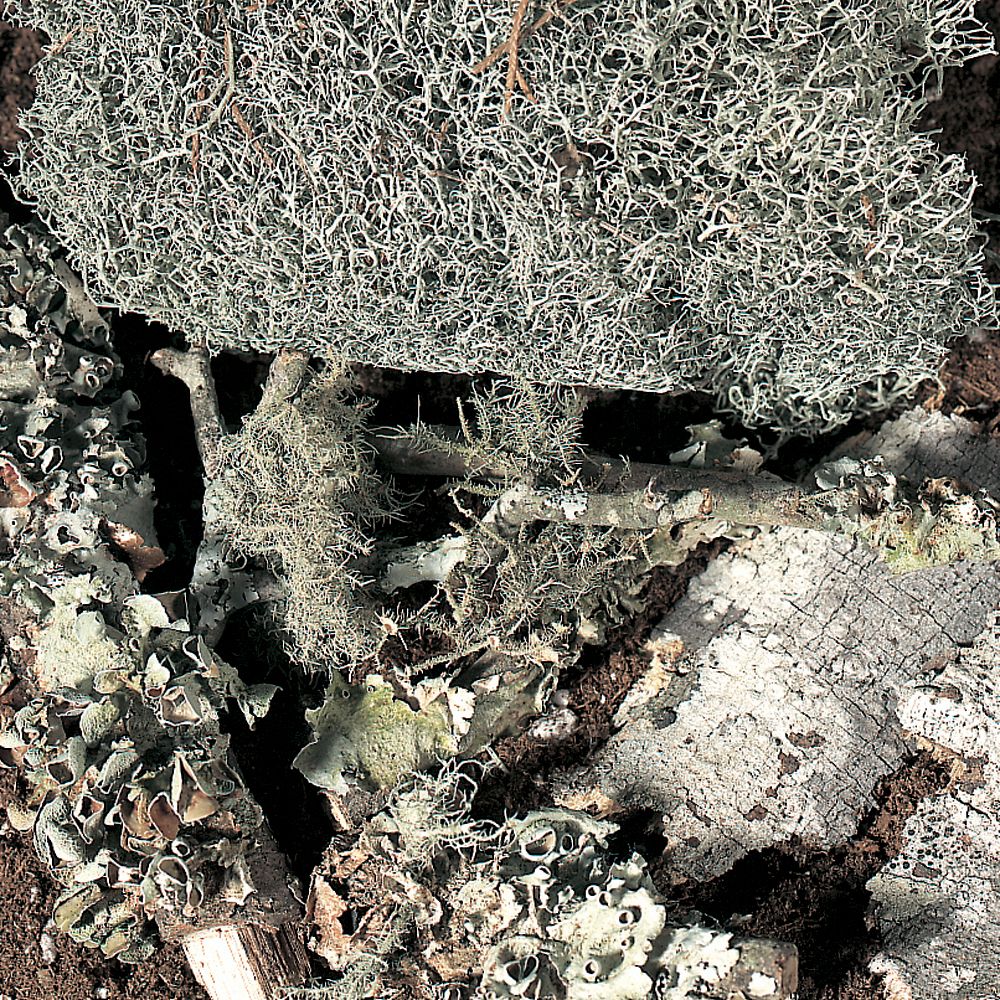
In this lab, students observe basic lichen types (crustose, foliose, fruticose and fruticose pendant) and see that lichens are composite organisms, consisting of fungal and algal components. We recommend that students observe fungal hyphae and unicellular algae prior to doing this activity.
Ensure that students understand and adhere to safe laboratory practices when performing any activity in the classroom or lab. Demonstrate the protocol for correctly using the instruments and materials necessary to complete the activities, and emphasize the importance of proper usage. Use personal protective equipment such as safety glasses or goggles, gloves, and aprons when appropriate. Model proper laboratory safety practices for your students and require them to adhere to all laboratory safety rules.
The lichens are shipped dry. Spray them with room-temperature water to freshen them before use. Lichens cannot be cultured, but they can sometimes be maintained in woodland terrariums for extended periods.
Students can work individually or in pairs. Set up workstations for each lichen type. Copy the Lichen Types Bioreview® Sheet and place one at each station. Workstations for the foliose, fruticose, and fruticose pendent lichens will also need the following:
microscope slides
coverslips
droppers
scissors
dissecting needles
In many cases the fungal and algal components of a lichen can be separated and grown in culture. Neither, when grown by itself, resembles the lichen

Carolina is teamed with teachers and continually provides valuable resources–articles, activities, and how-to videos–to help teachers in their classroom.
Get the latest news, free activities, teacher tips, product info, and more delivered to your inbox.