Algae are effective pollution indicators because they are widespread across salt water and freshwater systems, form the base of aquatic food webs, and respond rapidly to changes in nutrients, organic matter, acidity, salinity, metals, toxic chemicals like pesticides, water temperatures, turbidity, light, and flow. Attached algae—especially benthic diatoms and certain dinoflagellates—integrate conditions over the days or weeks in which a community develops, often revealing episodic or chronic stress such as transient algae blooms that a single water sample can miss. Different species have different environmental tolerances, so shifts in species composition, abundance, biomass, physiology, or tissue chemistry can be translated into evidence of ecological impairment (Stevenson & Bahls, n.d.; Stevenson, 2014).
As we became more aware of the problems of organic pollution affecting our waters, researchers looked for ways to quickly evaluate the degree of water pollution. There are several proposed evaluation strategies for measuring organic pollution, ranging from chemical methods to the use of characteristics of aquatic communities. Of the many strategies being considered, the biological method involving selected indicator organisms is the most promising for quick, rough estimates of degrees of pollution. But for detailed analysis of the exact condition of any given body of water, complex chemical techniques must be used.
There are certain plants and animals found almost exclusively in areas of organic pollution and others found only in areas of little or no organic pollution. Many plants and animals are able to survive over ranges stretching from moderately polluted to clean water environments. To build a system of indicator organisms that give a reasonable estimate of pollution, the organisms must be easily sampled, easily identified, and have a specific tolerance range so the greatest population is limited to a definable range, such as high pollution or clean water. An organism that survives over too wide a range of pollution concentration is of little value since its presence or absence will tell nothing about the water quality. At the same time, it’s essential that an organism isn’t restricted to a habitat because of factors like pH, escape from predators, or a geographical location. Sensitivity to such factors limits the usefulness of the organism to those areas where the effect of the factor can be eliminated or controlled.
Most animals suggested as pollution indicator organisms are rated on their ability to survive under low oxygen conditions often found in hypoxic dead zones prone to fish kills. Common suckers (Catostomus commersoni), sludge worms (Tubifex), and bloodworms (larvae of Chironomus decorus) are often associated with high organic pollution and are very resistant to low oxygen conditions. Smallmouth bass (Micropterus salmoides), other gamefish, caddisworms (Hydropsyche), and dragonfly nymphs (Anax janius) are examples of animals found in clean water areas with reasonably high oxygen levels. Even though these animals are good indicators of the presence or absence of pollution, they’re often hard to sample and identify.
Bacteria are excellent indicators of pollution and are easy to sample, but they are hard to identify. The coliform bacilli are widely used as indicators of high organic pollution which is dangerous to humans, and there are many easy testing procedures for the presence of coliform bacteria that yield results within two to three days. However, there’s no method yet to differentiate between coliforms from human feces and those from feces of non-human animals. Until techniques are further refined and more information is gathered, any sample of drinking water containing a very high number of coliform bacteria should be considered dangerous.
Algae have the potential to be the best indicators of organic pollution. There are genera of algae which thrive in highly polluted areas and which are almost universally distributed. These algae are also easy to sample and identify, making them excellent pollution indicators.
Bacteria in an area containing large amounts of organic wastes break down the organic matter and release carbon dioxide, methane, ammonia, nitrates, and other nutrients similar to chemical fertilizers from agriculture in the water. In the presence of light, the algae can use these nutrients for growth and photosynthesis, which releases oxygen.
Algae, unlike animals, aren’t characterized by their ability to tolerate low oxygen conditions; with sufficient light and nutrients, the oxygen content of the water is not limiting. In 1969, Palmer compiled an extensive list of 240 genera and 725 species of algae, including various forms of blue-green algae, reported to be tolerant to pollution. From this list, he produced an algal-pollution index which can be used to rate water samples for high or low organic pollution.
The 20 genera of algae most often found in large amounts in areas of high pollution were compiled and assigned a pollution index number (Table I). When a water sample is analyzed, any of the genera from the index (when found in a concentration of 50 or more individuals per milliliter) are recorded as present in the sample. The pollution index numbers of the algae present are totaled. A total of 20 or more points indicates a high organic pollution concentration, and 15 to 19 points indicates a high to medium organic pollution concentration. Less than 15 points indicates either a low organic pollution concentration or that the sampling methods or some environmental factor is interfering with algal growth. While the validity of this index is still being proven, early tests suggest that a practical degree of accuracy can be achieved.

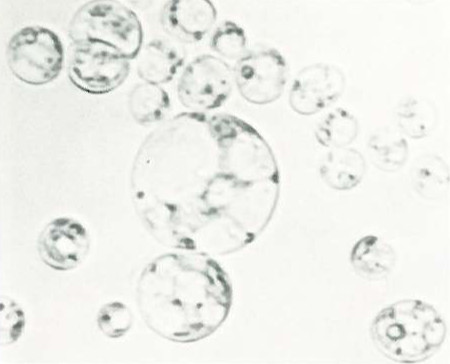
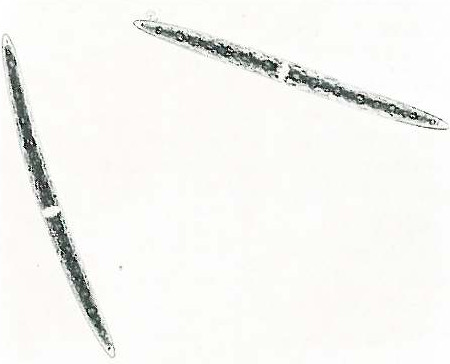
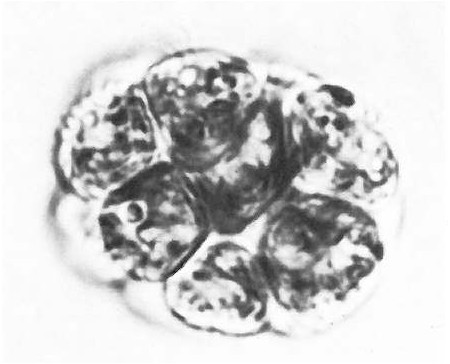
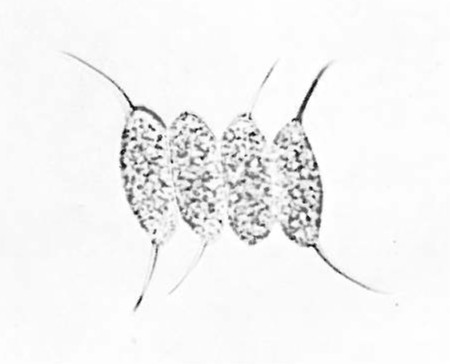
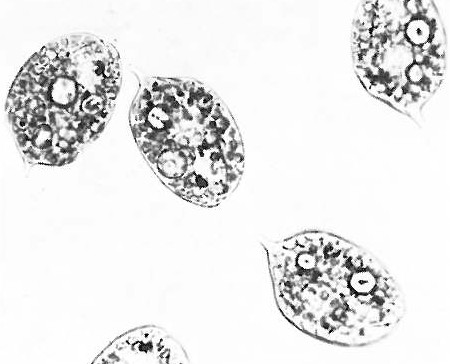
Since the original publication of this article, water pollution research has continued and additional testing protocols have been established. Updated findings and a decadal research summary that follow show the advancements in water pollution assessment with microorganisms.
Nutrient enrichment and eutrophication: Nitrogen and phosphorus stimulate algal growth, alter diatom assemblages, increase chlorophyll-a and biomass, and can favor nuisance or cyanobacteria known to produce harmful algal toxins. Diatom indices assign taxa sensitivity and abundance scores to estimate trophic conditions. The Trophic Diatom Index, developed in 1995 from 86 taxa, correlated strongly with aqueous phosphorus and phosphate concentrations at river sites not dominated by severe organic pollution (Kelly & Whitton, 1995). The index was developed from 86 taxa and tested at 70 sites without significant organic pollution.
Organic and sewage pollution: High biochemical oxygen demand and reduced dissolved oxygen favor pollution-tolerant genera and species. Monitoring examines the proportion of tolerant taxa, including forms historically associated with organic enrichment or discharges from wastewater treatment facilities, rather than assuming that high algal abundance alone proves sewage contamination (U.S. Environmental Protection Agency [EPA], 2017).
Acidification, salinization, and ionic change: Diatom species have narrow preferences for pH and conductivity. Community turnover can infer acidification, recovery from acid deposition, intrusion of salt water into brackish water habitats, contaminated groundwater inflows, or rising salt and mineral concentrations. Silica frustules preserved in sediments also permit reconstruction of past lake conditions.
Metals and toxic contaminants: Pollution can reduce diversity, select tolerant taxa, inhibit photosynthesis, change enzyme activity, or produce abnormal diatom frustules. Macroalgae can also accumulate metals in their tissues, providing a time-integrated biomonitor of exposure; field studies have used species of Ulva, Enteromorpha, Padina, and Dictyota to track coastal metal contamination (Chakraborty et al., 2014). Research involving these algae found genus-specific responses to metal uptake and supported their potential use as biomonitors.
Habitat and thermal disturbance: Sedimentation, altered flow, grazing, substrate instability, shading, heated discharges, and broader shifts driven by climate change and global warming alter growth form and taxonomic composition. These signals are useful, but interpretation should pair algae with habitat and water-chemistry measurements so that natural variation is not mistaken for pollution.
1980s–1990s: from indicator species to calibrated indices. Research shifted from simple lists of tolerant organisms toward quantitative, regionally tested metrics based on relative abundance and species-specific optima. Diatoms became especially prominent because their species richness and ecological specificity support diagnosis of nutrient, organic, pH,
and conductivity gradients. The 1995 Trophic Diatom Index exemplified this transition, while later community-based work emphasized reference conditions, confounding stressors, and the upper limits of index sensitivity (Kelly, 1998; Kelly & Whitton, 1995).
Late 1990s–2000s: standardized bioassessment and regulation. Agencies incorporated periphyton sampling, laboratory identification, and multimetric analysis into stream and wetland assessment. EPA protocols describe diatoms as abundant, sensitive indicators whose attached communities integrate reach-scale disturbance. In Europe, the Water Framework Directive made phytobenthos a formal biological quality element for ecological-status assessment, accelerating intercalibration among national methods (European Parliament & Council of the European Union, 2000; Stevenson & Bahls, n.d.).
2010s–2020s: predictive models, traits, and molecular tools. Recent work combines assemblage data with site-specific models that account for natural environmental variation, improving estimates of human impact, the onset of HABs (harmful algal blooms) such as coastal red tides or those documented in Lake Erie producing cyanotoxins like microcystin or marine toxins like brevetoxin and domoic acid, and stressor thresholds. DNA metabarcoding offers faster, more reproducible identification of mixed communities, while trait-based and genus-level approaches can reduce inconsistency among taxonomists. However, reference libraries, laboratory methods, and index calibration still require standardization. EPA research identifies taxonomic harmonization, genus-level analysis, and DNA metabarcoding as promising pathways for national diatom datasets (Stevenson, 2014).
Current regulatory application. A 2021 review reported that benthic diatoms were widely intercalibrated for Water Framework Directive monitoring and were particularly successful in detecting eutrophication, organic pollution, and acidification (Masouras et al., 2021). New lake indices continue to be developed and validated. For example, a 2023 French multimetric method used data from 93 lakes collected between 2015 and 2020 to assess eutrophication pressure (Tison-Rosebery et al., 2023).
Algae respond quickly, occur in nearly all aquatic habitats, are comparatively inexpensive to sample, contain many taxa with known tolerances, and express both exposure and ecological effect. Attached communities integrate short-term fluctuations, sediments preserve historical diatom records, and macroalgal tissues can accumulate contaminants.
Algal responses are rarely specific to one pollutant. Season, light, flow, grazing, substrate, temperature, and interactions among stressors can alter the same metrics. Biomass may be low after floods even in nutrient-rich runoff water, and blooms can be transported from elsewhere. Species-level diatom identification requires expertise and can vary among analysts. For these reasons, monitoring programs need consistent methods, quality assurance, regional calibration, and repeated sampling (EPA, 2017, 2022).
Since 1980, algal biomonitoring has developed from qualitative pollution-tolerance lists into quantitative, regionally calibrated systems used in regulatory assessment. The most reliable applications use changes in whole assemblages—especially benthic diatoms—rather than a single species, combine taxonomic data with biomass or physiological measurements, and interpret biological signals with chemistry and habitat information. Algae are therefore best viewed as sensitive ecological recorders: they show not only that pollutants are present, but whether those pollutants are changing the structure and function of an aquatic ecosystem.
Algae occur in nearly every aquatic environment and respond quickly to changes in nutrients, acidity, salinity, temperature, light, metals, and other contaminants. Changes in their abundance and community composition can reveal environmental stress that may be missed by a single water sample.
Algae can provide evidence of nutrient enrichment, eutrophication, organic and sewage pollution, acidification, salinization, metal contamination, toxic chemicals, sedimentation, and thermal disturbance. Because several environmental factors can create similar responses, algal observations should be interpreted with water chemistry and habitat data.
Diatom species have distinct tolerances for nutrients, pH, salinity, conductivity, organic pollution, and other environmental conditions. Their diversity, widespread distribution, and silica cell walls make them useful in both present-day monitoring and historical reconstruction.
An algal pollution index assigns values to algae associated with particular pollution conditions. Researchers total the values for the algae found in a sample to estimate the level of organic pollution or nutrient enrichment.
No. Algal communities are sensitive indicators, but their responses can also be influenced by season, light, flow, temperature, grazing, and substrate. The most dependable assessments combine algal evidence with chemical testing, physical habitat observations, quality assurance, and repeated sampling.
American Public Health Association. (1969). Standard methods for the examination of water and wastewater.
Palmer, C. M. (1959). Algae in water supplies (Public Health Service Publication No. 657). U.S. Government Printing Office.
Palmer, C. M. (1969). A composite rating of algae tolerating organic pollution. Journal of Phycology, 5, 78–82.
Schlichting, H. E. (1971). Measuring water quality. Carolina Tips, 34, 37–38.
Schlichting, H. E., Jr. (1975). The biomoniter. Carolina Tips, 38, 33–34.
Schlichting, H. E., Prendeville, G. N., & Guiry, M. D. (1974). New techniques for biological monitoring of water quality. BioControl Tech., 1, 1–3.
Wilber, C. G. (1969). The biological aspects of water pollution. Charles C Thomas.
Chakraborty, S., Bhattacharya, T., Singh, G., & Maity, J. P. (2014). Benthic macroalgae as biological indicators of heavy metal pollution in the marine environments: A biomonitoring approach for pollution assessment. Ecotoxicology and Environmental Safety, 100, 61–68. https://doi.org/10.1016/j.ecoenv.2013.12.003
European Parliament & Council of the European Union. (2000). Directive 2000/60/EC establishing a framework for Community action in the field of water policy. Official Journal of the European Communities, L 327, 1–73.
Kelly, M. G. (1998). Use of community-based indices to monitor eutrophication in European rivers. Environmental Conservation, 25(1), 22–29.
Kelly, M. G., & Whitton, B. A. (1995). The Trophic Diatom Index: A new index for monitoring eutrophication in rivers. Journal of Applied Phycology, 7, 433–444. https://doi.org/10.1007/BF00003802
Masouras, A., Karaouzas, I., Dimitriou, E., Tsirtsis, G., & Smeti, E. (2021). Benthic diatoms in river biomonitoring: Present and future perspectives within the Water Framework Directive. Water, 13(4), Article 478. https://doi.org/10.3390/w13040478
Stevenson, J. (2014). Ecological assessments with algae: A review and synthesis. Journal of Phycology, 50(3), 437–461. https://doi.org/10.1111/jpy.12189
Stevenson, R. J., & Bahls, L. L. (n.d.). Chapter 6: Periphyton protocols. U.S. Environmental Protection Agency. https://archive.epa.gov/water/archive/web/html/ch06main.html
Tison-Rosebery, J., Boutry, S., Bertrin, V., Leboucher, T., & Morin, S. (2023). A new diatom-based multimetric index to assess lake ecological status. Environmental Monitoring and Assessment, 195, Article 1202. https://doi.org/10.1007/s10661-023-11855-w
U.S. Environmental Protection Agency. (2017). Algal indicators in streams: A review of their application in water quality management of nutrient pollution (EPA-822-R-17-002). https://www.epa.gov/sites/default/files/2017-06/documents/algal-indicators-whitepaper.pdf
U.S. Environmental Protection Agency. (2022, December 13). Diatoms: Solving an identity issue. https://www.epa.gov/sciencematters/diatoms-solving-identity-issue
DANIEL E. JAMES
From the Algae Department, Carolina Biological Supply Company, Burlington, North Carolina 27215
Get the latest news, free activities, teacher tips, product info, and more delivered to your inbox.