| Kit Title | Science Topics | Social Studies Concepts | Further Applications |
|---|---|---|---|
 Circulatory System
 |
|
Lack of access to advanced health care in developing parts of the world |
Discuss the lack of health care in other parts of the world. Explain to students that lack of access to vaccines and other preventive medicine can lead to disease outbreaks. |
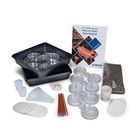 How to Train Your Isopod
 |
|
Domestication of animals |
Discuss the role and process of domestication of animals in society throughout history. Address how the shift from hunting and gathering to farming allowed for settlement. |
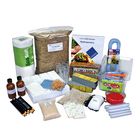 Hydroponics
 |
|
Global population |
Discuss world population growth and the use of hydroponics to feed a rapidly growing population. |
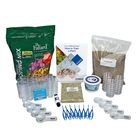 How to Train a Plant
 |
|
Different growing methods of indigenous populations in various regions |
Discuss with students how cultivation techniques differ in different parts of the world. Also discuss how various plants such as corn, wheat, and rice became such a staple of diets in many parts of the world. |
| Kit Title | Science Topics | Social Studies Concepts | Further Applications |
|---|---|---|---|
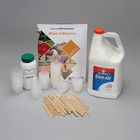 Make it Bounce
 |
|
The role of plastic and polymers in our disposable culture |
Discuss with students how plastic and other polymers have been used in medical advances and safe food packaging to benefit society. Also discuss the dilemma of how a community should dispose of these products. |
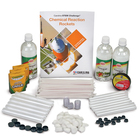 Chemical Reaction Rockets
 |
|
Space race and development of missiles |
This is a great lead-in to a unit on the space race as well as the development of missiles for warfare. |
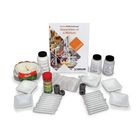 Separation of a Mixture
 |
|
Separating mined minerals from their ore |
Discuss with students the process of extracting the minerals from the ore. This discussion should cover the energy requirements for many of these processes and include a discussion of mining wastes and what happens after a mine is no longer profitable. |
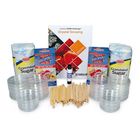 Crystal Growing
 |
|
Natural resources, mining, and the salt trade |
Work this activity into a lesson on the importance of a region’s natural resources and how those resources relate to a country’s wealth and stability. Mining, overuse of natural resources, and ownership of natural resources can lead to discussions of governmental systems and economics. This is a great opportunity to discuss the current and historical importance of table salt as a commodity, ancient currency, and early preservative. |
| Kit Title | Science Topics | Social Studies Concepts | Further Applications |
|---|---|---|---|
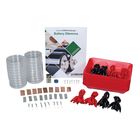 Battery Dilemma
 |
|
History of batteries (Baghdad battery or Parthian battery) |
Archeologists have discovered items they believe to be batteries that date back over 2000 years. Based on knowledge of the culture of the area and the time period, have students hypothesize potential uses. |
 Geothermal
 |
|
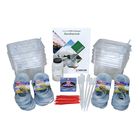
Map study |
Use the kit in conjunction with a map study. Tie in the locations of naturally occurring thermal vents like hot springs to areas where people gather for healing, general health benefits, and tourism. Iceland is a case study for the use of geothermal power and tourism. |
 Passive Solar Design
 |
|
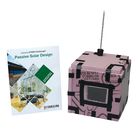
Ancient passive solar designs |
Socrates said that a south-facing portico is warmed by the sun in the winter but shaded in the summer. The classical Roman atrium and heated bathhouses are based on passive solar design. The homes of Anasazi Native Americans were built into the sides of cliffs to be shaded in the summer and warmed by the sun in the winter. |
 Biofuels
 |
|
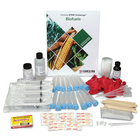
Impact on local food economy when more land is used to support biofuel production |
The use of crops for fuel can have an impact on the price of those crops. Incorporate this activity into a discussion of supply and demand and how that impacts prices. |
 Hydroelectric Power
 |
|
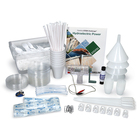
Use of dams throughout history |
Use this kit during a unit on dam building. The Hoover Dam in the Unites States, the Aswan High Dam in Egypt, and the Three Gorges Dam in China are well- documented examples in different regions of the world. Egyptians built the first dams around 2800 BC. Water use and control (water rights) is a topic for both science and politics. |
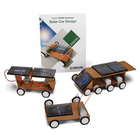 Solar Car Design
 |
|
Use of photovoltaic cells to bring electric power to remote areas |
Over a billion people in Sub-Saharan Africa and South Asia do not have access to electricity. Extending the grid to these remote regions is impractical. Discuss with students how solar or wind energy could provide access to electricity in these remote areas. |
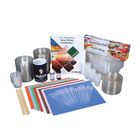 Solar Water Distillation
 |
|
Water resources and infrastructure |
Tie this activity into a lesson on the importance of a region’s water resources (amount of water available and cleanliness of water) and how those resources relate to a country’s wealth and stability and the health of its populations. A discussion of available technologies related to infrastructure availability could point out the benefits of solar distillation. |
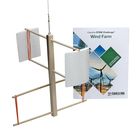 Wind Farm
 |
|
Windmills |
Windmills have been used for centuries in many parts of the world for many reasons. Let students research the technology and provide a timeline with location, use, and design of windmills. |
| Kit Title | Science Topics | Social Studies Concepts | Further Applications |
|---|---|---|---|
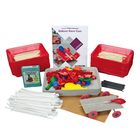 Balloon Race Cars
 |
|
Industrial revolution and mass production |
After the challenge is complete, demonstrate Henry Ford’s idea of mass production. Time single students making a car from raw materials and compare that to assembly line construction. |
 Egg Drop
 |
|
The socioeconomics of safety |
Try the baby egg exercise. Place students in different socioeconomic groups, distribute different amounts of “money” to each group, and require that students buy supplies to protect their eggs. Full instructions can be found online. |
 Mousetrap Cars
 |
|
Industrial revolution and mass production |
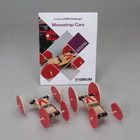
After the challenge is complete, demonstrate Henry Ford’s idea of mass production. Time single students making a car from raw materials and compare that to assembly line construction. |
 Projectile Launcher
 |
|
History and development of tools across cultures |
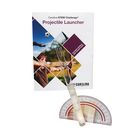
Use the projectile launcher to spur a discussion of the transition of humans to hunters (throwing a spear, the invention of the bow and arrow, and the impact of those tools on human development). |
 Sound Off
 |
|
Information transfer through history
Theater and stadium architecture |
Discuss the inventions of the gramophone, phonograph, radio, and phone. Students can trace the development of communication science from posting in the middle ages to digital communication today. This STEM challenge can also be used in a discussion of the sporting complexes built by the Mayans and Romans. From the right location, a whisper could be heard throughout those theaters. |
 Structures
 |
|
Structures and dwellings of ancient cultures |
Many cultures can be identified by the structures they have built. Use this kit as a segue to investigate the importance of architecture to cultural development. |
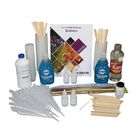 Bubbles
 |
|
Laundry methods throughout history |
What did people do before the invention of detergents for cleaning their clothes? Have a discussion of laundry methods throughout history. |
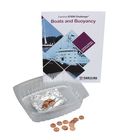 Boats and Buoyancy
 |
|
Historical trade routes and migration |
Use this kit during a unit on trade routes (ancient and modern). Pennies added to the boat emphasize the strategic need for deep water ports, which can inform a geography lesson on ancient and modern port locations and human population distribution. |
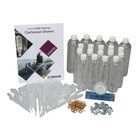 Cartesian Divers
 |
|
Military use of submarines |
This kit can be used as a hook when learning about the Civil War, the World Wars, and submarine warfare. As the ballast is added and removed, the diver rises and falls (just like a submarine). |
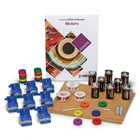 Motors
 |
|
Industrial revolution |
Use the results of the motors challenge to introduce mechanization in transportation and manufacturing. Students should recognize that hp means horsepower. Motors had to perform better than draught horses. |
 Paint Stirrer Catapult
 |
|
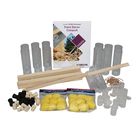
Medieval warfare |
Include the catapult activity results in a discussion of ancient warfare technology and the importance of simple machines to changing the course of history. |
 Roller Coasters
 |
|
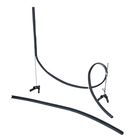
Mining cars and mountain railways |
Funicular railways have been in use since as early as 1515 to transport loads over steep grades. Have students investigate some of these early uses of steep railways for transporting goods along steep grades. |
 Balloon Rockets
 |
|
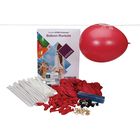
The use of rockets to assemble, staff, and maintain the International Space Station |
The International Space Station is a joint venture between NASA (United States), Roscosmos (Russia), JAXA (Japan), ESA (European Union), and CSA (Canada). Have students discuss the collaboration between these countries to build and maintain the station. The discussion should cover the importance of international treaties and agreements such as those that made the International Space Station a possibility. |
 Keep It Hot
 |
|
Food and food distribution |
Students can design the best way to keep food hot for the longest period of time. This kit could also be used as a manufacturing/marketing example for an economics unit. |
 Trebuchets
 |
|
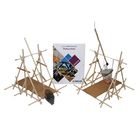
Ancient warfare |
Include the trebuchet activity results in a discussion of ancient warfare technology, reminding students that territorial conquest impacts people their culture, and natural resources. |
 Take Flight
 |
|
History of transportation and aviation |
Include this kit in a transportation unit or as a supplemental activity to introduce the history of aviation in the United States. |