Objective
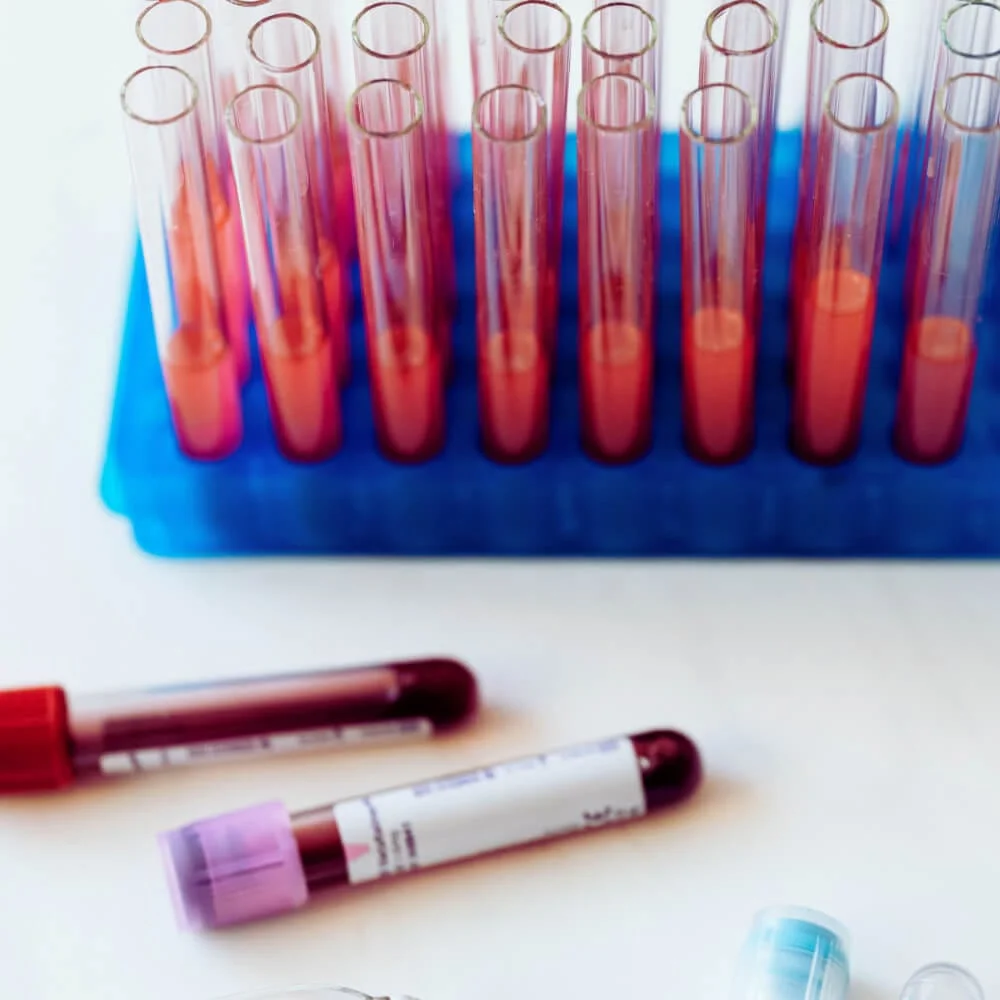
You will perform tests to determine the ABO-Rh properties of a blood sample.
Activity Details
- Prep Time: 30 minutes
- Class Time: 60 minutes
Materials
NGSS Standards
High School and College
SEPs
• Developing and Using Models
• Planning and Carrying Out Investigations
• Analyzing and Interpreting Data
• Using Mathematics and Computational Thinking
DCIs
• PS1.A: Structure and Properties of Matter
• PS1.C: Nuclear Processes
• PS3.C: Relationships between Energy and Forces
Safety
Use this kit only in accordance with established laboratory safety practices, including appropriate personal protective equipment (PPE) such as gloves, chemical splash goggles, and lab coats or aprons. Ensure that students understand and adhere to these practices. Know and follow all federal, state, and local regulations as well as school district guidelines for the disposal of laboratory wastes. Students should not eat, drink, or chew gum in the lab and should wash hands before and after entering or exiting the lab.
The blood typing materials in our sets are for educational purposes only, as described in our manuals and instructions. They are not to be used for any other purpose. Furthermore, classroom blood typing tests should not be interpreted as medically accurate, and they are not a replacement for procedures and analyses performed by certified medical professionals. Such interpretations should only be made by trained serologists and pathologists.
We do not recommend that a teacher draw blood from students. Check with the appropriate authorities before using lancets, because there may be state, local, or school system regulations governing their usage. A lancet should be discarded after it has been used once. A lancet should never be used by more than one person. Several types of infections can easily be transmitted if lancets are improperly used.
Human blood and products containing human blood should be treated as if they may contain potentially infectious material. Laboratory work should only be done in accordance with best practices and aseptic technique. At the conclusion of this laboratory exercise, all these materials should be disposed of safely and in compliance with OSHA’s Bloodborne Pathogens Standard (29 CFR 1910.1030).
Activity Procedure
If you are using your own blood as the sample for testing:
- Use an alcohol swab to gently clean the fingertip you will use for testing.
- Remove the cap from the safety lancet. Place the lancet on the fingertip, and using firm pressure, press down until the lancet pierces the fingertip.
- Collect a droplet of blood on the concave surface of the blood mixing stick and swirl it on the circle labeled Anti-A.
- Perform Step 3 for each of the designated spaces on the blood typing card, using a new blood mixing stick to collect a blood droplet each time.
- Add a drop of water to each of the circles and mix gently with the respective blood mixing stick, being careful not to cross contaminate samples.
- Hold the card at the bottom corners and rock it back and forth gently for 20 seconds.
- Carefully examine the thin film of liquid mixture left behind. If the film remains uniform in appearance, there is no agglutination. If the sample appears granular, agglutination has occurred. Determine the blood type of each sample using the chart below. Answer yes or no as to whether the agglutination occurred in the sample. A positive agglutination reaction indicates the blood type.
| Anti-A | Anti-B | Anti-D (Rh) | Blood Type | |
|---|---|---|---|---|
|
Reaction Occurred? (Y/N) |
|
|
|
|
- Be sure to dispose of the materials properly based on local guidelines for blood and bodily fluid disposal.
Discussion
Almost everyone can be assigned to 1 of the 4 ABO blood groups. These blood groups result from the presence or absence of 2 antigens, A and B, on the membranes of red blood cells. Answer the following questions based on your results recorded in the Data Table.
Mike is blood type A. When a lab technician mixes a sample of Mike’s blood with serum taken from Ken’s blood, Mike’s blood cells agglutinate. When Mike’s blood is mixed with serum from Kim’s blood, there is no agglutination.
What is the most likely explanation of this?
Assuming this pattern applies to all the ABO blood groups, fill in this chart:
ABO Blood Groups
| Blood Group | Red Cell Antigen | Serum Antibody |
|---|---|---|
|
A |
|
|
|
B |
|
|
|
AB |
|
|
|
O |
|
|
Rh is another human blood group. People are classified as either Rh-positive or Rh-negative depending on whether their blood cells agglutinate when mixed with anti-D (anti-Rh). Because both ABO and Rh have medical significance, both are used in designating a person’s blood type (e.g., A+, A-). About 14% of the population in the United States is Rh-negative. People with Rh-negative blood type usually do not have Rh antibody in their blood serum unless there has been a previous exposure to the Rh antigen.
What are some ways that such an exposure might take place?
Now that your students know the chemistry of slime, see what creative uses they find for the product of this lab.
Related Products


Related Resources
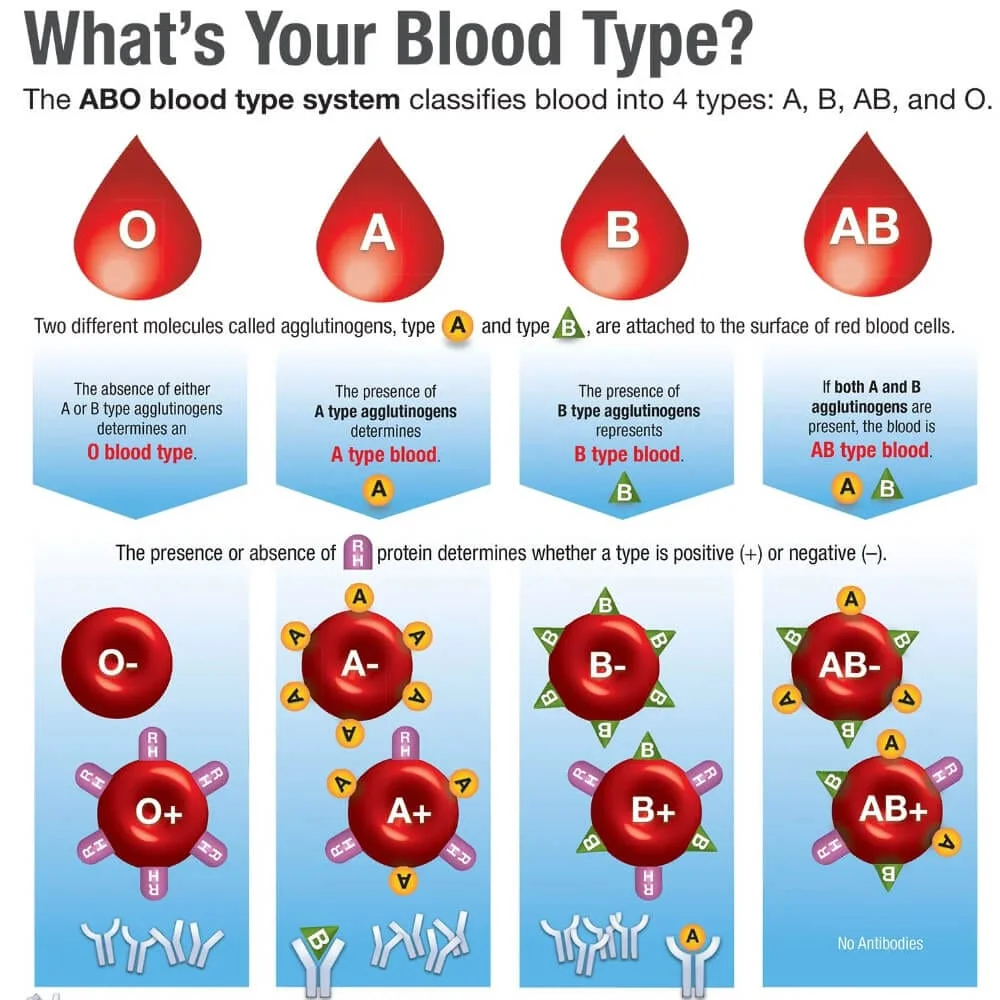
Infographic: What's Your Blood Type?
The ABO blood type system classifies blood into 4 types: A, B, AB, and O.