Grasshoppers

Published: September 1941 | Updated: June 2026

Carolina has offered grasshoppers as instructional specimens since 1927. There are two kinds of grasshoppers popular for laboratory study. These are the Schistocerca americana and the “Lubber Grasshopper.”

Schistocerca americana (Fig. 1), or large-winged Southern Grasshoppers are native to the Piedmont region of North Carolina. Comstock, in his Introduction to Entomology (p. 256) refers to Schistocerca as “This magnificent species.” They measure from 2 to 3 ¼ inches in length and are consequently slightly smaller than the lubbers.

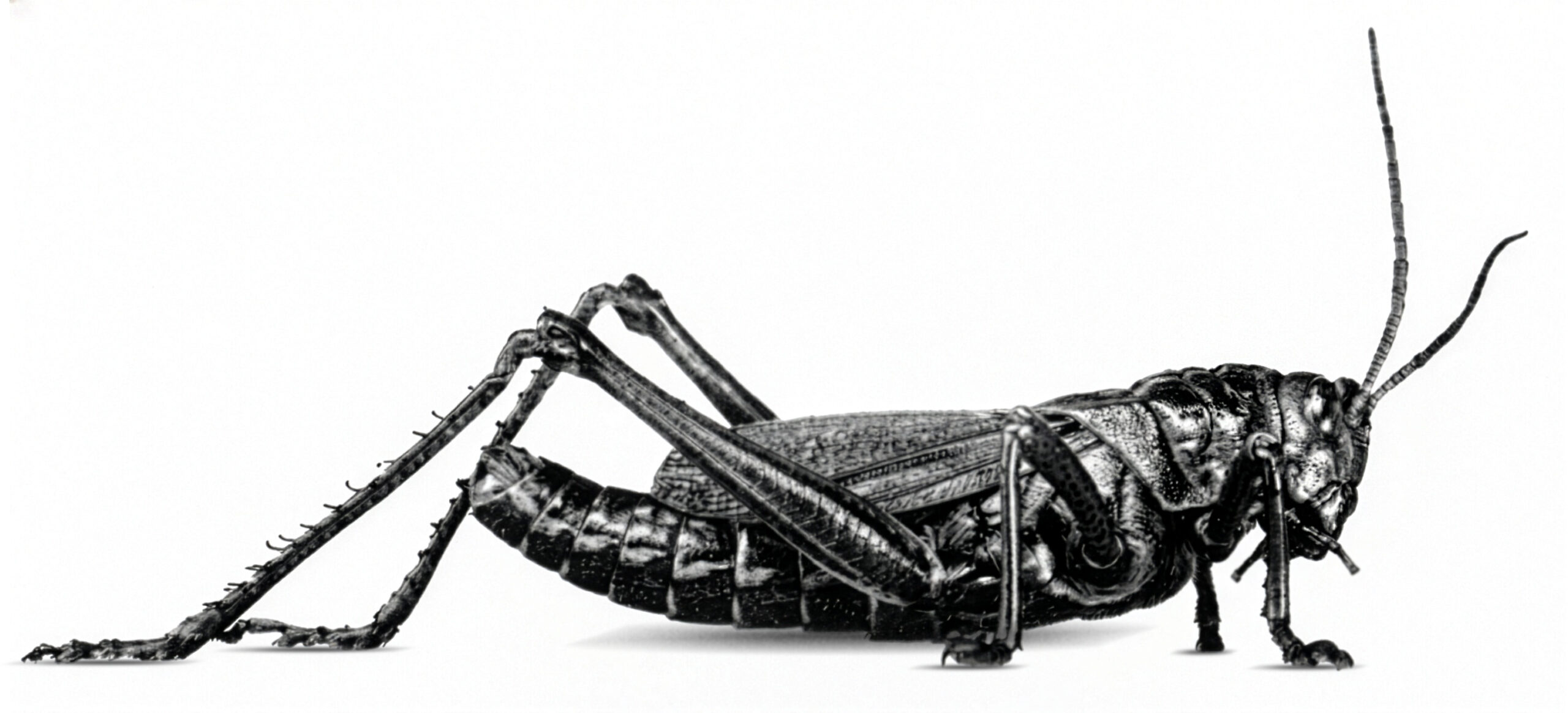
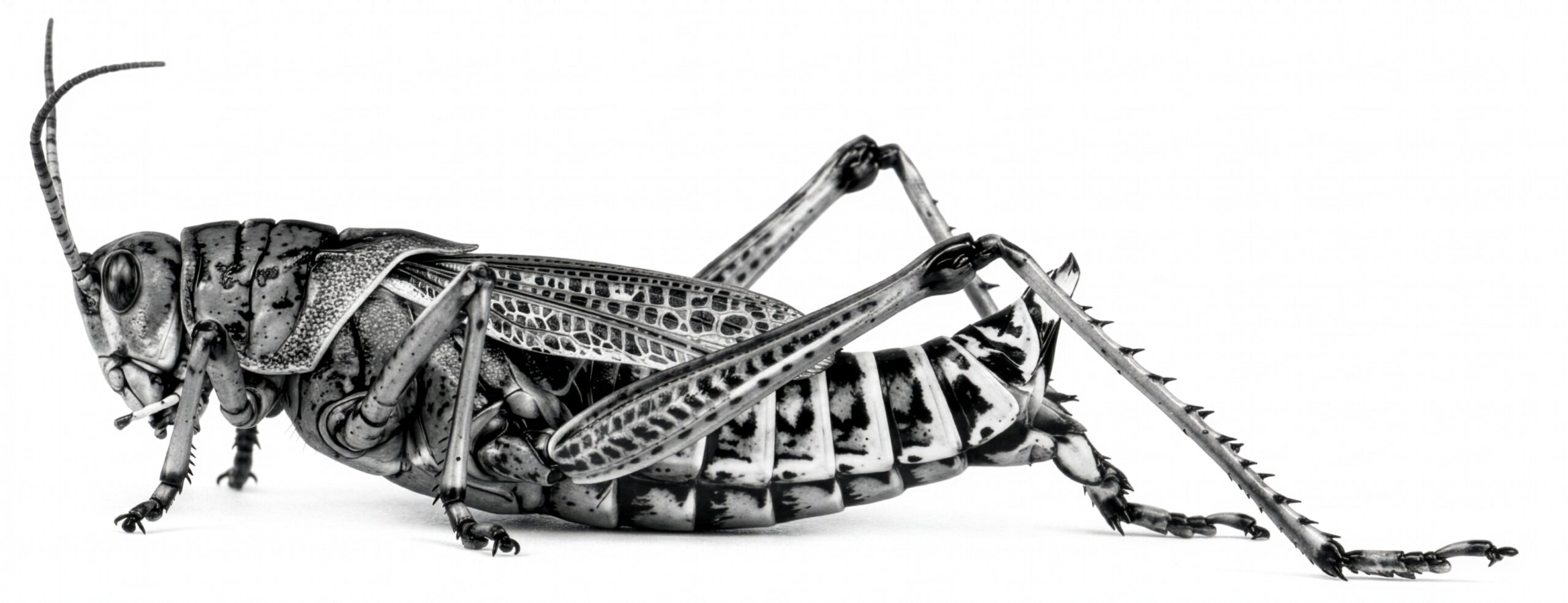
Lubbers run to the yellow-phase Romalea (Dictyophorus) and the black-phase Romalea microptera. Romalea microptera, perhaps due to its somewhat smaller size, is often favored over the yellow-phase. Romalea microptera (Fig. 2) or the black lubber grasshopper is found in Louisiana, while Dictyophorus (Fig. 3) or the yellow lubber is native in Florida. There are, of course, variations in size in any given habitat and ecologically speaking there seems to be a merging of the two. In other words, the purest yellow is encountered in Florida and as one collects west the yellow color becomes progressively mottled with black until eventually the specimens assume a solid black color. Today, Carolina’s preserved grasshopper specimens are lubber grasshoppers.

Figure 1 Schistocerca americana. Large-Winged Southern Grasshopper.

Lubber Grasshoppers

Black lubber grasshoppers and yellow lubber grasshoppers are striking forms of the eastern lubber grasshopper, Romalea microptera, a large, flightless insect in the order Orthoptera and family Romaleidae, though many other common species belong to the family Acrididae. In classroom and lab settings, it is helpful to explain that these black and yellow lubbers are generally not separate species, but different color phases or regional forms of the same species. The yellow-and-black form is more common in some eastern populations, while darker black forms with yellow, orange, or red markings are more often noted in other parts of the range. This makes them useful examples when teaching taxonomy, variation within a species, and addressing frequently asked questions regarding the difference between common names and scientific classification.

The accepted scientific name is Romalea microptera, although older references may also list the synonym Romalea guttata. The species occurs across the Southeastern United States, from North Carolina south through Florida and west to Texas, and is commonly found in fields, marsh edges, roadsides, gardens, open woodlands, and other warm habitats with abundant vegetation. Because it is large, colorful, and active during much of the warmer season, it is one of the best-known grasshoppers in this region.

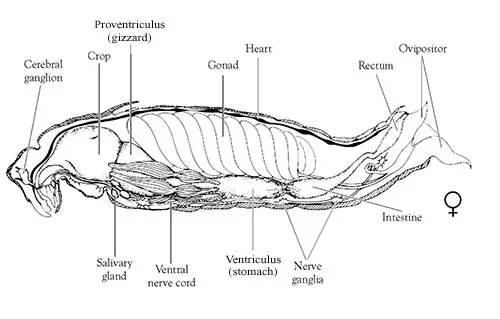
Adults are heavy-bodied and slow moving, with reduced hind wings that are too small to support flight, a physical trait that defies the aerodynamic optimization seen in smaller species. The forewings are longer but do not allow sustained flying, so these grasshoppers are usually seen walking, climbing, or making only short, awkward jumps, unlike the powerful leaps of a kangaroo. This reduced-flight condition helps students connect structure to function and understand how not all grasshoppers share the same movement strategies. To illustrate grasshopper anatomy, a 3D model is helpful. Using anatomically designed paper shapes, students build a 3D grasshopper model illustrating structure and function. As an added bonus, students can deconstruct their model as an introduction to a grasshopper dissection.

Figure 2 Romalea microptera. Black Lubber Grasshopper. Male.
Figure 3 Romalea (Dictyophorus). Yellow Lubber Grasshopper. Female.

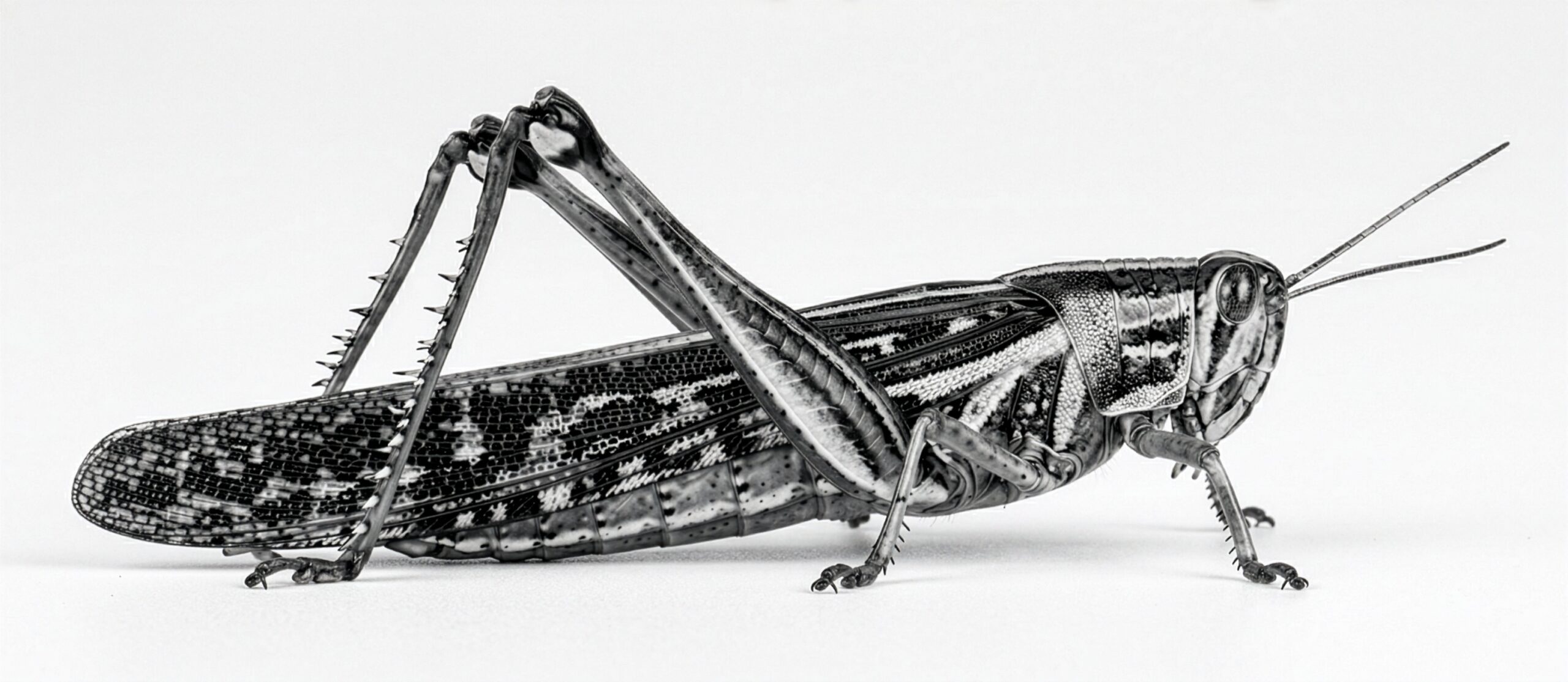
Within the lubber species, males are generally smaller, often measuring about 1.7 to 2.2 inches, while females are larger and may exceed 3 inches, sometimes reaching about 3.5 inches. Their large size and sturdy body make them excellent teaching and dissection specimens because students can easily observe the head, thorax, abdomen, compound eyes, simple eyes or ocelli, antennae, chewing mouthparts, spiracles, and enlarged hind legs. The thorax is divided into three segments, each bearing a pair of legs, and the two posterior thoracic segments also bear wings. Like other insects, lubbers possess an exoskeleton, segmented appendages, and a tracheal respiratory system with spiracles opening along the thorax and abdomen. These features make them useful for introducing the basic body organization of arthropods and insects.

Scientifically, black and yellow lubber grasshoppers are especially valuable because they demonstrate aposematism, or warning coloration. Their bold colors advertise chemical defenses that make them unappealing to many predators. When disturbed, they may raise and spread their wings, produce a hissing sound by forcing air through spiracles, and emit a foul-smelling frothy secretion. Researchers have also noted that eastern lubbers feed on a very broad range of plants, with more than 100 host plants reported, making them polyphagous herbivores. They consume weeds and vegetable crops, and in some places can become significant defoliators. This broad diet gives teachers a natural way to introduce topics such as plant-insect interactions, host preference, herbivory, chemical defense, and the role of insects as primary consumers in food webs. In the field, eastern lubbers can influence plant communities through feeding and also serve as prey for some predators, parasites, and pathogens, despite their defenses.

Grasshoppers have a unique life cycle. They undergo incomplete metamorphosis, developing from egg to nymph to adult without a pupal stage. Females lay clusters of eggs in the soil, often 30 to 50 eggs per mass. The eggs typically overwinter and hatch when temperatures rise in spring. Nymphs emerge wingless and pass through several molts, or instars, before reaching adulthood. Younger nymphs are often black with bright yellow, orange, or red markings, and adults may appear more yellow, tawny, orange, or mostly black, depending on population and developmental stage.

Teachers can use this gradual change in form to help students understand growth, molting, and the concept that immature insects may resemble smaller versions of adults. These visible changes make grasshoppers excellent for teaching life cycles, growth, and insect development. Their anatomy, behavior, and ecological importance also make them valuable classroom study organisms.

Grasshoppers are excellent for teaching structure and function in elementary science. As students advance, they can also be used to explore a variety of scientific concepts, including comparative zoology, animal classification, and evolution. Because grasshoppers are familiar to most students, small, and easy to store, they are often a preferred choice for classroom study and dissection.

This article was originally published in Carolina Tips®, Vol. IV, No. 6 (September 1941); it was revised June 2026.

Additional Resources

Further Reading

BugGuide. “Species Romalea microptera—Eastern Lubber Grasshopper.”

NCBI Taxonomy Browser. “Romalea microptera.”

University of Florida IFAS Extension. “Eastern Lubber Grasshopper, Romalea microptera.”

University of Florida IFAS Gardening Solutions. “Eastern Lubber Grasshoppers.”

NC State Extension. “Grasshoppers on Ornamental Plants.”

Florida Department of Agriculture and Consumer Services. “Eastern Lubber Grasshopper.”

Schowalter, T. D. “Biology and Management of the Eastern Lubber Grasshopper.” Journal of Integrated Pest Management, 2018.

Newsletter Signup

Get the latest news, free activities, teacher tips, product info, and more delivered to your inbox.

;