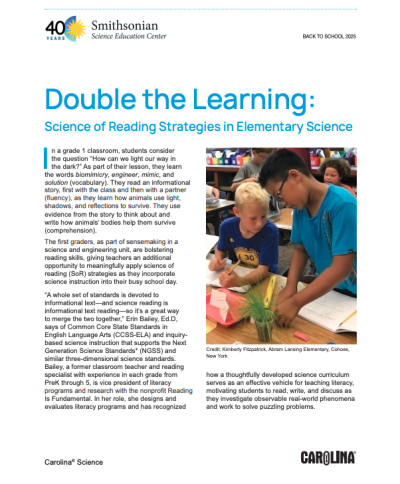
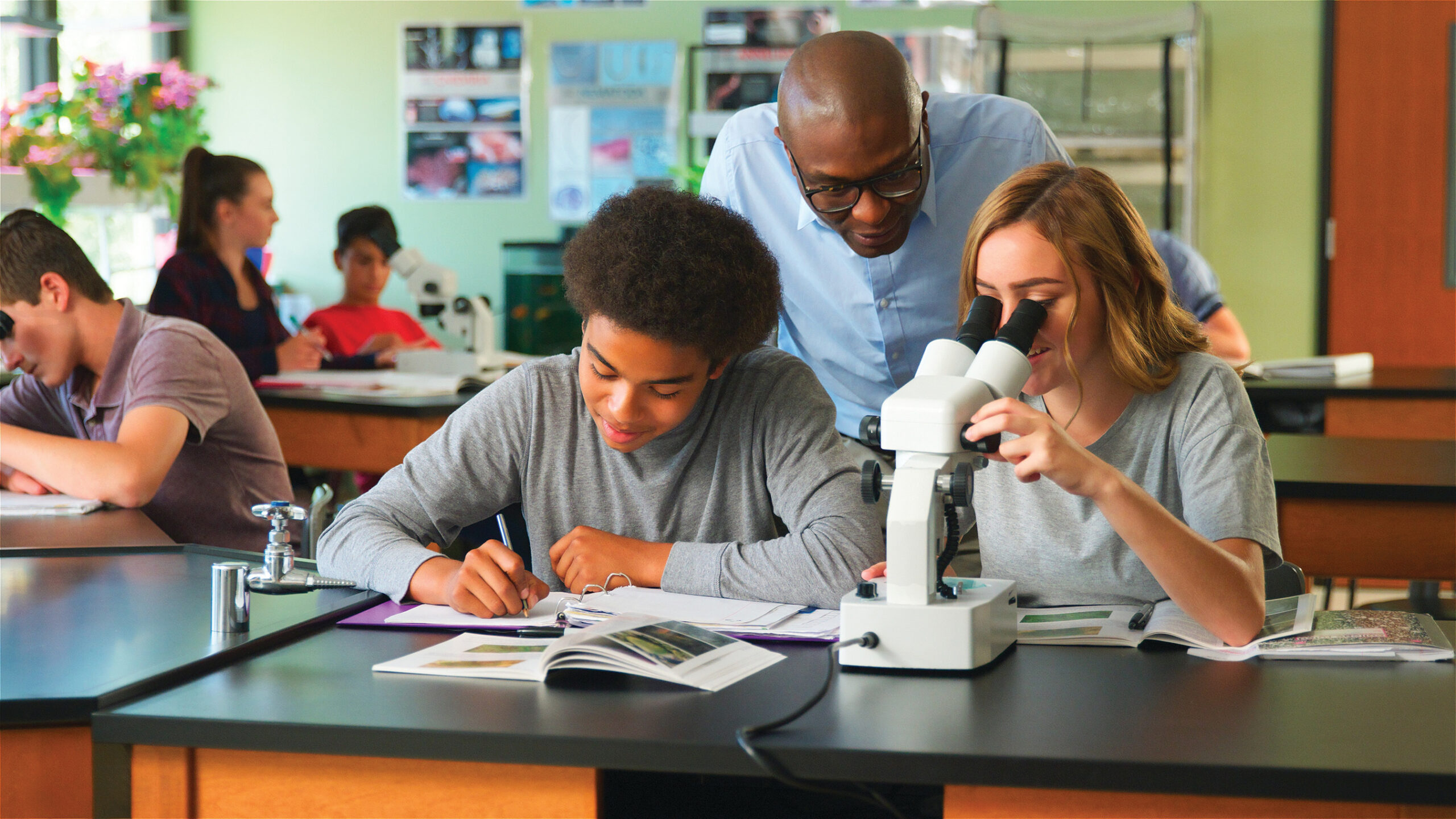
The Science of Reading practices can be meaningfully integrated into hands-on and inquiry-based science instruction. Scientists and engineers spend half their time reading, interpreting, and producing text.
In this webinar, former reading specialist and literacy expert, Dr. Erin Bailey, and Smithsonian Science Education Center Manager of K–8 Curriculum, Dr. Sarah Glassman, partner to share how Science of Reading and authentic science instruction are a natural fit.
Viewers can learn: • How phenomenon- and problems-driven science instruction can build students literacy skills • What the Science of Reading says about informational texts • Strategies for integrating Science of Reading practices into interdisciplinary science curricula in elementary grades • Results from a 5-year randomized controlled trial studying the integration of reading and science at the elementary level
We’re pleased to provide this free webinar to elementary school leaders, district leaders, and all interested educators.
Learn More
Double the Learning: Science of Reading Strategies in Elementary Science
Reading provides a unique opportunity to facilitate science learning. Informational text in science instruction gives students a chance to engage in scientific inquiry in multiple forms and, with prompting and support, read text appropriately complex for their grade level.
Carolina is teamed with teachers and continually provides valuable resources–articles, activities, and how-to videos–to help teachers in their classroom.