This introduction to fungi focuses on the production of asexual spores by three fungi: Aspergillus, Penicillium, and Rhizopus. Formerly Aspergillus and Penicillium were classified in a group called deuteromycetes (imperfect fungi) because the sexual stages, if any, of their life cycles were unknown. Currently, they are placed in the phylum Ascomycota (sac fungi), and their older classification has been abandoned. Rhizopus belongs to the phylum Zygomycota.
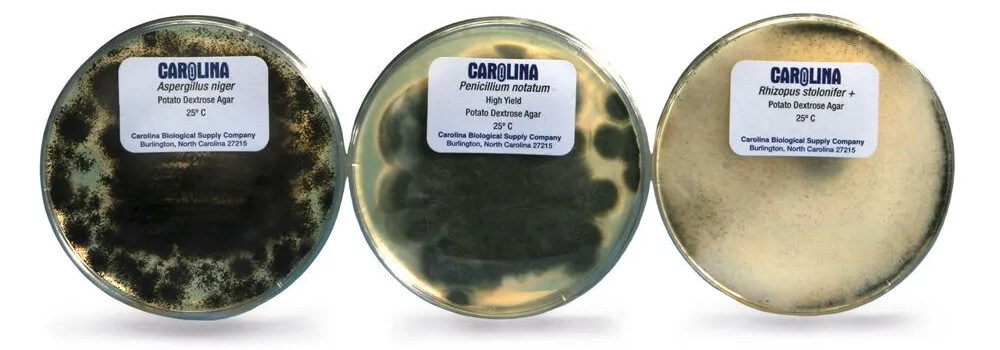
This activity requires that students work with fungal cultures and open flames. All work surfaces must be wiped down with disinfectant before and after the lab. Have students wash their hands before and after the lab. Destroy any cultures remaining at the end of the lab by autoclaving or by flooding them with disinfectant overnight before proper disposal.
Ensure that students understand and adhere to safe laboratory practices when performing any activity in the classroom or lab. Demonstrate the protocol for correctly using the instruments and materials necessary to complete the activities, and emphasize the importance of proper usage. Use personal protective equipment such as safety glasses or goggles, gloves, and aprons when appropriate. Model proper laboratory safety practices for your students and require them to adhere to all laboratory safety rules.
If you are using the Student Independent Fungi Study Kits, have students view the prepared slides included in the kits. You may perform this lab in conjunction with our Introduction to Fungi LabSheet, which addresses the production of sexual spores by two representative fungi.
Observe your slide using the scanning and low-power lenses of the microscopes. Look for the spores. Compare this slide of the Penicillium with slides of Aspergillus and Rhizopus.
Are the spores of Penicillium produced in a sporangium as are those of Rhizopus, or are the more like those of Aspergillus?
Many mycologists (scientists who study fungi) use the term mitospore for the asexual spores of fungi.
Why do you think they use that term (i.e., what does that term suggest)?
Get the latest news, free activities, teacher tips, product info, and more delivered to your inbox.