This article was originally published in January 1980 and shows the uncertainty, concern, and drive for solutions against acid precipitation during that time. In the decades since, technology, legislation, and attitudes have changed. The story of acid rain in the United States shows how citizens, corporate America, and legislators can positively impact a large-scale national issue. The 1980 article is intact as a “before” story. A new section with current data and sources closes the article. Students rarely get to experience the identification of a problem, proposed solutions, and the initial results of implemented solutions. Mitigating acid deposition is an example of the scientific process on a grand scale.
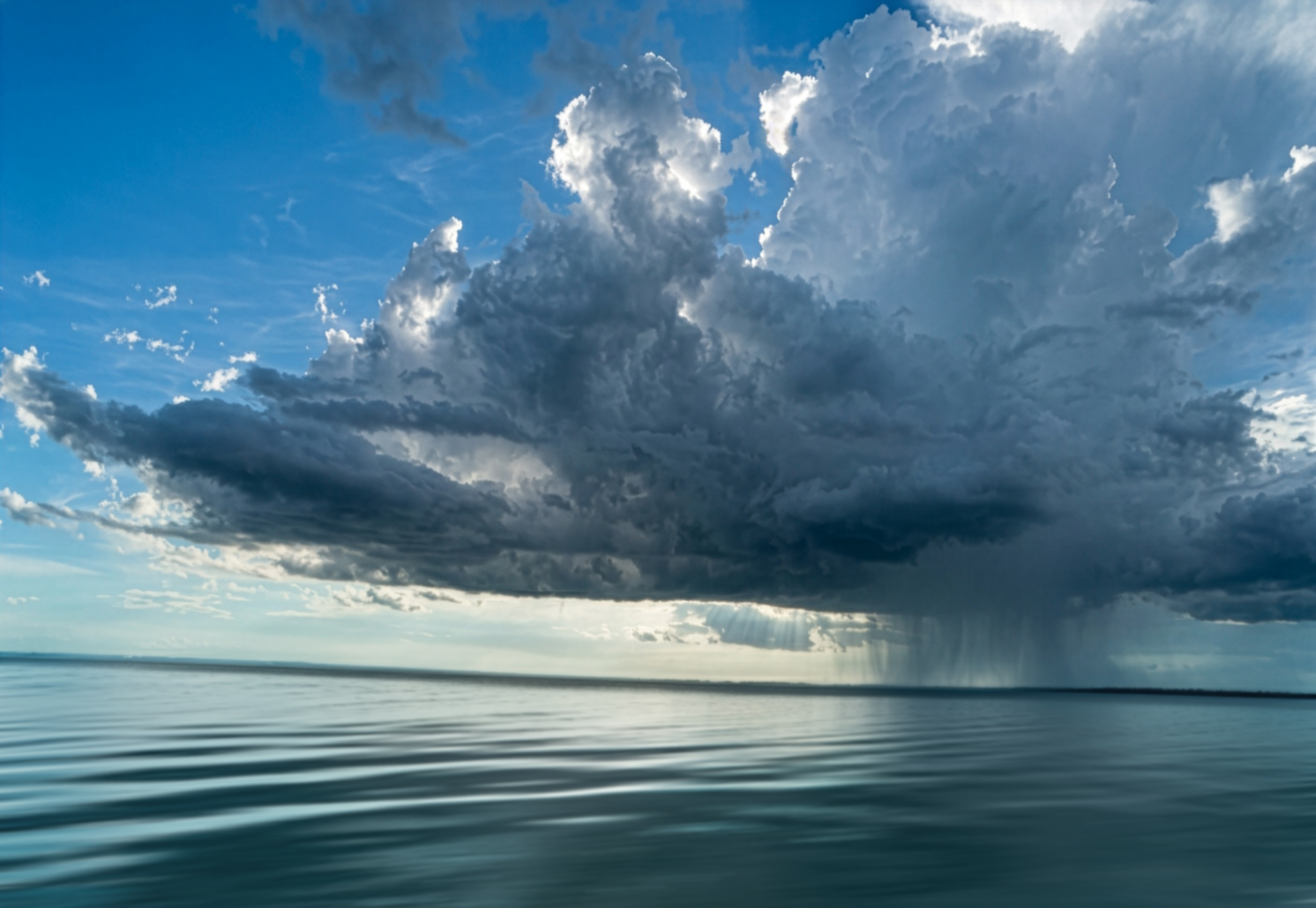
The autumn rains falling over eastern North America bathe our continent in acid. The raindrops splattering against your windowpane are likely to be a dilute solution of nitrate and sulfuric acids. Sometimes, they may be as acidic as vinegar. Even if you live far from centers of industry and human congestion, your rainfall may be an acidic solution. The problem is spreading from the industrialized east into the open spaces of the west: high in the Colorado Rockies, not far from the Continental Divide, acid precipitation falls over the remote Como Creek watershed.
The acid rain that acidifies aquatic habitats and damages our forest ecosystems is formed when precursors like oxides of sulfur and nitrogen are washed from the air by rainwater, forming a solution of sulfuric and nitric acids. Excess sulfur and nitrogen compounds pour into the atmosphere from fossil fuel combustion. But if we’ve created acid rain, why can’t we control it?

The story of acid rain serves to show the fundamental conflicts that keep humans trapped in the spiral of acidifying our environment and its subsequent deterioration. These conflicts are split into two kinds. The first clash is between the need for immediate action and the need for complete scientific information to guide that action. Paradoxically, action without knowledge may be catastrophic, but waiting to act until we know everything may be catastrophic, too. For example, two or three decades ago, industry began building taller smokestacks to reduce local air pollution. This solution worked, but, as we’ll see, it contributed to the regional problem of acid rain. Our knowledge was too incomplete to anticipate this result.
Today, on the other hand, acid rain is almost certainly damaging our lakes and forests, but because the specific causes of acid rain and its harmful effects aren’t completely understood, the best course of action is unclear. By the time we understand the problem fully, however, the damage may be irreversible.
The second dilemma involves a conflict between apparently incompatible values: pollution is usually the unfortunate side effect of some activity which truly benefits society. Coal, a high-sulfur fuel, contributes more heavily to the acid rain problem than does oil, but burning coal offers the political independence of using our own domestic fossil fuel reserves. Controlling sulfur emissions, whether by burning expensive foreign oil or by applying technology to the combustion of coal, is expensive. Inevitably, the costs are put on the taxpayer and the consumer. But in the long run, couldn’t pollution itself be more expensive?
These two conflicts—the need for action versus the need for knowledge and the cost of pollution versus the cost of controlling it—are closely interrelated. Learning what we must know to make informed decisions is itself expensive: in August of last year, President Carter called for an annual allotment of $10 million to acid rain research.
A closer look at the acid rain problem, its history, and the long-term effects of acid deposition, is instructive not only in itself but as an example of the kinds of dilemmas that we face in tackling any of our environmental problems, including climate change.
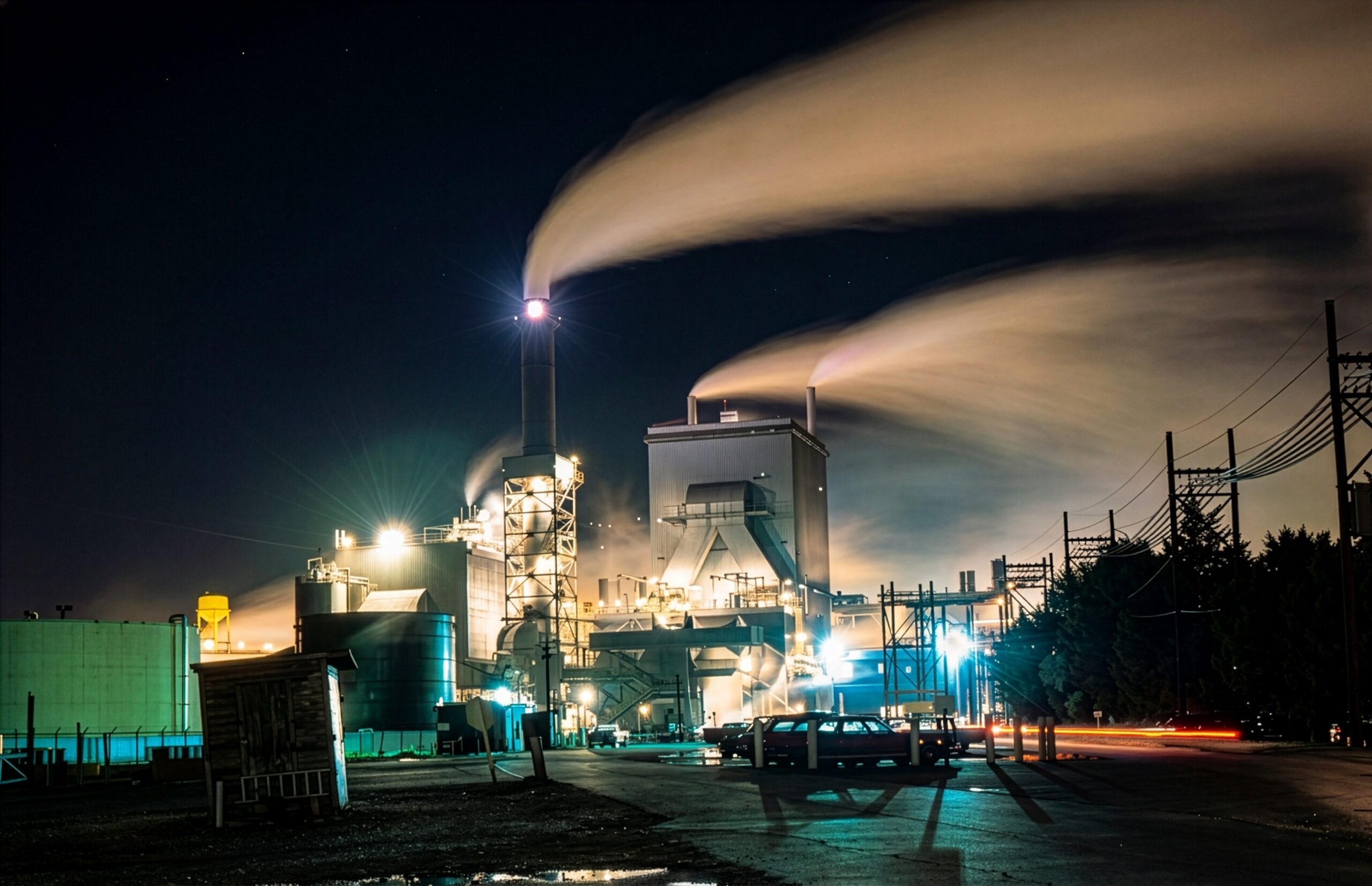
![FIGURE 4 The towering smokestacks built to alleviate local air pollution send noxious gases high into the atmosphere, contributing to the regional problem of acid rain. [Photograph from “Acid Rain—The Choice is Ours” 35-mm transparency set (48-1360) and filmstrip (52-3442).]](https://knowledge.carolina.com/wp-content/uploads/2026/07/Fig_04_F.jpg)
During the Industrial Revolution, the growth of coal-burning industries expelling soot into the air soon created serious local pollution. Soot consists of airborne particulate matter, or fly ash, which contributes to dry deposition of acidic particles. Clinging to the fly ash particles is sulfuric acid, formed from water and sulfur dioxide. The colorless sulfur dioxide gas is generated during the combustion of high sulfur fuels such as soft coal, while nitrogen dioxide and other nitrogen oxides, produced in the same way, color the air with a brown haze. Together, these emissions create the atmospheric condition known as “London smog.”
The gaseous oxides of nitrogen and sulfur irritate the eyes, nose, and throat. Like carbon monoxide, nitrogen oxide combines with hemoglobin far more readily than oxygen does, and at sufficiently high concentrations can cause death by asphyxiation. It also lowers resistance to infections and increases susceptibility to various respiratory diseases. Inhalation of sulfuric acid, whether clinging to particulate matter or suspended as a mist in the air, irritates the respiratory tract and damages the cilia in the lungs. Pulmonary hemorrhage and permanent lung damage have been induced in laboratory animals by exposure to sulfuric acid mist. Methylated sulfates, which are organic derivatives of sulfur oxides, are both mutagenic and carcinogenic. One study showed that these compounds were present in significant amounts in the respirable particulate matter generated by coal-fired power plants.
However, it didn’t require very sophisticated understanding of its hazards to know that the irritating haze of coal smoke was unhealthy. And it soon became apparent that it was detrimental not only for human health but for other living things as well. By the turn of the century, emissions from smelters processing ore at Copper Hill, Tennessee, had completely destroyed 28 km² of deciduous forest. Examples of damage to local ecosystems by ore smelters, which are among the major users of coal, are numerous. One of the most dramatic is in Sudbury, Ontario, Canada: a single smelter complex expels 1 to 3 percent of the total worldwide sulfur emissions every year. Nineteen hundred km² of forest suffer damage under these emissions.
What could be done about the local pockets of industrial air pollution that contaminated cities and damaged forests? One simple and obvious solution was to send the emissions high into the sky to be swept away by the winds. Following several especially severe incidents of London smog in the 1950s, Great Britain adopted a policy of building taller and taller smokestacks to alleviate the problem, and other nations soon followed suit.
The tall smokestacks brought fresh air to industrial areas. The air moving hundreds of meters above the earth’s surface was a convenient dumping ground that carried the pollution well out of sight—and out of mind. Who could have predicted that fish in Sweden would begin to die because the smokestacks of western Europe towered higher and higher?
The oxides of sulfur and nitrogen deposited high in the atmosphere had to go somewhere. Carried on prevailing winds for several days, the oxides have time to undergo photo-chemical reactions which convert them into acids. Rain and snow, known as wet deposition, then wash the acids from the air. Sweden and Norway are in the path of the southerly winds blowing from western Europe, carrying with them Europe’s acid wastes. In 1959, a Norwegian Fisheries Inspector was the first to attribute declining fish populations to the acidification of Scandinavian lakes and streams, a phenomenon also later observed in Canadian waters. The region of acid deposition has steadily spread, and today this acid precipitation falls over most of northwestern Europe.
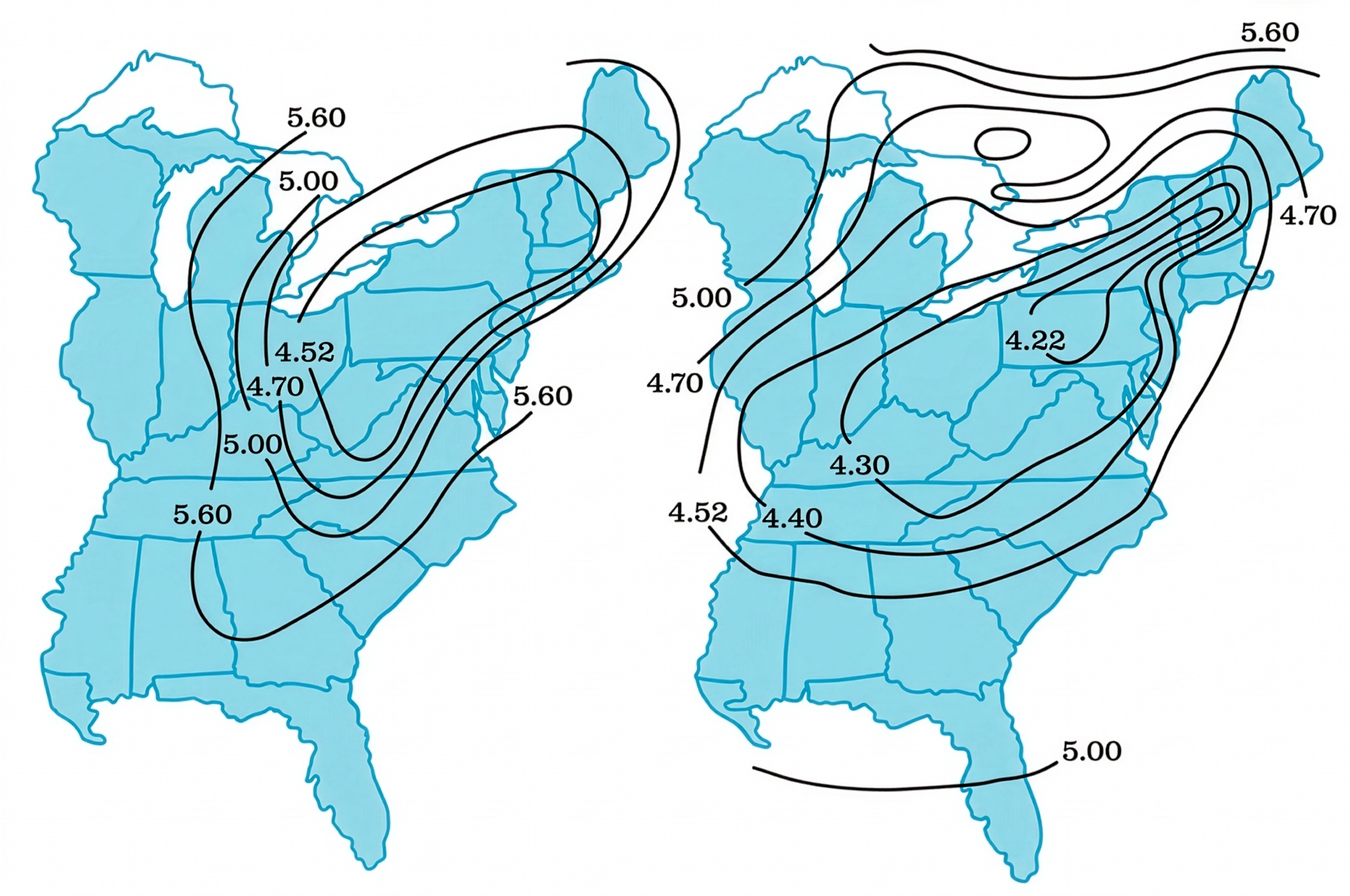
Acid rain was also falling over much of the northeastern and eastern United States by the mid ‘50s. Since that time, rainfall in the northeast has become still more acidic, and the region receiving acid precipitation has spread to include much of North America east of the Mississippi.
One recent report shows increasingly acid precipitation falling over a remote area in the Colorado Rockies. The nearest center of human population is the Fort Collins-Denver-Boulder area lying 20 to 50 km to the east. But the prevailing winds over Como Creek blow from the northwest, so they may be bearing pollution from as far away as Salt Lake City, 600 km to the west, or from some still more distant source.
Just how acid is acid rain? How much blame for it can be placed on human activity? Many of the figures that follow are rough estimates at best, but there is enough agreement among the estimates from various sources to suggest the magnitude of the problem.
One common measure of acidity is the pH scale, which ranges from 0 to 14. Pure water is neutral at pH 7, and lower pH values represent acids. Each unit change in pH represents a tenfold change in acidity, making a solution with pH 4 10 times as acidic as one with pH 5.
Normal rainfall is not pure water, and its pH is not 7. Water vapor in the atmosphere reaches an equilibrium with gases in the air, among them carbon dioxide. Dissolved in water, carbon dioxide produces a solution of carbonic acid. This weak acid dissociates slightly, lowering the pH to 5.6—the lowest pH expected for rainfall in an unpolluted atmosphere. However, the actual pH of normal rain and snow is often above 6 because of the presence of airborne dust from slightly alkaline soils, which increases the alkalinity of the precipitation.
Not surprisingly, there are few records of rainfall chemistry from the days before anyone suspected an issue. However, rain and snow that fell before the Industrial Revolution have been preserved in glaciers and ice sheets; this “fossil rain” generally has a pH above 5. The rain falling today over eastern North America and western Europe has an average annual pH of 4 to 4.5. Individual storms may be much more acidic—a 1974 storm over Scotland dumped rain as acid as vinegar, with a pH of 2.4.
Scientists estimate that about 60 percent of the acidity of rainfall is due to sulfur dioxide in the atmosphere, while the remaining 40 percent is due to nitrogen oxides (NOx). It is exceedingly difficult to estimate just what proportion of these atmospheric oxides is generated by human activity, but it is probably around as much as that produced by natural sources. In the natural biogeochemical cycles of sulfur and nitrogen, these elements spend only a short time as atmospheric oxides. The largest reservoir of nitrogen is the gaseous N, in the air, while most of the earth’s sulfur is tied up in soils and sediments.
Natural sources of atmospheric sulfur include weathering of the earth’s crust, airborne sea salts, volcanoes, and the activity of anaerobic sulfur bacteria in lakes, bogs, and seashores. One report estimated in 1971 that the rate of sulfur introduction from fossil fuels was roughly equal to that from anaerobic areas and volcanoes combined. The huge smelter complex in Sudbury, Ontario, is thought to have emitted as much sulfur every year for the last decade as all of the world’s volcanoes. The US Environmental Protection Agency estimates that 30 to 50 percent of the sulfur dioxide in this country’s air comes from human activity. In southern Sweden, as much as 70 percent of the atmospheric sulfur may be from human sources—most of them outside of Sweden—and in the coal areas of western Europe, the estimate rises to 90 percent.
The actual quantity of sulfur dioxide that the United States emits into the atmosphere annually is about 20 million tons, although estimates for these emissions of SO2 vary somewhat. Of this, roughly two-thirds is produced by the combustion of fossil fuels in power plants. The EPA estimates that United States power plants alone produced 18.6 million tons of sulfur dioxide in 1975, and it predicts that the figure may rise to 20 to 24 million tons by 1995. Most of the sulfur dioxide emissions originate in the heavily industrial upper Ohio Valley and the Midwest; from here, prevailing westerly winds carry them over eastern North America. Among the fossil fuels, coal is the worst culprit. United States coal reserves typically contain more than 3 percent sulfur, compared to only a few tenths of a percent for petroleum. For this reason, the EPA estimates that President Carter’s coal conversion plan could lead to a 10 to 15 percent increase in acid rain.
If coal-fired power plants are the largest single source of the sulfur dioxide component of acid rain, where do most of the nitrogen oxides and NOx emissions come from? Gasoline-powered automobile engines contribute 40 percent of the total. In areas of extremely heavy traffic, such as Los Angeles County, nitrogen oxides from transportation contribute more heavily to acid rain than sulfur dioxide. However, the next largest single source of nitrogen oxides is, once again, electrical power plants, which contribute 30 percent of the total. This means that the process of power generation alone produces roughly half of the acid rain that falls across the continent.
![FIGURE 7 Heavy industry, especially electrical power generation, is the main source of the sulfur and nitrogen compounds that are carried across the continent by prevailing winds, finally to fall as acid rain. [Photograph from “Acid Rain—The Choice is Ours” 35-mm transparency set (48-1360) and filmstrip (52-3442).]](https://knowledge.carolina.com/wp-content/uploads/2026/07/Fig_07_F.jpg)
![FIGURE 8 Horn Lake is one of 170 Adirondacks lakes whose waters, once teeming with fish, are now acidic and nearly lifeless. [Photograph from “Acid Rain—The Choice is Ours” 35-mm transparency set (48-1360) and filmstrip (52-3442).]](https://knowledge.carolina.com/wp-content/uploads/2026/07/Fig_08_F.jpg)
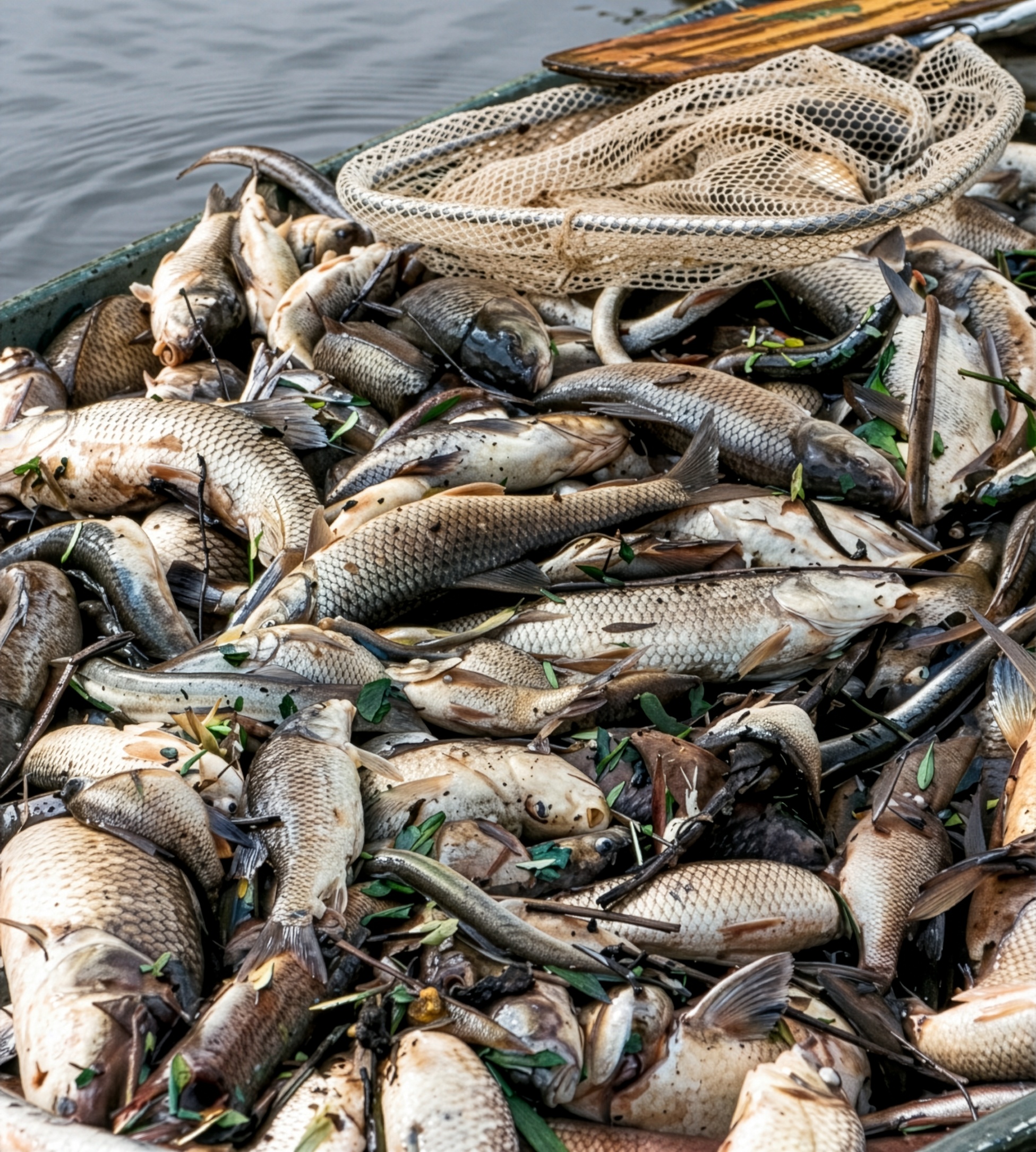
In 170 mountain lakes in the Adirondack Mountains, no fish swim—the waters are too acidic to support them. Two-thirds of the 1,500 lakes in the million-acre Boundary Waters Canoe Area on the Minnesota-Ontario border are approaching a pH of 5, which is critical for fish. Although the Great Lakes are big enough to dilute a lot of acid, two bays of Lake Huron are becoming dangerously acidic, and even in the mountains of western North Carolina, the pH of streams and lakes dips alarmingly after major storms, although for now they are still able to recover.
Mountainous areas such as the Appalachians and the Adirondacks are especially prone to receive acid rain as moisture-laden air masses rise and cool over the mountains. Ironically, these areas are also the most sensitive to acid precipitation. Their thin soils are weathered from siliceous bedrocks such as granite, which have little capacity to buffer or neutralize the acid.
Aquatic ecosystems such as mountain lakes, surface waters, and other freshwater bodies are particularly sensitive to changes in acidity. Healthy lake water may have a pH as high as 8 because of the presence of calcium bicarbonate. Acidification removes the calcium and magnesium, and at pH 7 the declining calcium levels may affect the hatching of salamander eggs in the water. As the pH drops toward 6, snails and small crustaceans begin to disappear. The biodiversity and kinds of species that form the lake’s complex food web decline rapidly—a stark contrast to the nutrient-rich process of eutrophication—and the phytoplankton at its base begin to die. Bacterial decomposers are also killed, and organic matter builds up on the bottom.
Changes in the calcium balance disrupt ion exchange across the gills of fish and prevent fish egg production. Toxic heavy metals such as mercury, released by the acidic water, pose an additional threat. As the pH approaches 5, acid-loving mosses, fungi, and algae choke out the lake’s other plants. More fish species die. Sphagnum moss creeps into the water, further depleting the calcium. At pH 4.5, all the fish and most of the frogs and insects are dead. The lake is clear and blue—and nearly lifeless.
The impact of acid rain on forest ecosystems is less well known because of the difficulty separating the effects of numerous environmental pollutants. Growing evidence from laboratory and field studies suggests that acid rain attacks the forest on two fronts. As it seeps into the soil, it leaches away valuable mineral nutrients while making toxic metals more soluble, so that plant roots take up these poisons instead of the lost nutrients. Soil microorganisms that break down organic matter and recycle its nutrients are killed by the acid, making the soil poorer still. Even the nitrogen-fixing bacteria that form nodules on the roots of plants such as legumes become scarcer as the pH drops.
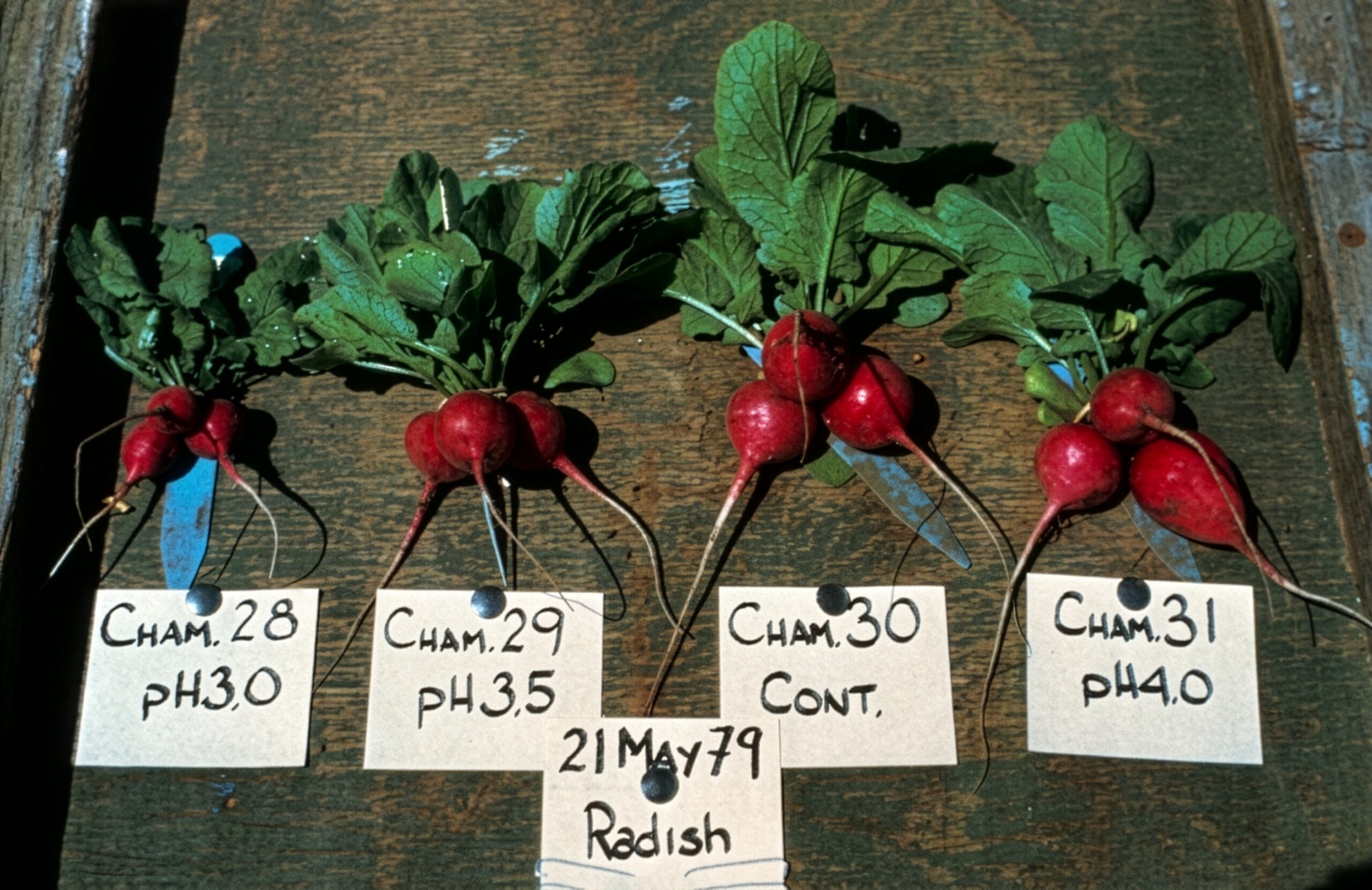
Acid rain impacts the foliage as well as the soil, eating through the protective waxy cuticle of leaves, damaging photosynthetic tissue and distorting the chloroplasts. Weakened trees may be more susceptible to attack by disease and insects. Young trees are especially sensitive to acid rain, which inhibits seed germination, stunts seedling growth, and inhibits bud formation. The growth of entire forests, including red spruce in Scandinavia and the northeastern United States, may be inhibited by decreased photosynthesis and other effects. There is accumulating evidence that acid rain may also damage crop plants such as bush beans, soybeans, radishes, lettuce, tomatoes, and apples.
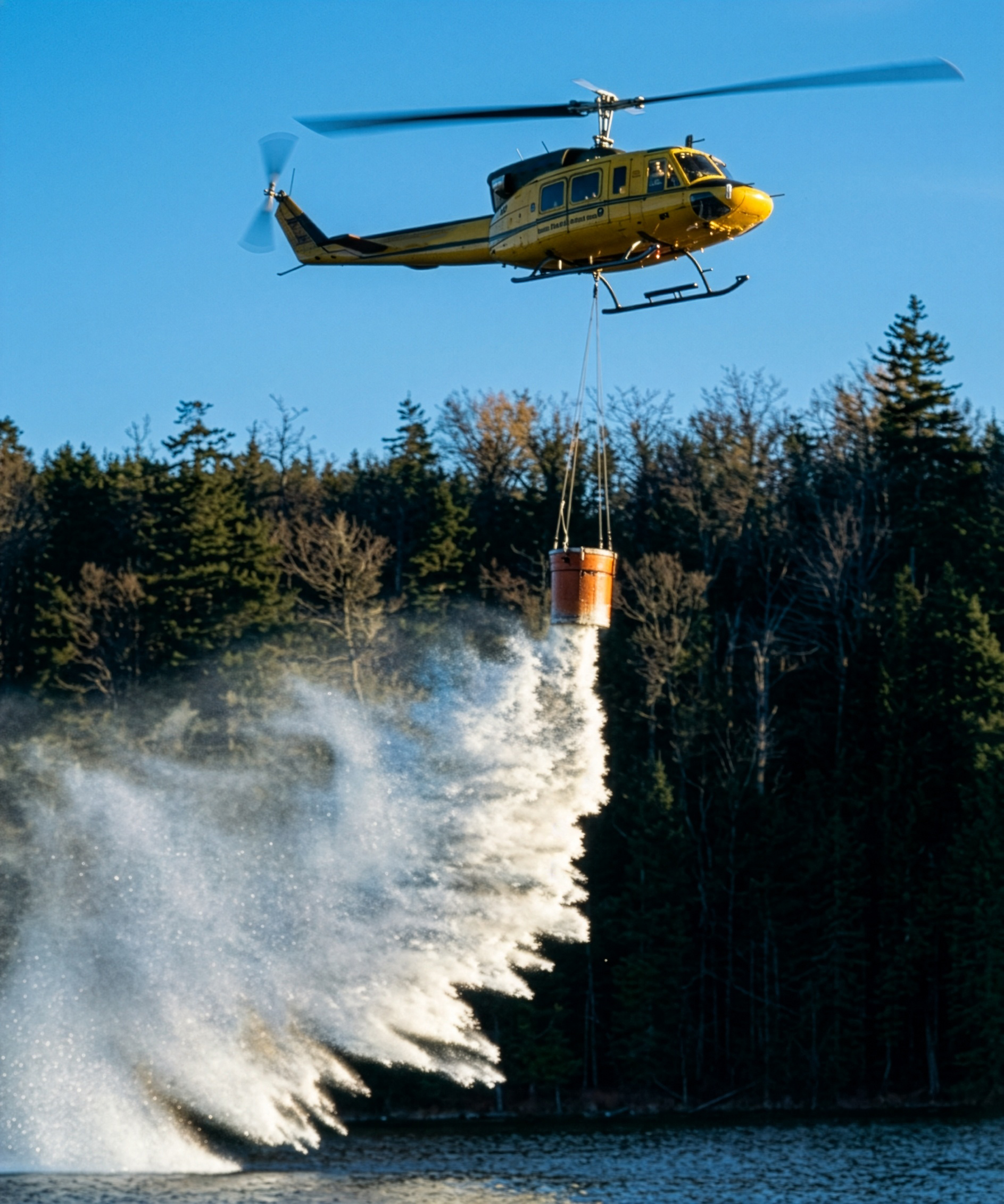
What can be done to halt the blight of acid rain? The stop-gap measure of adding lime to lakes may keep them alive until some long-term solution is found, but it’s an expensive and complex strategy. Sweden spent $2.5 million on liming lakes in 1979, but 10 times that amount would be needed to treat all 20,000 of its dying lakes. Adding lime may actually increase the toxicity of metals released by the acid, so it has sometimes killed the trout and salmon it was designed to save. The New York State Department of Environmental Conservation has been trying the technique in a few lakes, but estimates that it costs $10 to $20 per pound of trout. The neutralizing effect of the lime may last several years—or only a few months.
There’s also the strategy of trying to control the damaging emissions at their source. One option is to use low-sulfur fuels, but the United States now plans to adopt a $10 billion coal conversion plan which may substantially aggravate the problem.
Is it possible to burn coal cleanly? Washing coal before it is burned can reduce emissions by 10 percent, but it creates massive amounts of solid wastes to be disposed of. The most successful technique is flue-gas desulfurization, which uses solutions of limestone or other alkalis to absorb the sulfur dioxide from the flue gases. Such “scrubbers” are in operation on new power plants built to conform to the EPA’s ruling that 70 to 90 percent of the sulfur dioxide must be removed from their emissions. Existing power plants aren’t covered by this regulation, and this is why the pending coal conversion is expected to increase the fall of acid rain.
The first EPA ruling aimed directly at the issue of acid rain came in June 1979, when the agency ordered two Ohio power plants to reduce their sulfur dioxide emissions by 100,000 tons per year. The standards for these plants had been relaxed a year earlier because the Ohio coal industry claimed that it would suffer if it had to purchase lower sulfur coal from out of state. A new computer model of the sources and movements of pollutants led the EPA to overrule the industry’s protests. The Agency is also considering requiring control devices on older power plants and the possible early retirement of the worst emitters among them.
Still, all these control measures cost money. How much should we be willing to spend when our data on acid rain are still sketchy, though suggestive? And how much must we know before we act? Groups such as the American Petroleum Institute and the Electric Power Research Institute say that controls are unwarranted at present because existing data are too poor to establish beyond a doubt that acid rain is indeed due to anthropogenic activity, or even that it is actually increasing, or that it negatively affects the environment.
Several research programs are underway to try to find answers to the many questions that remain about acid rain: What is the mechanism of acid formation in the atmosphere? What will a more complete monitoring network reveal about increasing acidity and the spread of acid rain? Which regions of the continent are most sensitive? What roles do natural sources and long-range transport of pollutants play? How does acid rain affect soils, forest growth, and crop yields? Is the response of the Adirondacks lakes typical, or do they represent an especially sensitive ecosystem? Just how resilient is the environment?
F. H. Bormann, whose work at the Hubbard Brook Experimental Forest in New Hampshire has contributed much of what is known about the effects of acid rain on entire ecosystems, has pointed out that forest ecosystems have a remarkable capacity to purify the rainwater that filters through them. Forests, in fact, serve as a buffer between humans and their pollutants—but their resilience and buffering capacity are not unlimited. Rather than relying on natural ecosystems to buffer us against our own wastes, we should perhaps consider how much pollution we can afford to place upon this invaluable resource. As Bormann points out, forests provide an extraordinary array of benefits—and they do it on solar energy alone. There is what Bormann calls an ‘inseparable linkage’ between the degradation of natural, solar-powered systems which benefit humans and the growth of fossil fuel-powered human systems. The more coal we burn for energy, the more our acid rain damages the solar-powered lakes and forests that produce food and lumber, filter our air and water, control erosion, and provide us with recreation and scenic views. And the more we damage these natural benefits, the more we must rely on polluting fossil fuels for energy to replace them.
Since 2000, acid rain in the United States has changed from a high-profile national crisis into a managed but still important environmental issue. Acid deposition includes both wet deposition such as acidic rain, snow, and fog, and dry deposition such as acidic gases and particles that settle onto land, water, buildings, and vegetation. The main human-made precursors are sulfur dioxide (SO2) and nitrogen oxides (NOx) released largely from fossil fuel combustion. These pollutants react in the atmosphere to form sulfuric and nitric acids, which can acidify lakes and streams, damage soils and forests, corrode materials, and contribute to fine particle pollution.
The overall trend from 2000 through 2025 is strongly positive. The US Environmental Protection Agency reports that, from 1995 to 2023, power plant sulfur dioxide emissions fell by 95 percent and annual nitrogen oxides emissions fell by 89 percent under the Acid Rain Program and related power sector rules. In 2023, power plants covered by the Acid Rain Program and Cross-State Air Pollution Rule emitted about 0.65 million tons of sulfur dioxide, down 11.2 million tons from 1995 levels. The EPA also reports that wet sulfate deposition, a key indicator of acid rain, dropped more than 70 percent between 1989–1991 and 2020–2022. Looking more specifically at the 2000s, EPA progress data show a 71 percent reduction in wet sulfate deposition across the eastern United States from 2000–2002 to 2019–2021, with the Northeast and Mid-Atlantic improving by 77 percent.
These changes are closely tied to legislation. The foundation was Title IV of the 1990 Clean Air Act Amendments, which created the Acid Rain Program, the nation’s first large-scale cap-and-trade system for air pollution. Phase II, beginning in 2000, expanded the program to more than 2,000 generating units and set a permanent sulfur dioxide cap for electric generating units in the contiguous United States. Later policies reinforced those gains. The Clean Air Interstate Rule and then the Cross-State Air Pollution Rule addressed pollution transported from upwind states to downwind states, reducing sulfur dioxide and nitrogen oxides that contribute to fine particles, ozone, and acid deposition. The CSAPR framework and later updates used allowance trading, emissions budgets, and monitoring to push additional reductions from power plants in eastern and central states.
Technology also played a major role. Coal-fired power plants installed flue-gas desulfurization systems, often called scrubbers, to remove sulfur dioxide from exhaust gases. Selective catalytic reduction and selective noncatalytic reduction systems reduced nitrogen oxides. Continuous emissions monitoring systems made compliance measurable and enforceable by recording emissions directly from smokestacks. Utilities also switched to lower-sulfur coal, retired older coal units, improved combustion controls, and increased generation from natural gas, wind, solar, and other lower-emitting sources. These technology and fuel shifts helped reduce both acid deposition and co-pollutants such as fine particulate matter.
Scientific monitoring confirms the national improvement but also shows that the issue has not disappeared. The National Atmospheric Deposition Program has monitored precipitation chemistry since 1978 and operates the National Trends Network, which measures major ions and acidity at roughly 250 sites across the United States. The EPA’s Clean Air Status and Trends Network and long-term surface water monitoring programs show that lower sulfate deposition has helped many watersheds recover. The EPA reports an 81 percent improvement in the number of monitored lakes and streams exceeding critical loads during the period when wet sulfate deposition declined. However, recovery can be slow in sensitive ecosystems, especially in the Adirondacks, Appalachians, and high-elevation areas where soils have limited ability to neutralize acidity.
Nitrogen deposition remains a more complicated challenge than sulfur. EPA data show that reductions in nitrogen deposition have been less dramatic because nitrogen comes from more varied sources, including vehicles, agriculture, industrial activity, and combustion. From 2000–2002 to 2019–2021, wet inorganic nitrogen deposition decreased in the Northeast and Mid-Atlantic, but some central and mountain regions saw increases linked to reduced nitrogen forms such as ammonium. Nitrogen deposition can acidify ecosystems, but it can also fertilize waters and soils, contributing to eutrophication and harmful algal blooms.
By 2025, the United States has largely solved the most severe acid rain problem of the late twentieth century, but acid deposition remains relevant for environmental monitoring and policy. The major success story is sulfur: power sector controls, market-based regulation, and cleaner energy have sharply reduced sulfate deposition. The continuing concern is nitrogen, especially from sources outside the traditional power plant focus. Ongoing monitoring, updated interstate air pollution rules, agricultural ammonia management, transportation emissions controls, and clean energy deployment will determine whether the next phase of acid deposition policy matches the success achieved since 2000.

This article was originally published in Carolina Tips®, Vol. 43, No. 9 (September 1980); it was revised June 2026.

Audiovisuals/Scientific Publications Department
Bormann, F. H. (1976). An inseparable linkage: Conservation of natural ecosystems and the conservation of fossil energy. BioScience, 26(12), 754–759.
Likens, G. E., Wright, R. F., Galloway, J. N., & Butler, T. J. (1979). Acid rain. Scientific American, 241(4), 43–51.
Walton, S. (1980). Coal conversion will increase acid rain damage. BioScience, 30(5), 293–295.
West, S. (1980). Acid from heaven. Science News, 117, 76–78.
West, S. (1980). Acid solutions. Science News, 117, 106–108.
National Atmospheric Deposition Program. (n.d.). National Trends Network. https://nadp.slh.wisc.edu/networks/national-trends-network/ [nadp.slh.wisc.edu]
U.S. Environmental Protection Agency. (2026, February 26). Acid rain program. https://www.epa.gov/acidrain/acid-rain-program [epa.gov]
U.S. Environmental Protection Agency. (2026, February 19). Acid rain program results. https://www.epa.gov/acidrain/acid-rain-program-results [epa.gov]
U.S. Environmental Protection Agency. (2026, May 20). Cross-state air pollution. https://www.epa.gov/cross-state-air-pollution [epa.gov]
U.S. Environmental Protection Agency. (2024, April 17). Progress report—Atmospheric deposition. https://www.epa.gov/power-sector/progress-report-atmospheric-deposition [epa.gov]
U.S. Environmental Protection Agency. (2024, September 12). Progress report—Emissions reductions. https://www.epa.gov/power-sector/progress-report-emissions-reductions [epa.gov]
U.S. Geological Survey. (2024, July 10). National Atmospheric Deposition Program (NADP). https://www.usgs.gov/mission-areas/water-resources/science/national-atmospheric-deposition-program-nadp
Get the latest news, free activities, teacher tips, product info, and more delivered to your inbox.