



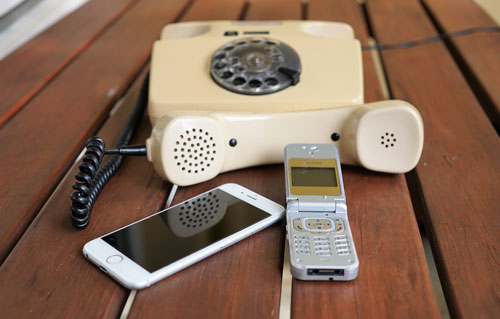
What makes these phones different from each other?
Examples of Student Responses
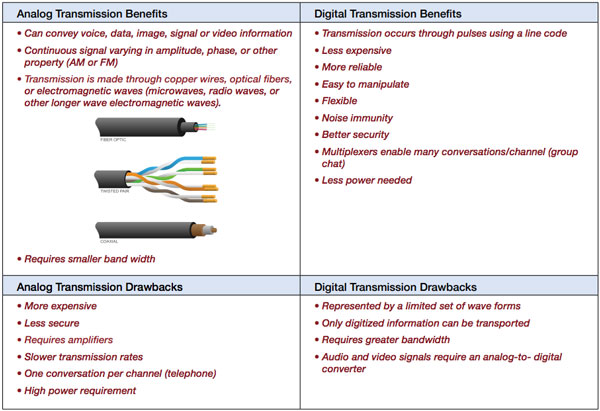
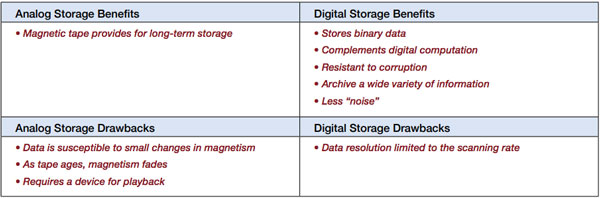
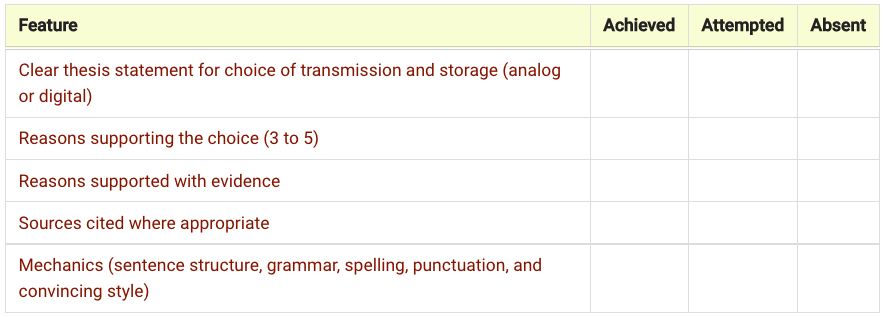
1. Construct an argument, citing evidence, that a large corporation should use either analog or digital information storage and transmission.
Student answers will vary. See a possible rubric below.
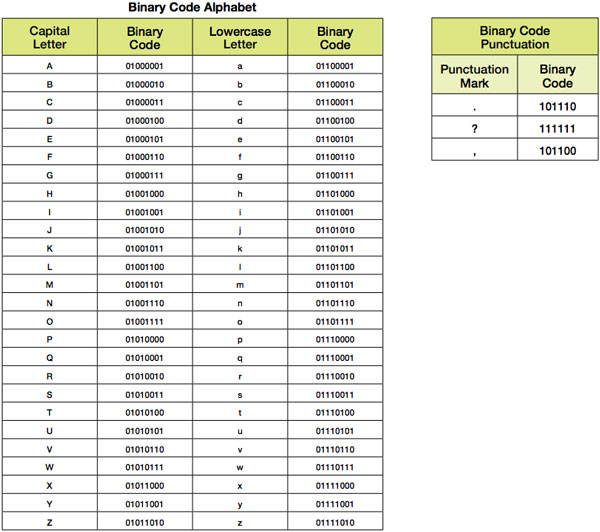
2. Look at the uppercase binary alphabet. What patterns can you identify?
All letters start with 010 and are 8 characters long. The last 5 digits change by one in each place as each letter changes.
3. Look at the lowercase binary alphabet. What patterns can you identify?
All letters start with 011 and are 8 characters long. The last 5 digits change by one in each place as each letter changes.
4. Write your name in binary code.
Amy = 010000010110110101111001
5. Write a short sentence in binary code and give it to a classmate for translation. Check it for correctness.
Student answers will vary. You may wish to put restrictions on sentence length if time is a concern.
6. Look at the phones in the phenomenon again. Based on what you learned, determine the information transmission and storage method for each phone. Include your reasoning.
Tan phone is analog transmission and no storage. There is a cord attached to the phone that must go to a wall jack and the receiver is attached by a cord to the phone base. The flip phone and flat cell phone are digital transmission and storage. There are no cords and pictures, voice, video, and text information can be stored on the phone.

