
What Is Chromatography?
Chromatography is the science of separation. The components of a mixture to be separated are distributed between 2 phases; one is stationary while the other is mobile in a definite direction. First, the mixture being separated is dissolved in the mobile phase. Next, the mobile phase travels through the stationary phase, with components of the mixture traveling at different speeds often based on mass. Each component has a measured retention time allowing for identification of the component.
How Was Chromatography Discovered?
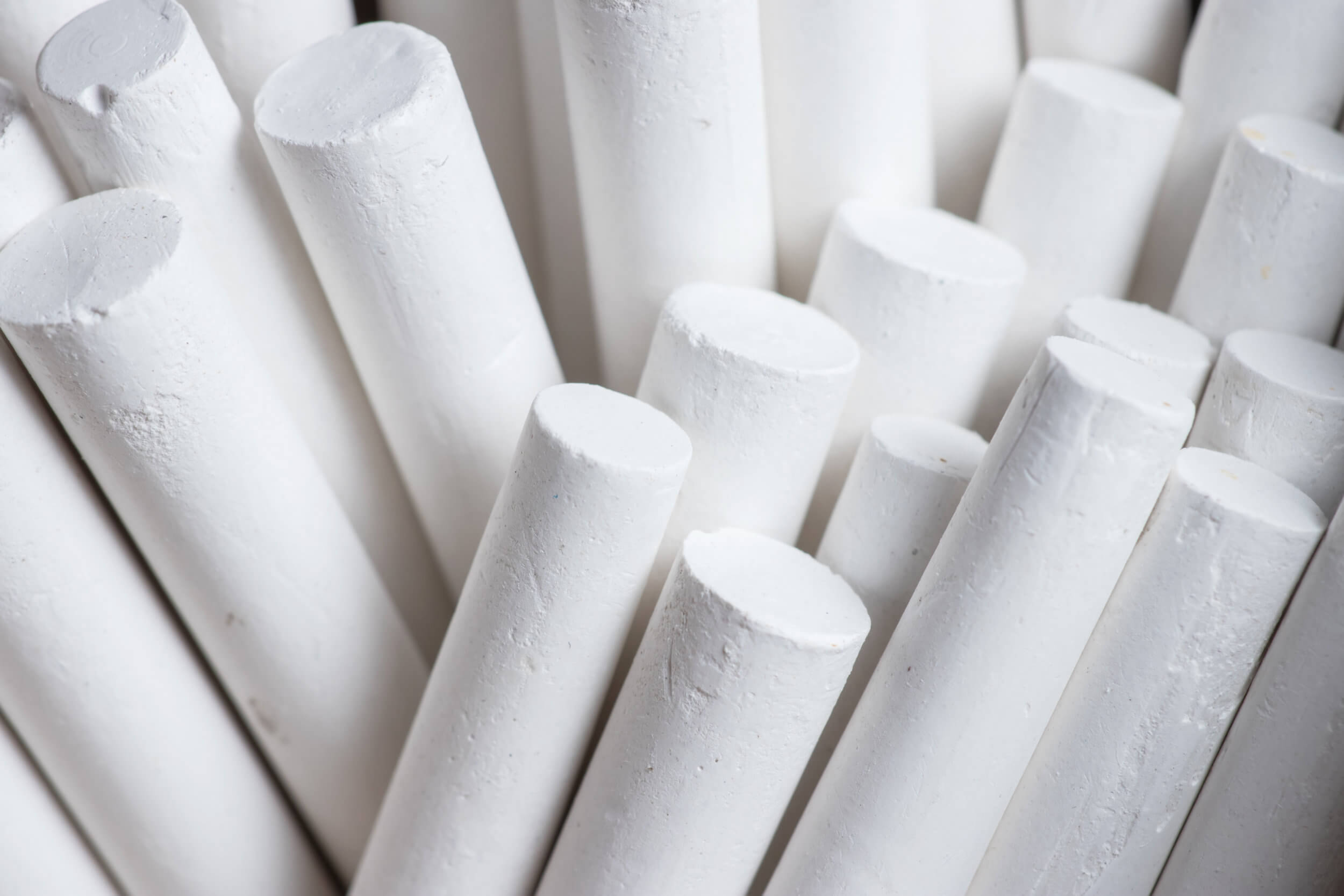
The discovery of chromatography is credited to the Italian-born Russian botanist Mikhail Tswett. Tswett discovered that he could extract the plant pigments that produce the fall colors in leaves by grinding the leaves in a solvent and pouring the resulting mixture through a tube full of powdered chalk (CaCO3, or calcium carbonate). The various pigments separated into colored bands as the mixture percolated down through the chalk. Tswett then carefully removed the column of chalk from the tube and separated the colored bands. Although he received some awards for his work, by the time he died in 1919 chromatography seemed to have made little impact. However, in the 1930s it was rediscovered and then spread worldwide.
What Are Common Types of Chromatography?
- In high-performance liquid chromatography, the mixture being separated is dissolved in a liquid and passed through a solid stationary phase column, often made of a silica material. This technique is used for environmental, industrial, forensics, beverage research, and biotechnology.
- In thin-layer chromatography, the stationary phase is a thin layer of solid material, usually silica-based, and the mobile phase is a liquid in which the mixture of interest is dissolved. Bands on the thin layer are easily photographed. This is used for food chemistry, agriculture pesticide analysis, pharmaceuticals, and toxicology.
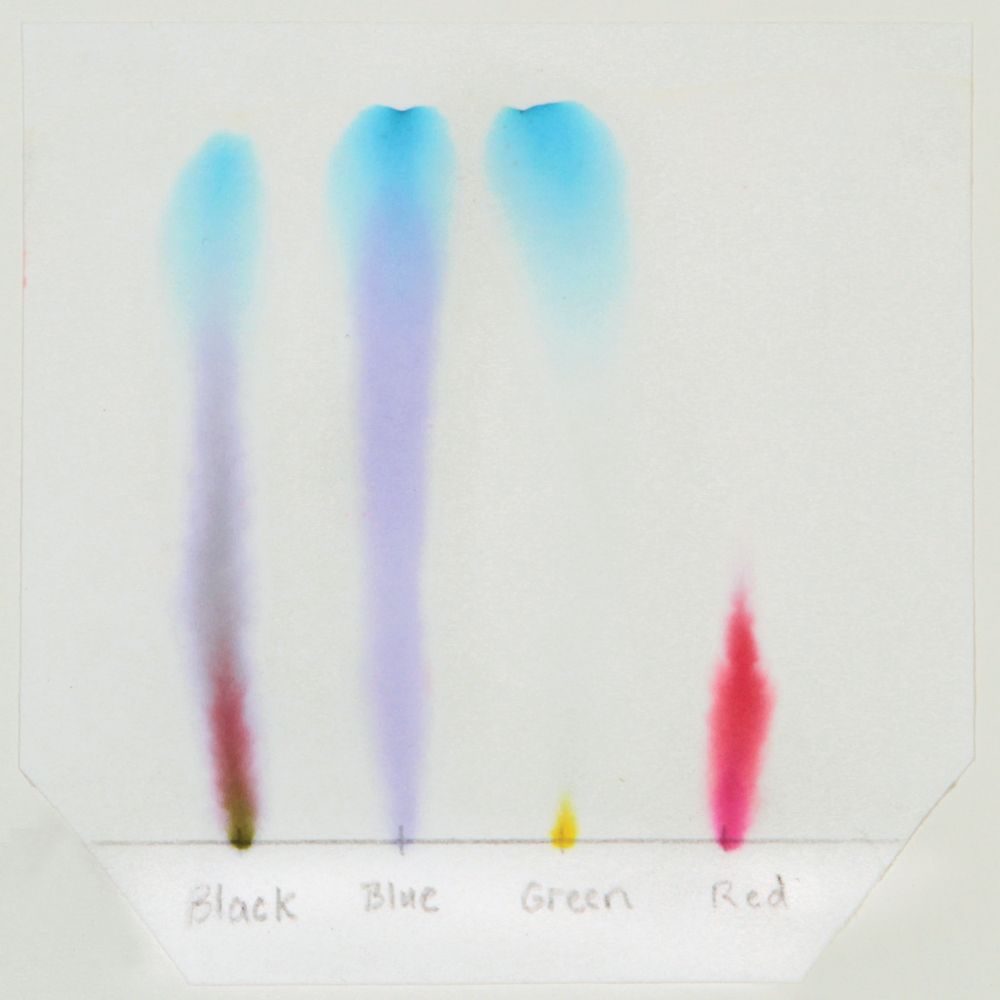
- In paper chromatography, the mixture being separated is dissolved in a liquid and passed through a solid stationary phase of paper. The technique is used for food coloring, plant pigments, and reaction monitoring.
- In gas chromatography, the mixture being separated is vaporized and carried through a stationary phase (usually a metal or glass separation column) with an inert gas, usually nitrogen or helium. This is used for pharmaceuticals, agriculture, medicine, industrial, food and beverage, and cosmetics.

Column Chromatography: Student Activity
Materials needed:
- Box of white chalk
- Assorted black markers with water-soluble nonpermanent ink (Sanford® and Crayola® brands work best)
- Watch glass
- Forceps
- Pipet
- Filter paper
- Ruler
- 50-mL beaker
- Water
- Pencil
- Scissors
- Clock or watch
Procedure
Preparing the chalk
- Stand a piece of chalk on end in the beaker. It must stand on end without falling over. If it does not, try the other end or another piece of chalk.
- Use the pencil to write an “x” on the upward-facing end of the chalk.
- Make a light pencil mark on the side of the chalk about 1″ down from the upward-facing end.
- Remove the chalk from the beaker and set it aside.
- Fill the beaker with 3 mL of water and set it aside.
Preparing the marker solution
- Use the scissors to cut a section out of the filter paper about 1 cm x 3 cm in size.
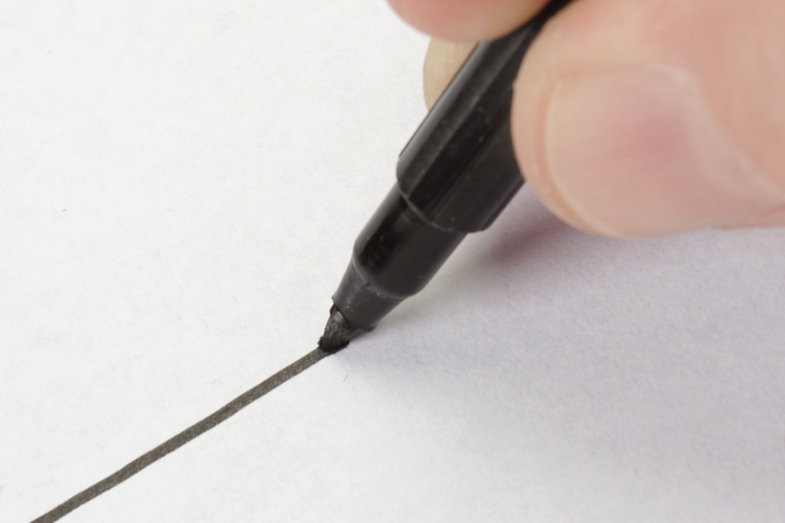
- Select a marker and use it to color both sides of the filter paper so that no areas of white show.
- Place the colored filter paper in the center of the watch glass.
- Fill the pipet with 0.5 mL of water.
- Hold the paper in place with the forceps and carefully cover it with the water in the pipet.
- Stir the paper and water gently for 5 minutes with the forceps.
- Remove the paper from the watch glass and discard it.
- Hold the chalk vertically with the “x” end up and place it in the marker solution. The chalk should absorb all the solution.
- Invert the chalk so that its inked end is up. Hold it in that position.
Priming the chalk
- Fill the pipet with 0.5 mL of water from the beaker.
- Use the pipet to place 1 drop of water on the inked end of the chalk, being careful not to let it overflow the sides of the chalk. Allow the drop to soak in completely.
- Repeat step two 9 times.
- Stand the chalk on its inked end in the beaker. Again, the chalk must stand on end and not fall over.
- Observe the ink solution separate into bands of color as the water is drawn into the chalk.
- Allow the column to develop for 5–10 minutes or until the water reaches the pencil mark on the side of the chalk.
- Remove the chalk from the beaker.
- Record your observations.
Discussion
- Explain what type of chromatography was used to separate ink pigments. This experiment uses a simplified column chromatography or liquid chromatography technique.
- Describe and explain the results of the mixture separation. Results will vary depending on the brand of marker, but all black markers will have blue, red, and yellow bands. (The pigments can be identified specifically as cyan, magenta, and yellow.)
Additional Free Activities

About The Author

Carolina Staff
Carolina is teamed with teachers and continually provides valuable resources–articles, activities, and how-to videos–to help teachers in their classroom.