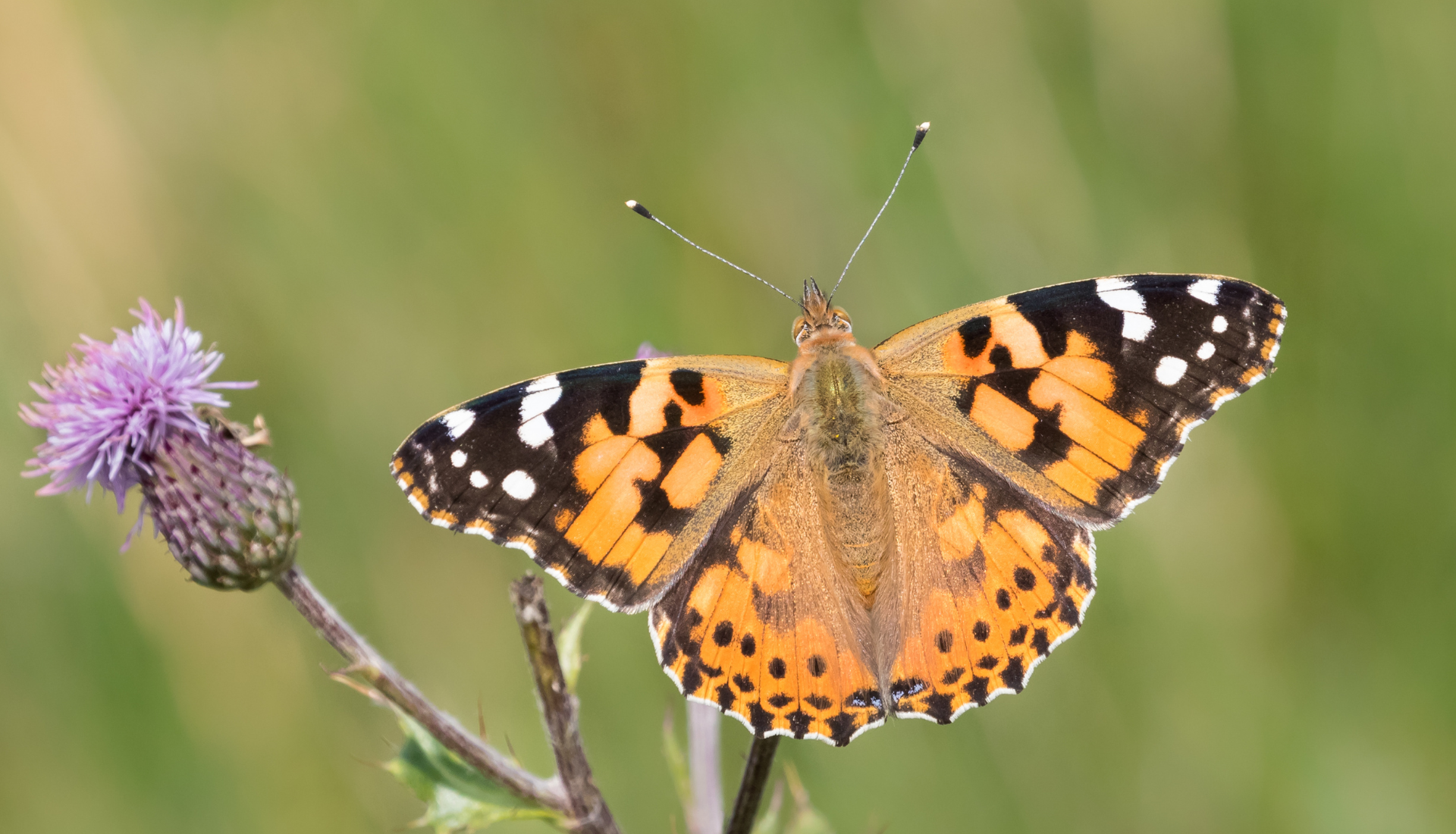
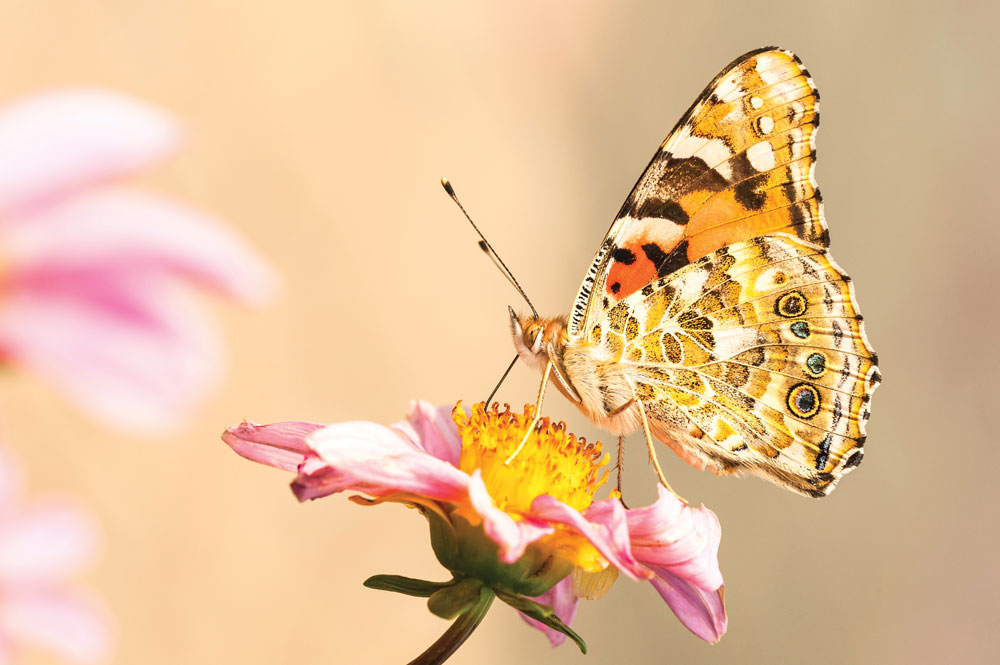
Butterflies demonstrate many important principles and concepts of biology, including life cycles, food chains, animal behavior, and structure and function. The painted lady butterfly (Vanessa cardui), commonly found throughout North America, is widely used in science classes.
For information on the care of butterflies, view our interactive care guide.
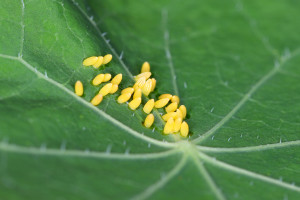
Light green color
Spherical shape
Laid singly on a plant
Temperature affects speed of development
Larva
Undergoes five molts
Changes color as it grows
Forms bristles
Produces a silk button to suspend from
Chrysalis
Brownish with gold flecks
Soft for first few days
Wiggles as a defense mechanism
Adults emerge in 7-10 days
Adult
Reach productive maturity in 5-7 days
Wing span is approximately 2 and half inches
Female can lay up to 500 eggs in her lifetime
Hands-On Butterfly Activities
Integrate the study of butterflies into your curriculum with the e-book Butterfly Activities. (It includes all the activities in a reproducible format.)
You may also be interested in the inquiry activity “Which Leaf Shape Can Hold the Most Butterfly Eggs?” in which students investigate the relationship between leaf shape and the number of butterfly eggs that can be laid on a leaf. Students build on their knowledge of the painted lady butterfly life cycle to assess which leaf shape can hold the most eggs.
Learn about painted ladies in the larval, pupal, and adult stages, with emphasis on the larval stage. This video covers habitat setup, maintenance, care, and feeding, along with some answers to frequently asked questions about painted ladies.
Everything I received was healthy and developed well. I got butterfly, ladybug, and mealworm larva, as well as a mallow plant. The mallow plant is the host plant for the painted lady butterfly. My class is really enjoying watching them change, and is developing an understanding of the insect lifecycle. I would recommend this for families and teachers.
Absolutely, positively the best source for everything concerning butterflies ever!!!! Exceptional customer service!!!! We love these guys!!!!!!!!!!
Valuable learning experience for my 2nd graders. We enjoyed following each step of the butterfly’s development. The majority of the caterpillars made it to the butterfly stage.
My daughter’s 2nd grade students are absolutely loving this! They want to watch their caterpillars all day! Everything arrived healthy and the kit had everything necessary to set up. Thanks for a quality product.
Carolina is teamed with teachers and continually provides valuable resources–articles, activities, and how-to videos–to help teachers in their classroom.