
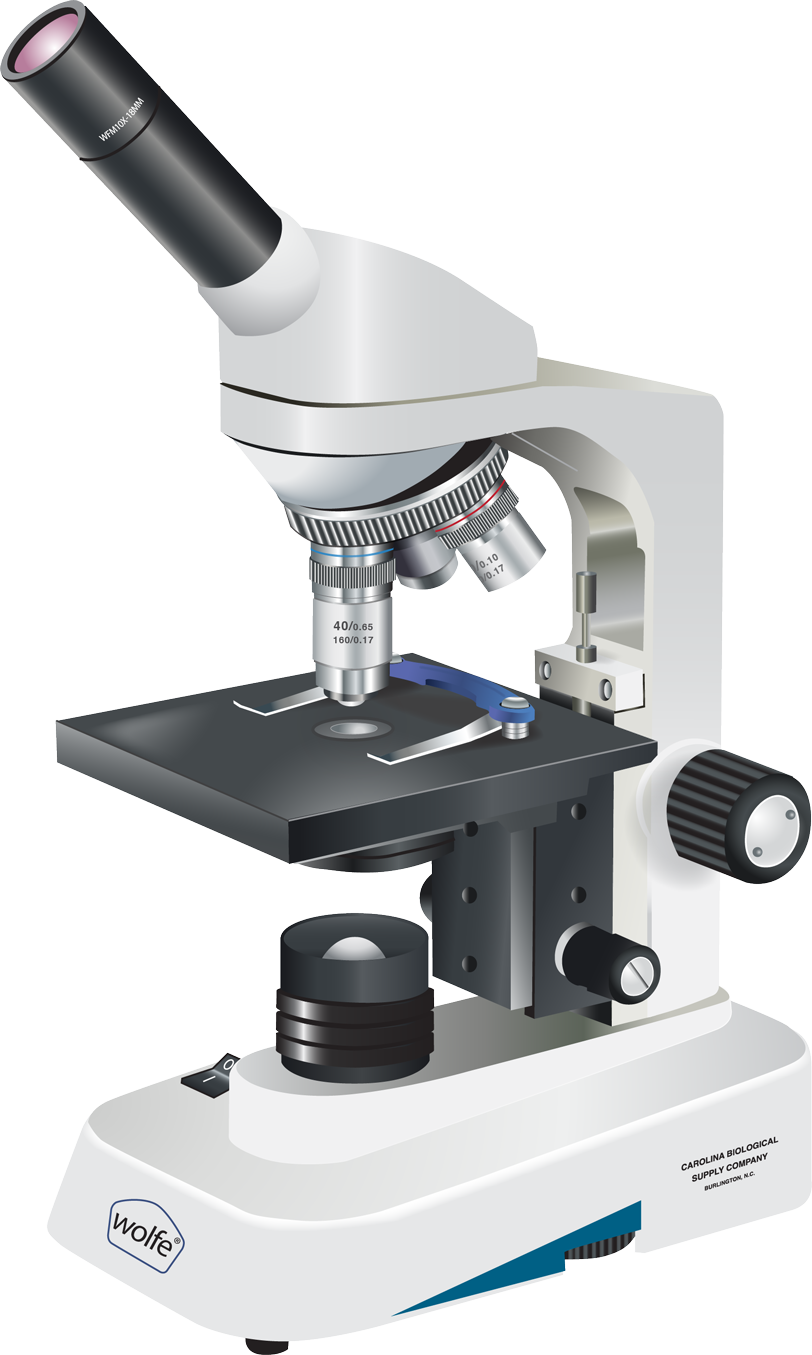
Microscopes give us the power to observe the world up close. By becoming familiar with their different parts and understanding how they work, you can get the most out of your microscope and the lab experience.
Eyepiece (Ocular Lens)-The lens you look through, often with 10x magnification.
Head-Contains the eyepiece and the refracting prisms
that redirect light from the specimen through the eyepiece.
Arm-Supports the stage and contains the focus adjustment knobs.
Objective Lenses-Lenses attached to the nose-piece that, with the ocular lens, magnify a specimen.
Coarse focus knob-Used to bring a specimen into general focus.
Fine focus knob-Used for precise focus adjustments.
Base-Platform that supports the instrument.
On/Off Switch-Turns light source on and off.
Illuminator housing-Location of the light source.
Diaphragm-Controls the amount of light focused on a specimen.
Stage-Surface for viewing a slide.
Condenser Lens-A lens or lens system that focuses light on a specimen.
Stage Clips-Flexible clips that hold a slide in place.
Nosepiece (Objective Turret)-Holds the objective lens and rotates to change the magnification used for viewing.
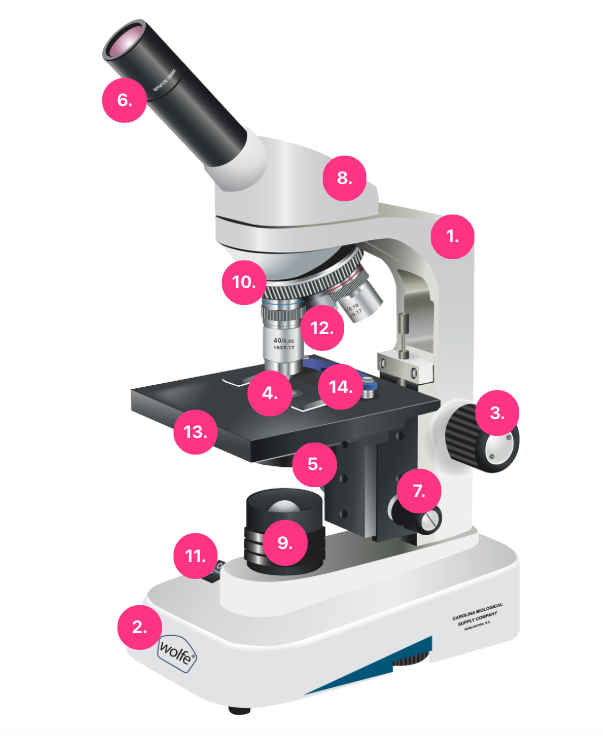
Eyepiece (Ocular Lens)-The lens you look through, often with 10x magnification.
Head-Contains the eyepiece and the refracting prisms
that redirect light from the specimen through the eyepiece.
Arm-Supports the stage and contains the focus adjustment knobs.
Objective Lenses-Lenses attached to the nose-piece that, with the ocular lens, magnify a specimen.
Coarse focus knob-Used to bring a specimen into general focus.
Fine focus knob-Used for precise focus adjustments.
Base-Platform that supports the instrument.
On/Off Switch-Turns light source on and off.
Illuminator housing-Location of the light source.
Diaphragm-Controls the amount of light focused on a specimen.
Stage-Surface for viewing a slide.
Condenser Lens-A lens or lens system that focuses light on a specimen.
Stage Clips-Flexible clips that hold a slide in place.
Nosepiece (Objective Turret)-Holds the objective lens and rotates to change the magnification used for viewing.
These are our top picks. If you don’t see what you are looking for, we’ll be happy to help you find the right activities and kits to simplify your planning and implementation. If you have questions, please contact us at product@carolina.com. Click here to view the Anatomy and Physiology catalog.
Carolina is teamed with teachers and continually provides valuable resources–articles, activities, and how-to videos–to help teachers in their classroom.
Get the latest news, free activities, teacher tips, product info, and more delivered to your inbox.