Development of Latent Fingerprints with Silver Nitrate
|
Carolina Staff
|
Carolina Staff
|
Introduction
Three types of fingerprints can be found at a crime scene–plastic, visible, and latent. Plastic impressions are fingerprints left in soft materials such as butter, soap, and putty. Visible prints are prints made when fingers are covered in a substance like blood, dirt, or paint, which leaves a mark on a surface. Latent prints are not visible to the human eye and are formed when sweat and natural body oils make contact with another surface.
Work Surface (covered with newspaper or similar material)
Background
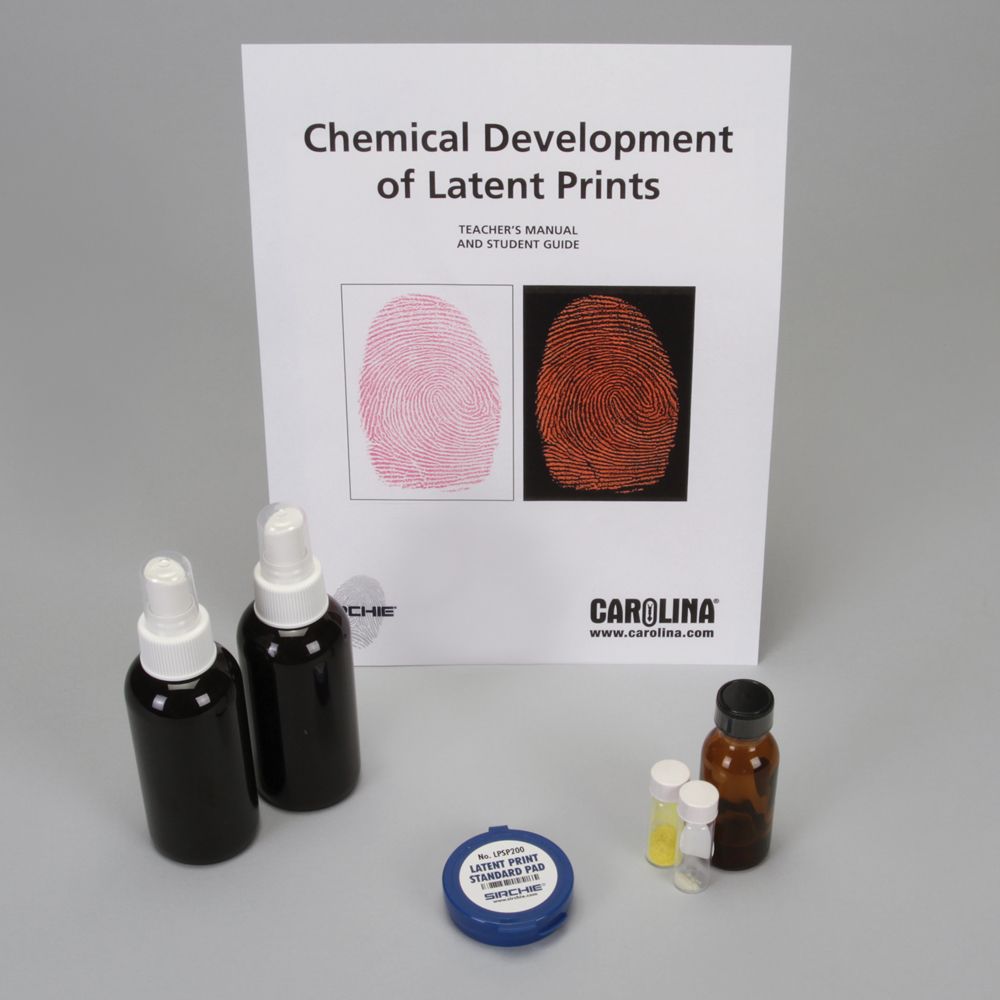
Through a process called latent print development, you can make these prints visible. Developing latent prints involves either a chemical or physical process using alternate light sources, fingerprint powders, or in this case, chemical reagents. Whatever tool you use should react with the skin secretions, causing the latent print to stand out against its background.
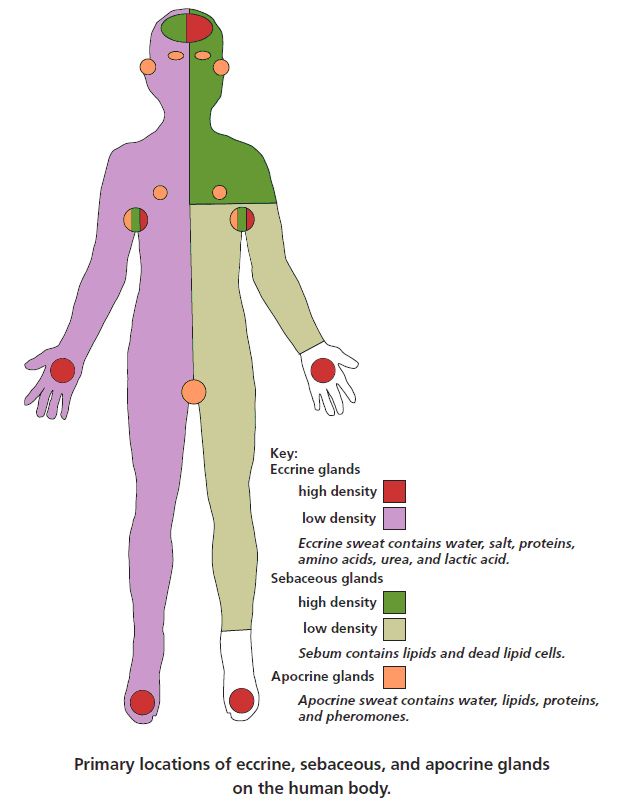
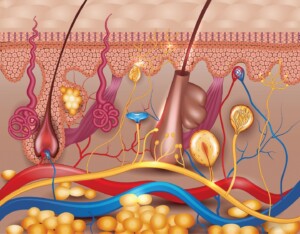
Choosing the right tool requires some understanding of the chemical makeup of the fingerprint. Most latent fingerprints consist of secretions of the skin’s glands. Three types of glands are responsible for these secretions: the eccrine glands, the sebaceous glands, and the apocrine glands. Sebaceous glands are not present in the hands, but secretions from these glands are transferred to the hands by touching areas where these glands are present, such as the hair and face.
About silver nitrate
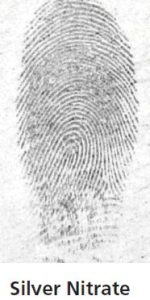
Silver nitrate (AgNO3) reacts with the chlorides in skin secretions to form silver chloride, which turns gray when exposed to UV light. Developed prints must be photographed immediately because the reaction will eventually (and permanently) fill the background. Silver nitrate is useful on paper, cardboard, plastics, and unvarnished, light-colored woods. It is not useful on items that have been exposed to water.
Safety
Avoid contact with silver nitrate, as it can discolor skin and clothing. Wear gloves, goggles, and an apron when handling the silver nitrate solution.
In this simple activity, students will use silver nitrate to develop latent fingerprints.
Preparation
Cover the lab surface with newspaper to collect overspray.
Arrange for students to be able to expose their prints to direct sunlight, either by opening a window or by taking the paper outside.
Student Instructions
Procedure
Set up your evidence.
Draw a horizontal line dividing a piece of paper in half. Write your initials or name in both pencil and pen in both the top half and the bottom half of the paper.
With your left hand, place several random fingerprints in the top half of the paper.
Allow the paper to dry and to absorb the prints for 5 minutes. Wear gloves for the remainder of the procedure.
Place your paper on the work surface.
Hold the spray bottle containing the silver nitrate solution approximately 2 to 3 inches from the surface of the paper. Remember, this chemical reacts with skin, so avoid contact.
Spray from the upper left corner across the page and then move down the page, spraying until the sheet is saturated.
Allow the paper to dry for 1 minute.
Expose the paper to sunlight for 1 to 2 minutes. Once the prints begin to develop, remove the paper from the sunlight. Further exposure will continue to darken the prints and background.
Questions
Sodium chloride (NaCl) is the chemical component of sweat that reacts with silver nitrate. Write the balanced equation for this reaction.
Latent prints are suspected on a surface, but none are found after treatment with silver nitrate. Describe which factors might contribute to this discrepancy, and explain the procedural steps you would take to ensure that all latent prints on the surface are developed.
*Next Generation Science Standards® is a registered trademark of Achieve. Neither Achieve nor the lead states and partners that developed the Next Generation Science Standards were involved in the production of, and do not endorse, these products.
Carolina Staff
Carolina is teamed with teachers and continually provides valuable resources–articles, activities, and how-to videos–to help teachers in their classroom.