
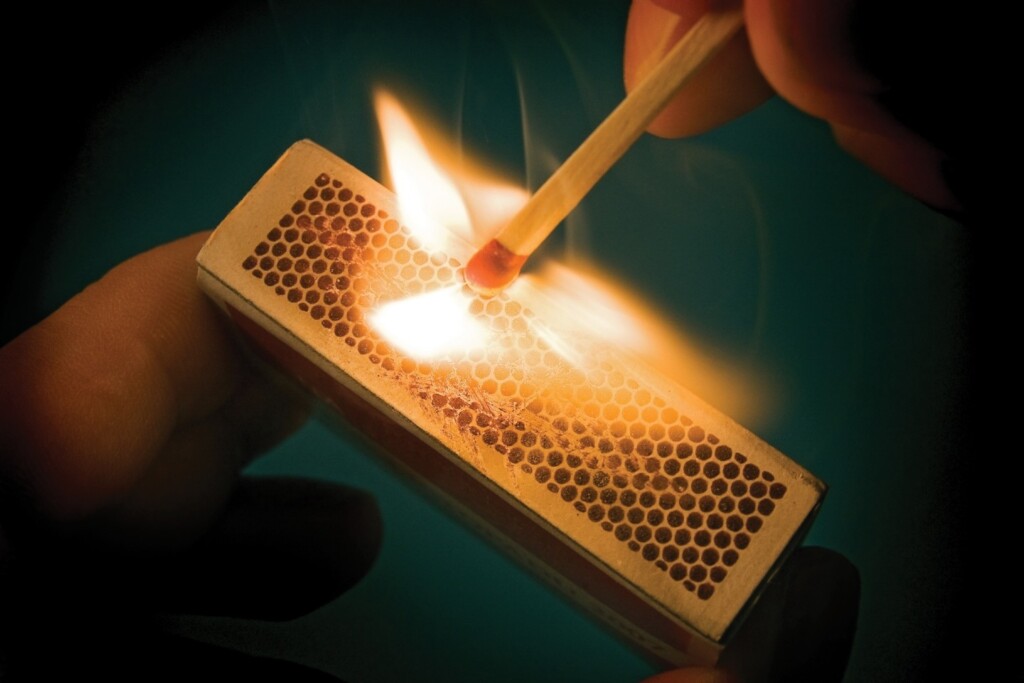
Writing and balancing chemical equations is an essential skill for chemistry students, who must learn to predict the products of a reaction when given only the reactants. This becomes much easier for students to do when they learn the pattern of 5 basic categories of chemical reactions: synthesis, decomposition, single replacement, double replacement, and combustion.
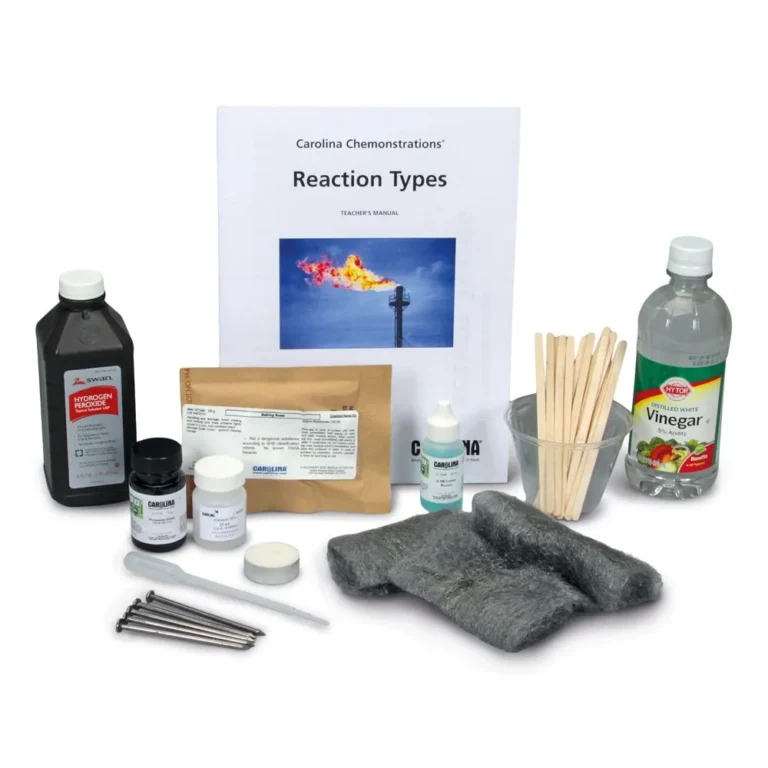
This activity is based on Carolina Chemonstrations®: Reaction Types Kit. This kit comes with the materials to perform the reactions described below and more.
Each lab group requires the following items to perform all the activities. You may want to set up the activities at stations and have student teams rotate through them. If so, print the instructions onto a card for each station.
Synthesis reactions
Two or more reactants combine to make 1 new product.
Examples:
C(s) + O2(g) + CO2(g)
H2O(l) + SO3(g) + H2SO4(aq)
Decomposition reactions
A single reactant breaks down to form 2 or more products.
Examples:
H2CO3(aq) + H2O(l) + CO2(g)
CaCO3(s) + CaO(s) + CO2(g)
Single-replacement reactions
A single element replaces a similar element of an adjacent reactant compound.
Example:
Zn(s) + CuSO4(aq) + ZnSO4(aq) + Cu(s)
Double -replacement reactions
Two ionic compounds exchange ions, producing 2 new ionic compounds.
Examples:
NaCl(aq) AgNO3(aq) + NaNO3(aq) + AgCl(s)
HCl(aq) + NaOH(aq) + NaCl(aq) + H2O(l)
Combustion reactions
A single element or compound combines with oxygen gas releasing energy. This rapid oxidation is called burning.
Examples:
C(s) + O2(g) + CO2(g) + energy
2Mg(s) + O2(g) + 2MgO(s) + energy
The activities described in this article address the following dimensions of the Next Generation Science Standards: HS-PS1-2. Construct and revise an explanation for the outcome of a simple chemical reaction based on the outermost electron states of atoms, trends in the periodic table, and knowledge of the patterns of chemical properties.
Constructing Explanations and Designing Solutions
Note: Use safety glasses or goggles and be cautious with the burning splints and Bunsen burner. Follow all local and state recommendations for chemical disposal.
Synthesis Activity
Decomposition Activity
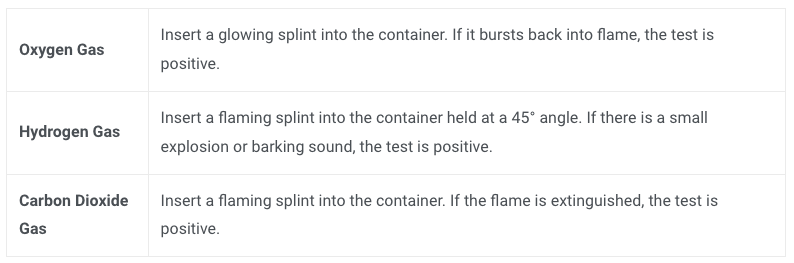
Single-replacement activity
Double-replacement activity
Combustion activity
Extension activities
Get the latest news, free activities, teacher tips, product info, and more delivered to your inbox.