
Plants and insects have evolved a variety of fascinating interrelationships that illustrate how organisms respond and adapt to the environment and to other organisms. Bringing interdependent organisms into the classroom provides opportunities to study plant and animal life cycles, behavior, co-adaptation, predator-prey relationships, and more. It also provides a limitless source of inquiry-based investigations. The Wisconsin Fast Plants® Program, developed at the University of Wisconsin-Madison, provides an easy way to integrate plant and insect life cycles in the classroom.
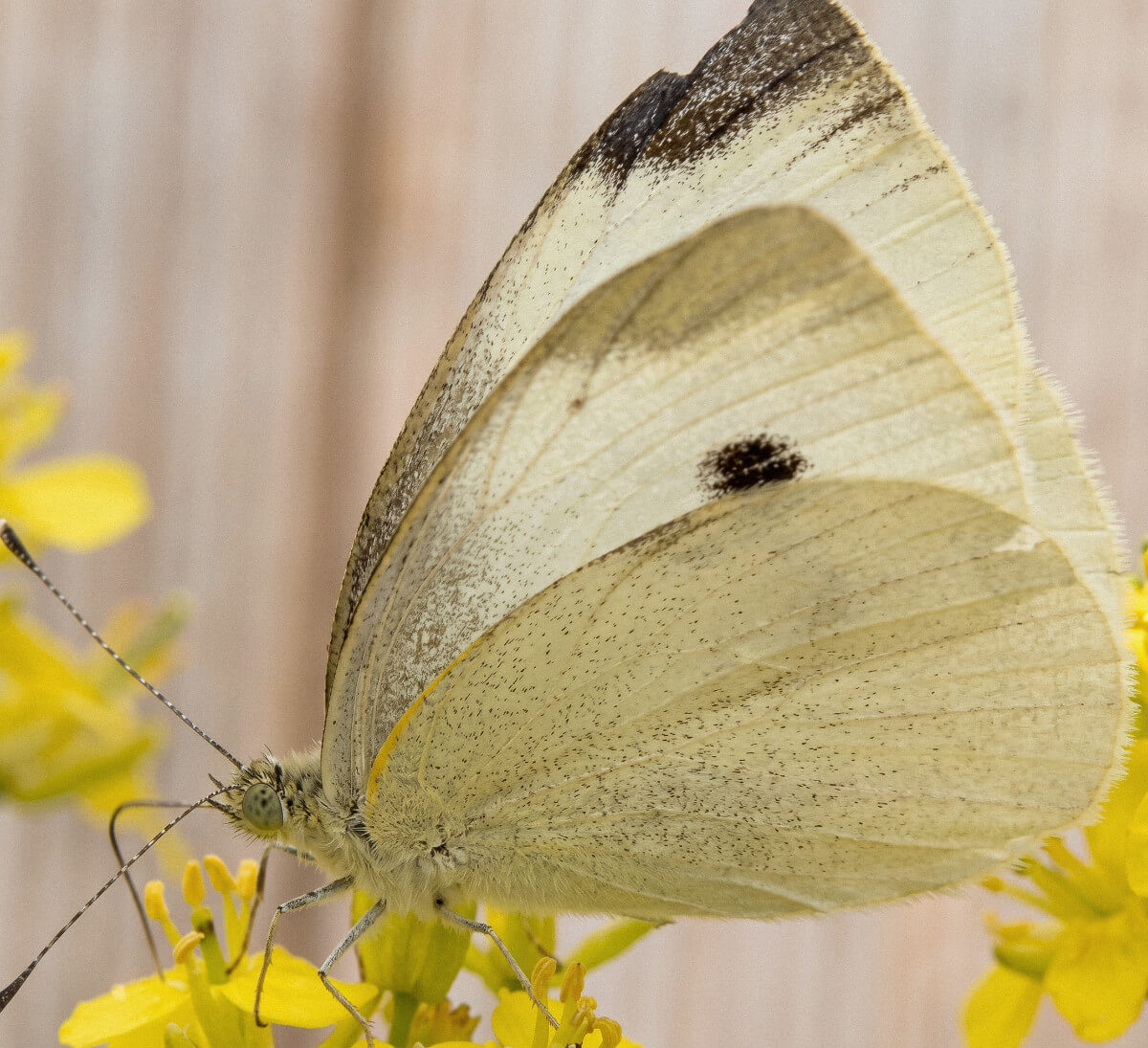
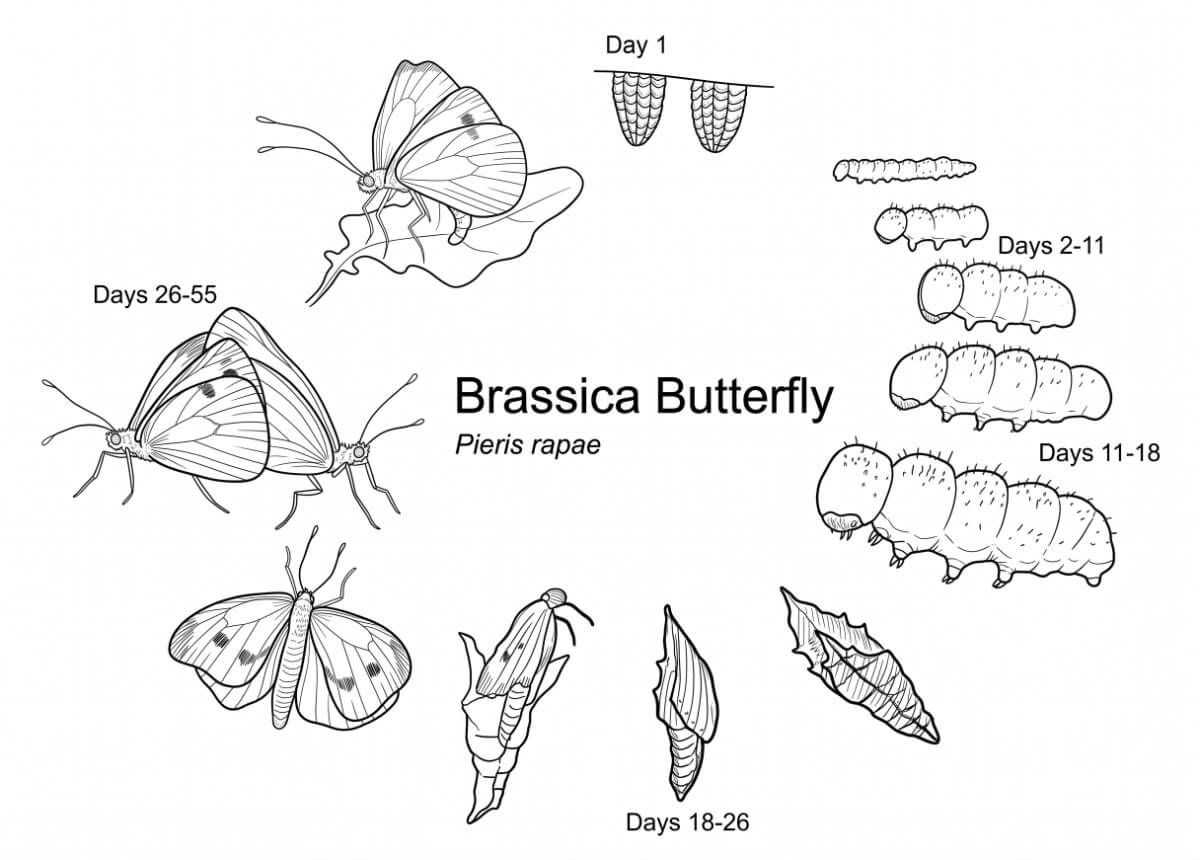
In nature, the cabbage white or brassica (Fig. 1) butterfly (Pieris rapae), a member of the Pieridae family often referred to as cabbage butterflies, is closely associated with the cabbage family of plants, such as broccoli, cabbage, cauliflower, kohlrabi, turnips, and their wild relatives. At first glance, the relationship between the 2 organisms appears mutualistic—or beneficial to both. Throughout their life cycle (Fig. 2), brassica butterflies utilize virtually all parts of the brassica plant. As larvae, they forage on the leaves; as chrysalises, they are sheltered from predators like wasps; and as adults, they drink nectar from the flowers and lay eggs on the leaves. In return, the butterflies pollinate the flowers of brassica plants, allowing them to reproduce.
A closer look reveals that this relationship may be less benign than it first appears. While the larvae thrive and grow into mature butterflies through the shelter and nourishment provided by the plants, they also can consume and destroy the plants. The cabbage white caterpillars have the potential to decimate an entire population of plants, which can be costly to gardeners and farmers, especially when considering damage like black spots, leading to interest in biological control methods.
How butterflies transform from tiny eggs into full-fledged adults in 30 days is an amazing process. That the Wisconsin Fast Plants organisms grow from single seeds to mature, flowering plants in 14 days is an equally fascinating transformation.
As students explore the dual life cycles of brassica plants and brassica butterflies, delving into aspects of entomology, they confront an interesting paradox: How can a relationship between 2 organisms appear to be mutually beneficial yet ultimately have the capability of being destructive? This leads to another important scientific inquiry: What conditions can cause such an imbalance between the butterfly and its host plant?
By exploring the tandem life cycles, students see how real scientific investigations work. They learn that real science takes more than one class period, requires ongoing care and maintenance, and doesn’t have preconceived or “correct” answers. By taking care of 2 organisms throughout their life cycles, students accomplish these objectives:
• Observe each organism’s form and structure as it develops.
• Relate form and structure to function.
• Observe and describe behavior through several developmental stages.
• Explore how the organisms interact in beneficial and destructive ways.
• Determine the conditions necessary for both organisms to live and reproduce.
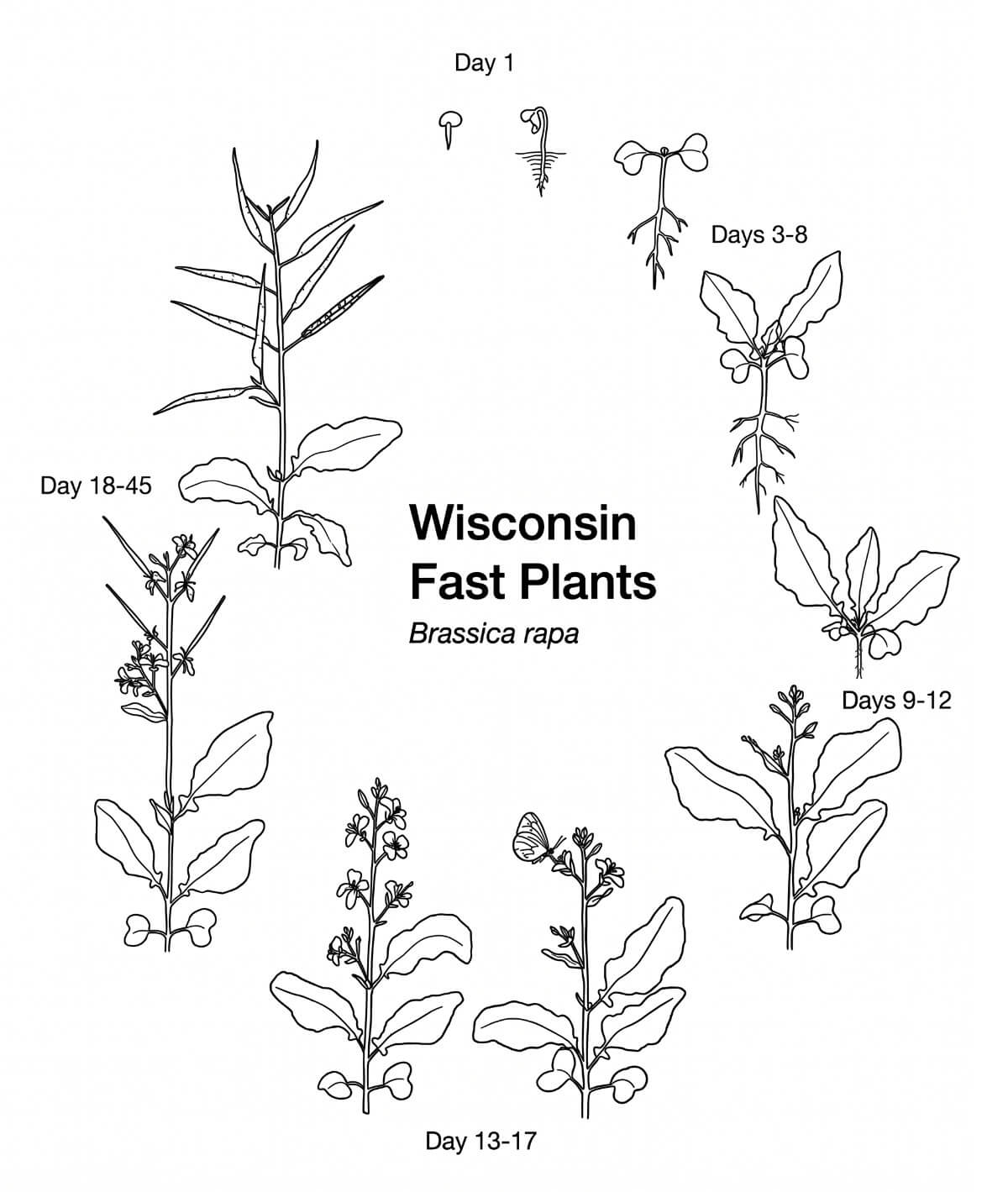
Wisconsin Fast Plants have been used to teach biology concepts in thousands of classrooms for decades. These unusual members of the brassica family (Brassica rapa) whiz through an ultra-short life cycle (Fig. 3) in about 5 to 6 weeks. In just over a month, your students can plant seeds, tend plants, pollinate flowers, and harvest new seeds that can immediately be planted again. Easily grown in the classroom, brassica plants need little more than continuous fluorescent light, water, and fertilizer.
Brassica butterflies can be found virtually anywhere that cabbage and other brassica plants grow, from North America to Australia and even New Zealand. The butterflies spend most of their short lives in fields of crops (such as cabbage, broccoli, canola, or turnip) or among the wild mustard plants that are common along roadsides and in woodlands, often needing to overwinter in these environments. These ubiquitous insects are as easy to rear in the classroom as they are to find outdoors.
In less than one month, these insects undergo tremendous changes. First, tiny green caterpillars (called larvae) hatch from the eggs (Fig. 4). Over the next 18 days, the larvae molt or shed their exoskeletons 5 times. Each molt brings the larvae to a larger stage, called an instar. Next, larvae transform as they pupate into chrysalises, entering the pupal stage from which they finally change (metamorphose) into adult butterflies.
Once they emerge from their chrysalises, the adult butterflies mate and lay eggs. Adults can live up to 3 weeks longer if you provide them with a simple sugar water and honey mixture.
You may be able to find brassica butterfly eggs in the wild. Brassica butterfly eggs (cabbage white) are found clustered on the underside of leaves of brassica family plants, like cabbages, kale, broccoli, and nasturtiums. Typically, they can be found from early spring through autumn. Look for small, yellow, cone-shaped eggs attached to leaves in gardens and on wild crucifer areas (like mustard or wild radish).
If students find eggs, they should place them on a mixture of 5-day-old brassica plants. Within 2 to 3 days, the eggs hatch, and the young larvae subsist on the plants as their primary source of nourishment while they grow and molt. (Note: During the larval stage of the butterfly, students should plant brassica seeds so that the plants are in flower when the butterflies emerge from their chrysalises. At that time, a butterfly box becomes essential to keep the newly emerged butterflies contained.)
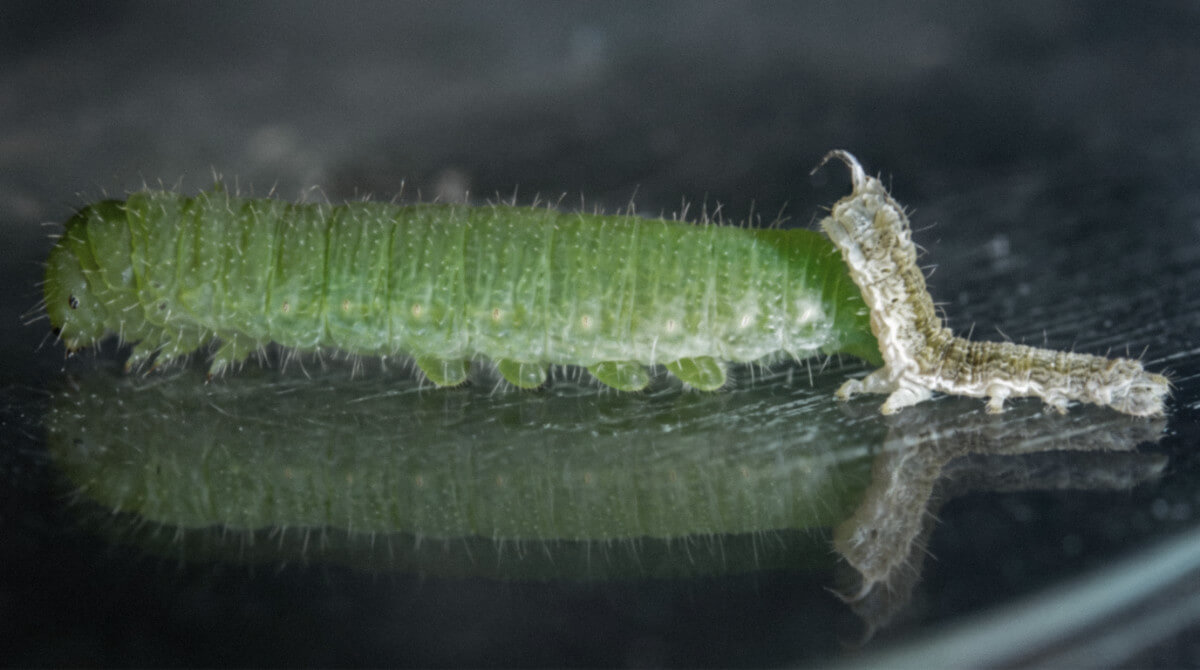
During the later instar stages (10 to 11 days later), the larvae become even more voracious and begin to forage for heartier fare. The larvae eat any pesticide-free brassica from your home garden or the grocery store, such as Brussels sprouts, cabbage, kale, or bok choy.
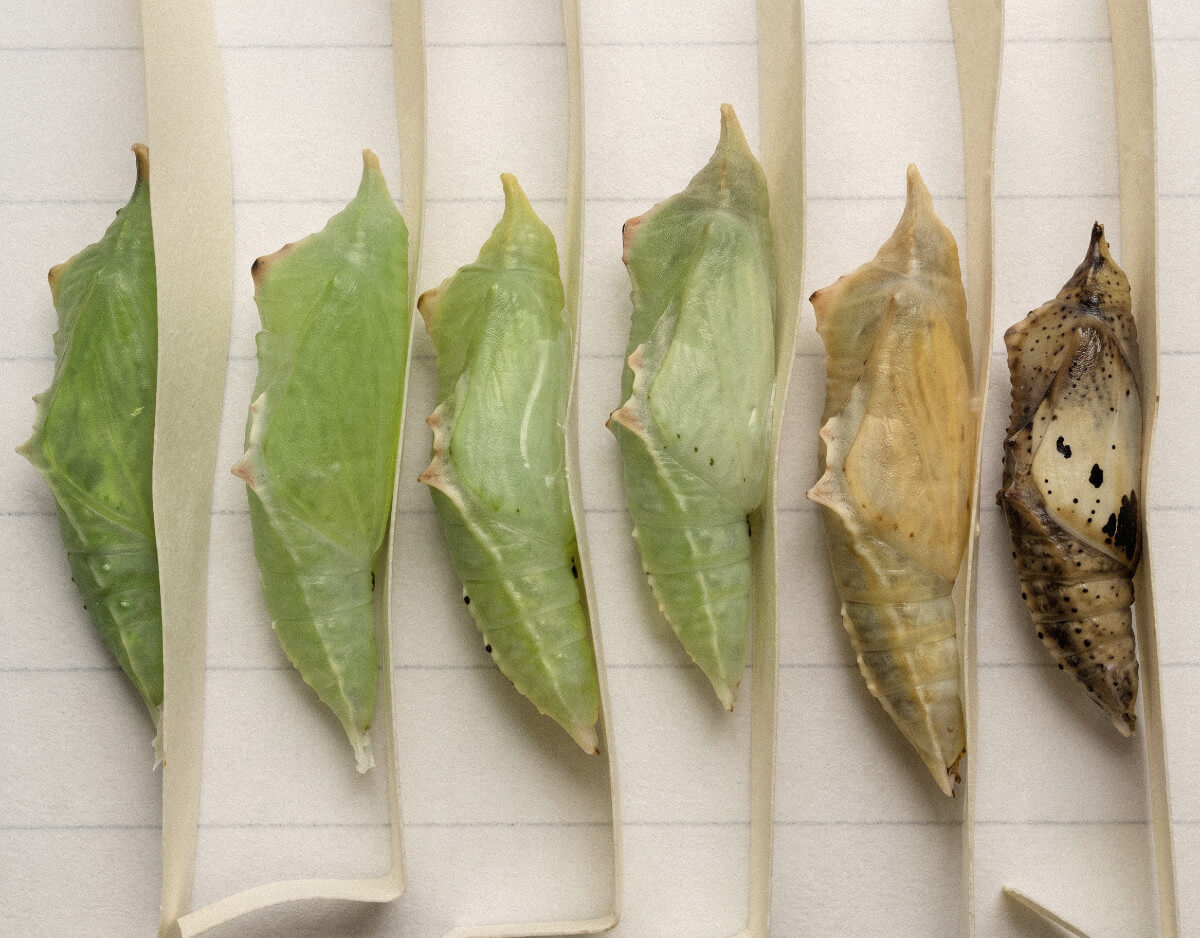
Once the larvae have gone through all 5 molts to the final and largest larval stage, they search for a suitable place to form chyrsalises. Most of them attach to the brassicas or to the sides of a rearing container. There they weave silken carpets, anchor themselves, shed their final exoskeletons, and form chrysalises. To the outside observer, the pupae appear to be resting during the next 10 days. Quite the opposite is true. Inside the chrysalises, the pupae undergo profound changes as they transform from larvae to adult butterflies (Fig. 5).
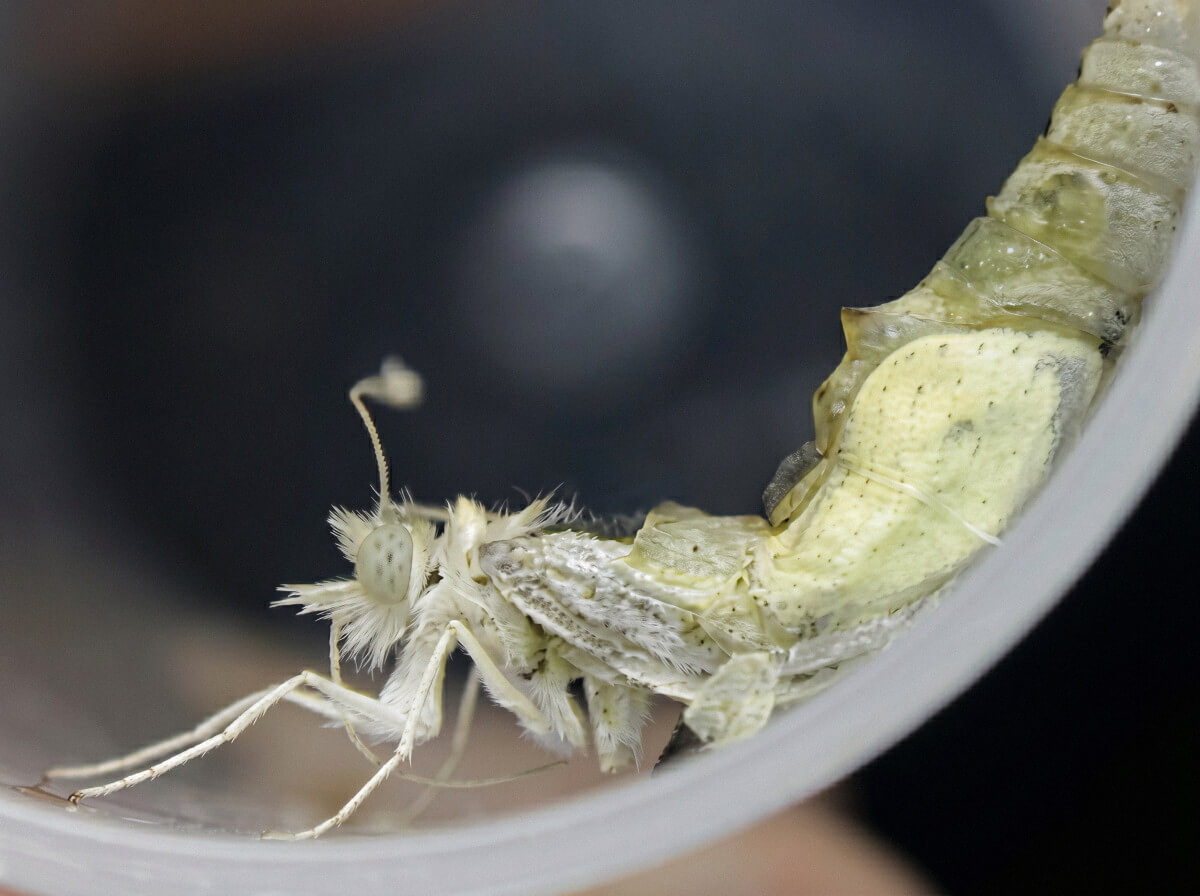
After emerging from their chrysalises (sometimes in less than a minute) (Fig. 6) the butterflies pump their soft new wings, including their forewings, until they have expanded and hardened, reaching their full wingspan. Once capable of flight, the butterflies begin to forage for nectar from flowers. The brassicas planted 2 weeks earlier are now in bloom, and the butterflies uncoil their tubelike mouthparts (proboscises) and plunge them into the flowers, much like they would with a nasturtium. As they drink, the butterflies pick up pollen from the anthers of one flower and transfer it to the stigma of another, causing pollination.
Within 2 to 3 days of emergence, the butterflies mate, and the females often lay their eggs on the undersides of the leaves. A few days later, the females begin to deposit tiny green eggs (Fig. 7) onto the leaves and stems of the brassica plants as the butterfly life cycle continues.
Meanwhile, young embryos are developing in the pods of the recently pollinated flowers, ensuring future broods. In a few weeks, these embryos become viable seeds, and the plant life cycle continues, also. Or does it?
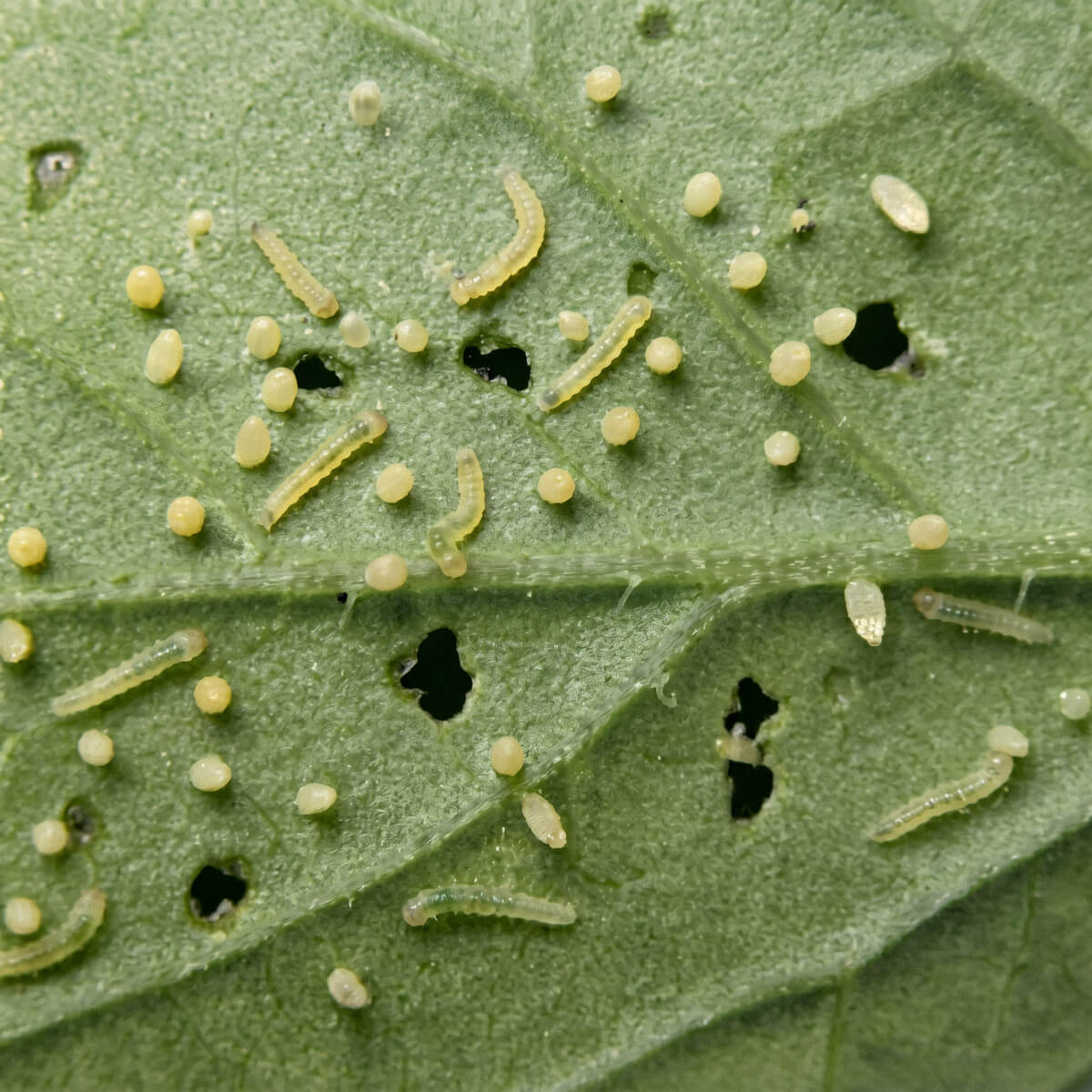
A paradox: How can the relationship between brassica plants and brassica butterflies be both benign and destructive? This exploration begins after the butterflies have completed an entire life cycle and have laid the next generation of eggs on the brassica plants.
As long as there are only a few larvae on the brassica plants, the relationship seems like a reasonably fair exchange of services. In this mutualistic relationship, both organisms benefit. The plants provide food for the larvae and the adult butterflies, and the butterflies serve as pollinators for the flowers. However, once the new generation of larvae emerges from the numerous eggs laid by the female butterflies, the mutualistic balance may be destroyed.
To better understand this relationship, here are several questions that students can answer by continuing to observe and collect data:
Observing life cycles: What strategies do plants and butterflies employ to grow, develop, and reproduce? Integrating brassica plants and cabbage white butterflies into the biology curriculum allows students to become involved in all stages of the life cycle. The following activities or questions help students understand the relationship between the 2 life cycles:
This article was originally published as “Integrating Plant and Insect Life Cycles” in Carolina Tips®, Vol. 65, No. 1 (print version, Winter 2002); it was revised April 2026.
Sarah Lauffer and Daniel Lauffer
Department of Plant Pathology and the Wisconsin Fast Plants Program
University of Wisconsin-Madison
Madison, WI 53706
Get the latest news, free activities, teacher tips, product info, and more delivered to your inbox.