Figs can be fantastic when considering the large variation in growth, shape of leaves, and fruiting for both wild and cultivated figs. But they can also be frustrating to identify, with an estimated 900 species that vary widely in appearance and can be confused with other plants.
What is a fig anyway? The Chinese once called it a fruit without a flower. But open a fig and you’ll find several flowers hiding in its bag-like body. The most recognized is the common fig, described by Linnaeus in 1737 as Ficus carica, from Caria in Asia Minor. There are many others, over one thousand species of Ficus, such as the India Rubber tree, the Banyan of India, and the true Sycomore of Egypt. But we’ll cover the one and only species that is widely grown among fruit trees for its edible fruit—used fresh, dried, canned, or preserved.
The common fig was probably first grown in the fertile part of Arabia where wild figs are still found. The trees gradually arrived in Mesopotamia, then were brought to the countries bordering the Mediterranean Sea and even to the British Isles. The Romans saw the fig tree as sacred, and images of the god Bacchus were often crowned with fig leaves. Fig references are also found in the Bible, the Quran, and in Buddhism.
From the Greek “Sycon” (fig), the word “sycophant” was derived. At first it denoted a religious denunciator who presided at the mysteries of the fig. That cult degenerated so that the sycophant, once respected and feared, came to be a charlatan; thus the modern use of the word. The fig became the tree of the phallic worshippers of Italy where the people still use the gesture of contempt, “fico,” the thumb inserted between the two fingers. Shakespeare referred to the gesture in the expression “and fig me like the bragging Spaniard.” The use of the word as an expression of scorn is well illustrated in this verse that first appeared in Towneley’s Mysteries (1420):
Let the world slide, let the world go;
A fig for care, and a fig for woe!
If I can’t pay, why I can owe,
And death makes equal the high and low.
Olympic athletes used figs as a pre- and post-workout snack, while later Romans considered it a delicacy that often held a place at banquet tables. Thousands of years later, in 1891, the fruit found its way onto store shelves as the love-it-or-hate-it Fig Newton.
Now let’s talk fig flowers. Botanically, the fig fruit is known as a syconium. The flowers are of two kinds, staminate or pistillate. The staminate flowers are found only in fruits having short-styled pistillate flowers, the latter adapted for oviposition by a fig insect, often referred to as fig wasps. Figs with these flowers are Caprifigs, the primitive type from which others have evolved. Caprifigs are grown in some European countries and in California for pollen production only. The transfer of pollen to other figs by the fig insect is known as caprification.
Long-styled pistillate flowers are found only in all edible figs. There are two types. Smyrna figs mature only after the pollination of the flowers and the resulting fertile seeds. Without pollination, immature figs shrivel and drop. Common figs don’t require caprification and seed development to have the fruit mature. Most varieties of this type have seed-like bodies without an embryo. Fig fruits are born single or geminate in axils of leaves, showing how these trees bear fruit. Axillary buds appearing late in the season generally survive winter as dormant fruit buds that push out in early spring with, or just before, the leaves—like many deciduous trees. Brebas, or first-crop figs, are produced on wood of the previous season. The main crop is born on the current growing season’s new growth. Varieties differ widely in fruiting habits. Some produce a large first crop of brebas, others none. Production of a second crop in late summer is also variable based on season, growing zones, size, color, and shape of fruit, fruit quality, susceptibility to fruit spoilage, usefulness, etc.
Common fig varieties, or cultivars, have 712 names across various countries. Well over half are the common type, but very few are grown commercially. Some fig varieties have been called by more than one name. To verify the variety, growers have turned to literature, side-by-side growing, and comparing fruit characteristics. One example is the Magnolia fig of Texas, named because a tree peddler sold what he called “Magnolia” trees, which actually proved to be fig trees. Comparing the tree and fruit actually identified the Magnolia as the Brunswick, grown in England for at least 200 years. California’s brown turkey fig is Italy’s San Piero—with nine other names floating around for the same tree. Brown Turkey of the southeastern United States is also an English variety that has a dozen or more other names. California’s Mission fig, often called the Black Mission Fig, is Franciscana of Spain. These examples are just some of many. New varieties have been developed by fig breeding, and other seedlings are still being selected.
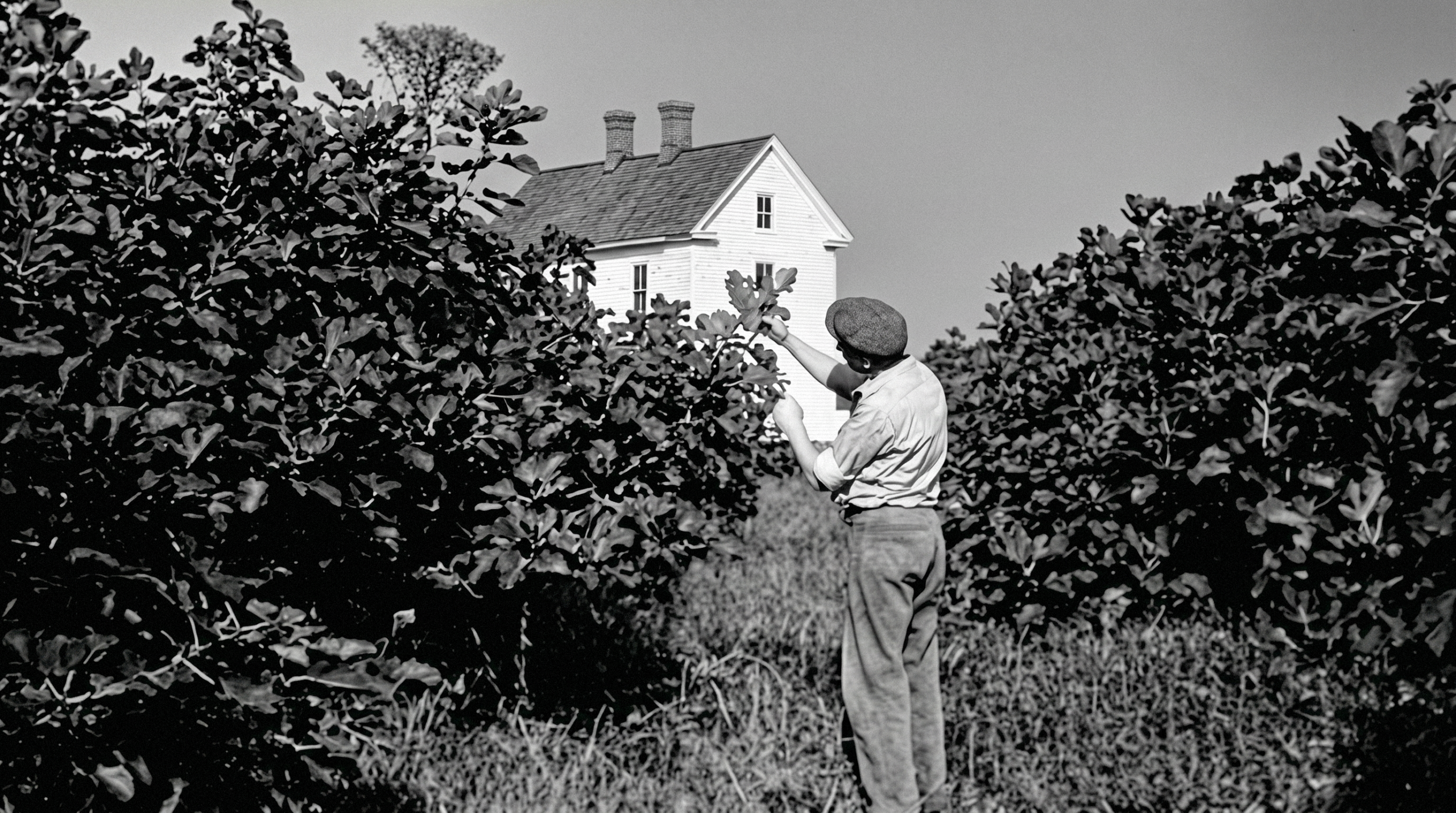
There are, of course, figs and fig culture in other states than California. Twice the author toured Virginia and Maryland’s historic districts with a representative from the United States Department of Agriculture (USDA), collecting and identifying 12 varieties of figs from gardens at Mt. Vernon, at Washington’s birthplace, the Lee Mansion, Williamsburg, Jamestown, and others. A few commercial orchards were found, the largest at least an acre at Crisfield, Maryland. A detailed account of early fig planting from Florida to New England is given in the author’s “Fig History in the New World.”
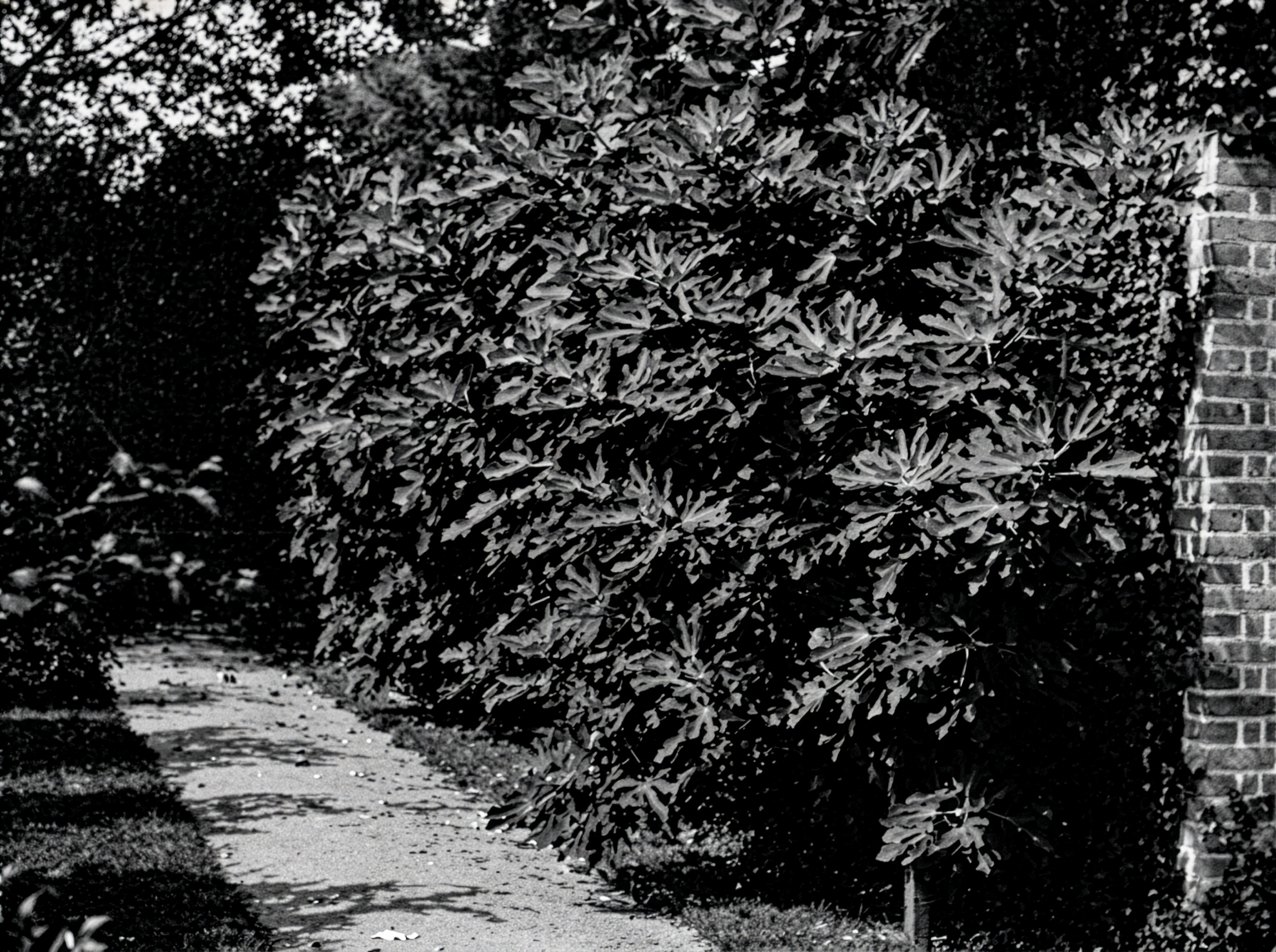
Fig trees in the colder sections of the United States may grow as trees but are often seen as bushes formed after the top branches have been cut back to the ground by freezing weather. The Chicago Hardy Fig is a primary example of a variety that can handle such conditions. Fig growers, especially the former residents of Mediterranean fig districts, will go to great lengths to protect trees from frost, though some opt for more cold-hardy varieties. Small trees, perhaps a few feet tall, may be dug and placed in pots to overwinter in cellars. For real trees, one method is cutting roots on one side of the root ball, bending the whole top into a well-drained trench, covering first with straw, corn stalks, or other material, then with soil or a thick layer of mulch until the frost threat is over.
The fast-growing trees are usually propagated from cuttings or grown in nursery rows for a year. They thrive in a wide range of well-drained soils, especially with full sun, as long as the ground doesn’t have high salinity, and are fairly drought-tolerant once established. Pruning practices vary widely and depend on the variety grown and harvesting methods.
Fig trees and their fruits are especially susceptible to injury by pests and diseases. Root knot caused by nematodes is common in plenty of host plants and accounts for fig trees failing to thrive in some places across the globe. Insect pests that go after the tree include certain scale insects, borers that attack the trunk and branches, and others. Still, most failures are because of pests that attack the fruit. The main insects that cause spoilage are fruit beetles, vinegar flies, and thrips, all of which carry bacteria and yeasts into the eye of the figs to start fermentation. A large, green beetle is so destructive to fresh figs that it’s commonly called “the fig eater.”
Tree diseases include cankers on branches, rust on leaves that’s controlled by spraying, a virus causing mosaic and distortion of leaves, and leaf blights or blotches that cause leaves to fall. Fruit spoilage is, at least in California, an insect problem that requires controlling. Pests and fig diseases are covered in more detail by various authors, including some listed below.
This article was originally published as “Figs: Fantastic and Frustrating” in Carolina Tips®, Vol. XXIX, No. 9 (November 1966); it was revised May 2026.
Betts, E. M. (1944). Thomas Jefferson’s garden book. American Philosophical Society.
Condit, I. J. (1947). The fig. Chronica Botanica Company.
Fig history in the New World. (1957). Agricultural History 31, 19-24.
Gould, H. P. (1923). Pig growing in the South Atlantic and Gulf States (Farmers’ Bulletin No. 1031). U.S. Department of Agriculture.
Reimer, F. C. (1910). Fig culture in North Carolina. (Bulletin No. 208). North Carolina Agricultural Experiment Station.
Smith, R. E., & Hansen, H. N. (1931). Fruit-spoilage diseases of figs (Bulletin No. 506). California Agricultural Experiment Station.
Stansel, R. H., & Wyche, R. H. (1932). Fig culture in the Gulf Coast region of Texas (Bulletin No. 466). Texas Agricultural Experiment Station.
Ira J. Condit
Professor Emeritus
University of California, Riverside
Riverside, California 92502
Get the latest news, free activities, teacher tips, product info, and more delivered to your inbox.