

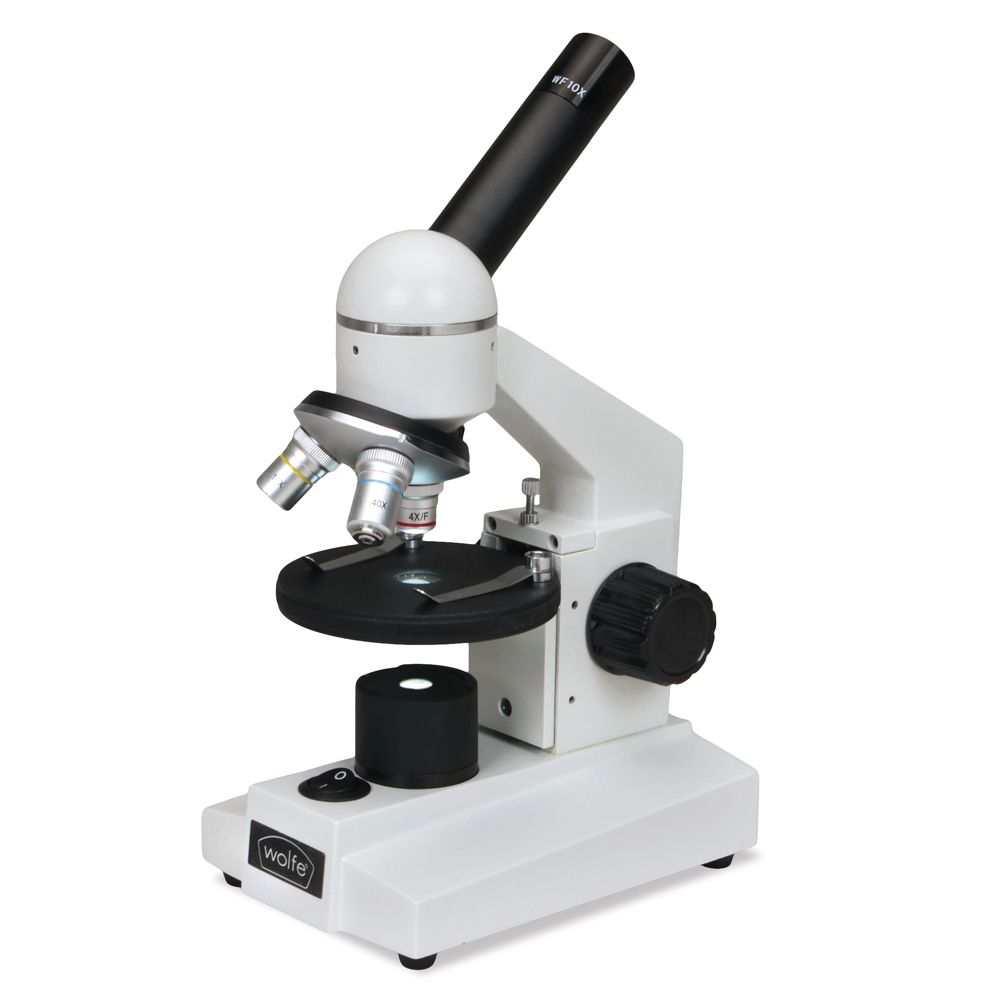
Grade Level: K-5
Bring science to life in the classroom with a microscope designed for elementary learners. Features a movable stage for hands-free slide adjustments and cool, cordless LED illumination for bright, safe viewing. This microscope combines simplicity with performance.
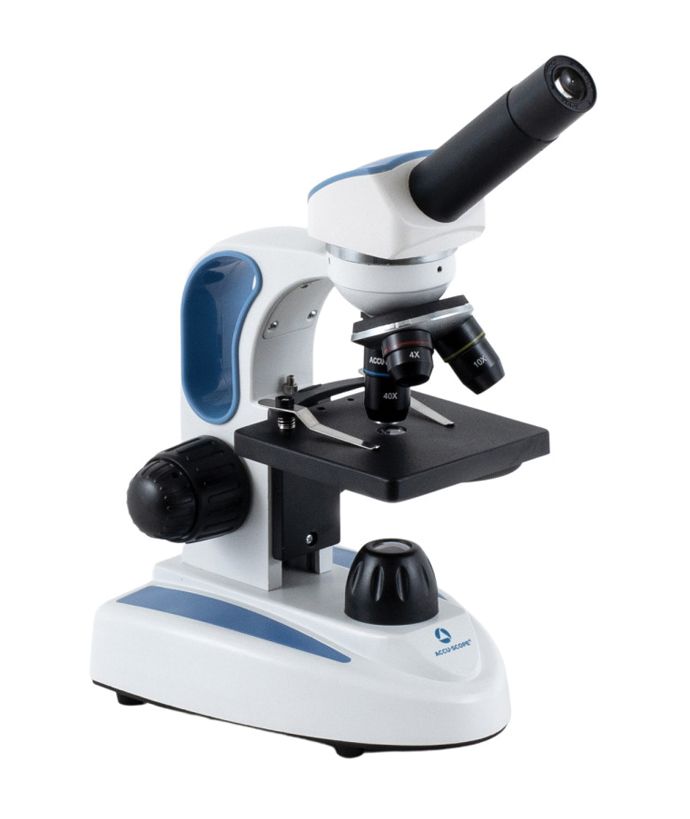
Grade Level: K-8
This compact microscope features 4x, 10x, and spring-loaded 40xR objectives, a flat-top stage with clips, and coarse and fine focus controls. The variable LED illumination delivers bright, adjustable lighting for clear, accurate viewing.
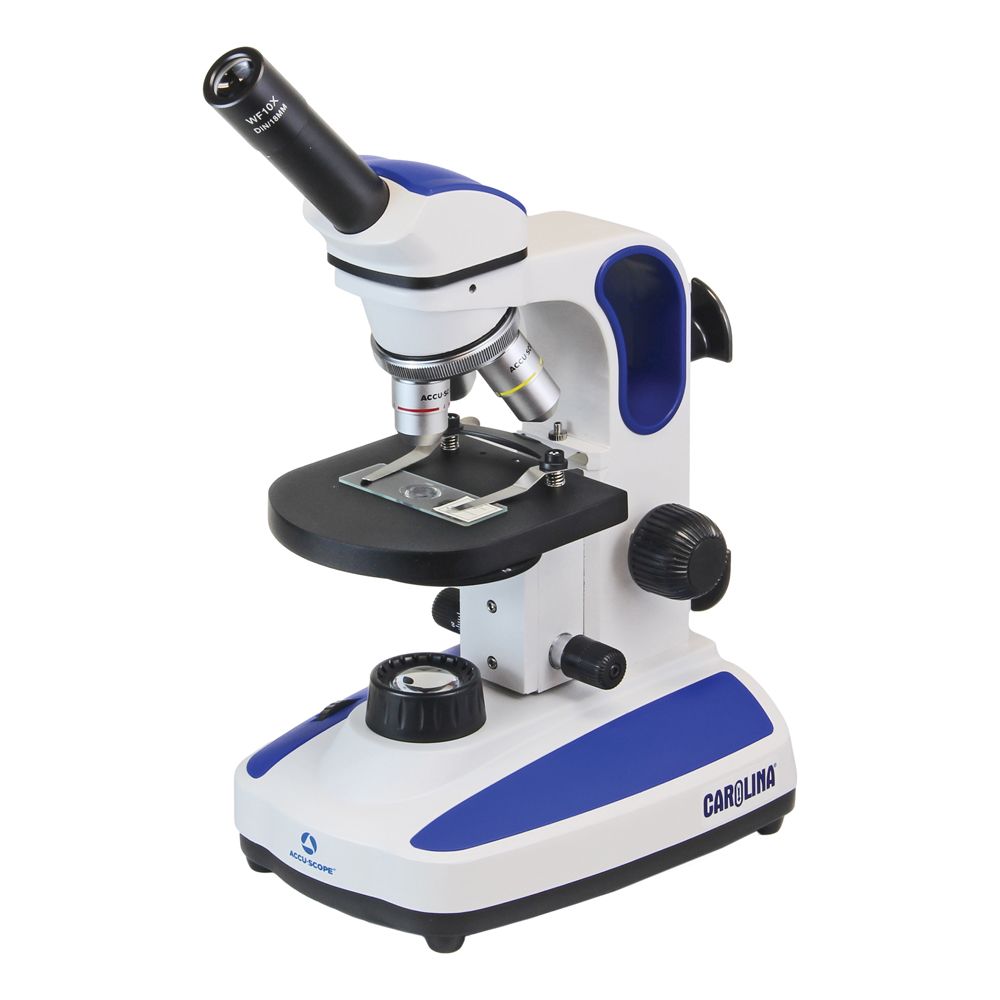
Grade Level: 6-12
Exclusive to Carolina! This scope features a 360° rotating monocular head with WF10x eyepiece; reversed 3-hole nosepiece with 4x, 10x, and spring-loaded 40xR objectives; and coarse/fine focus controls for precision. A rounded stage with quick-access clips, long-life LED illumination (20,000 hrs), and cordless operation with rechargeable NiMH batteries make it perfect for classroom use. Built with a wide, stable base, tamper-proof design, and integrated cord hanger for easy storage.
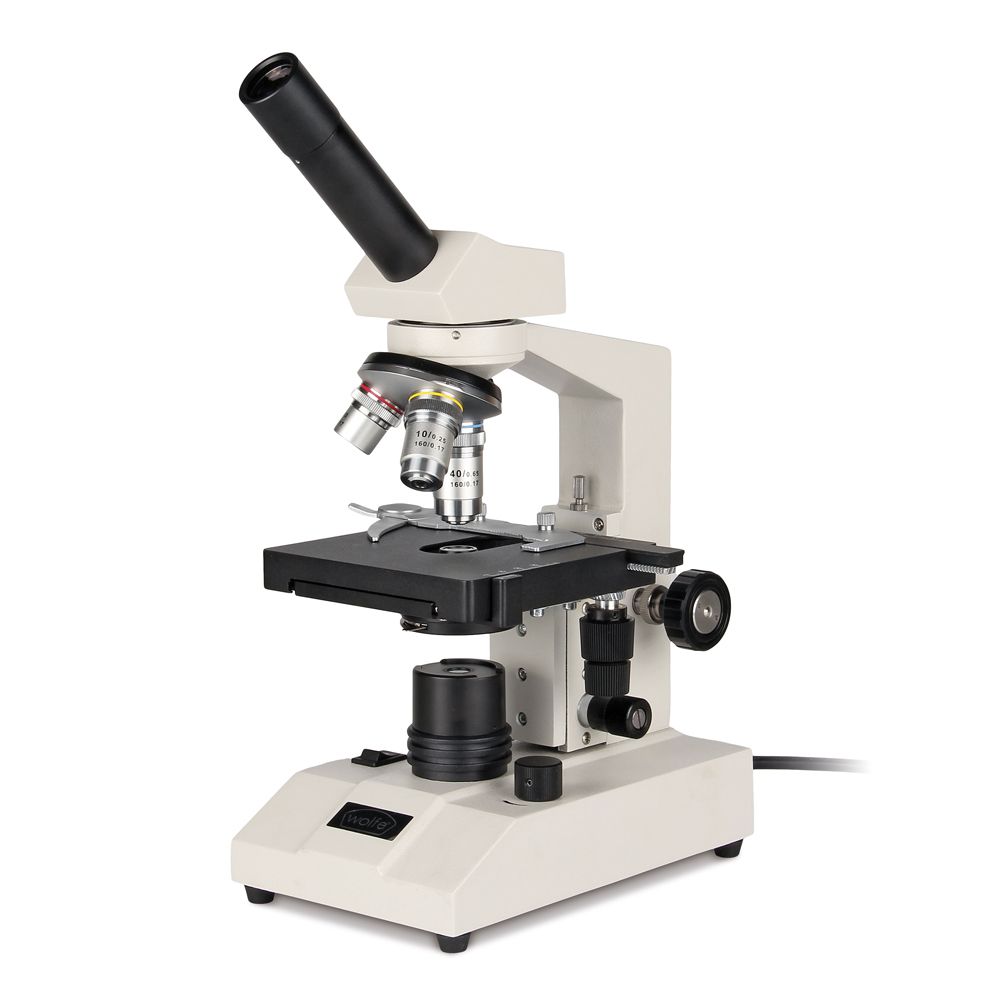
Grade Level: 9-12
A well-designed, versatile, and durable microscope with features you need, including inclined, rotatable head, LED illuminator, and an adjustable iris diaphragm. Separate coarse and fine adjustments give faster, more accurate focusing at higher magnifications.

Grade Level: K-5
Ideal for examining large specimens—such as minerals, insects, and plant parts—under low magnification anywhere. Features smooth rack-and-pinion focusing for easy head adjustment and runs on 2 AA batteries (not included).
Grade Level: K-8
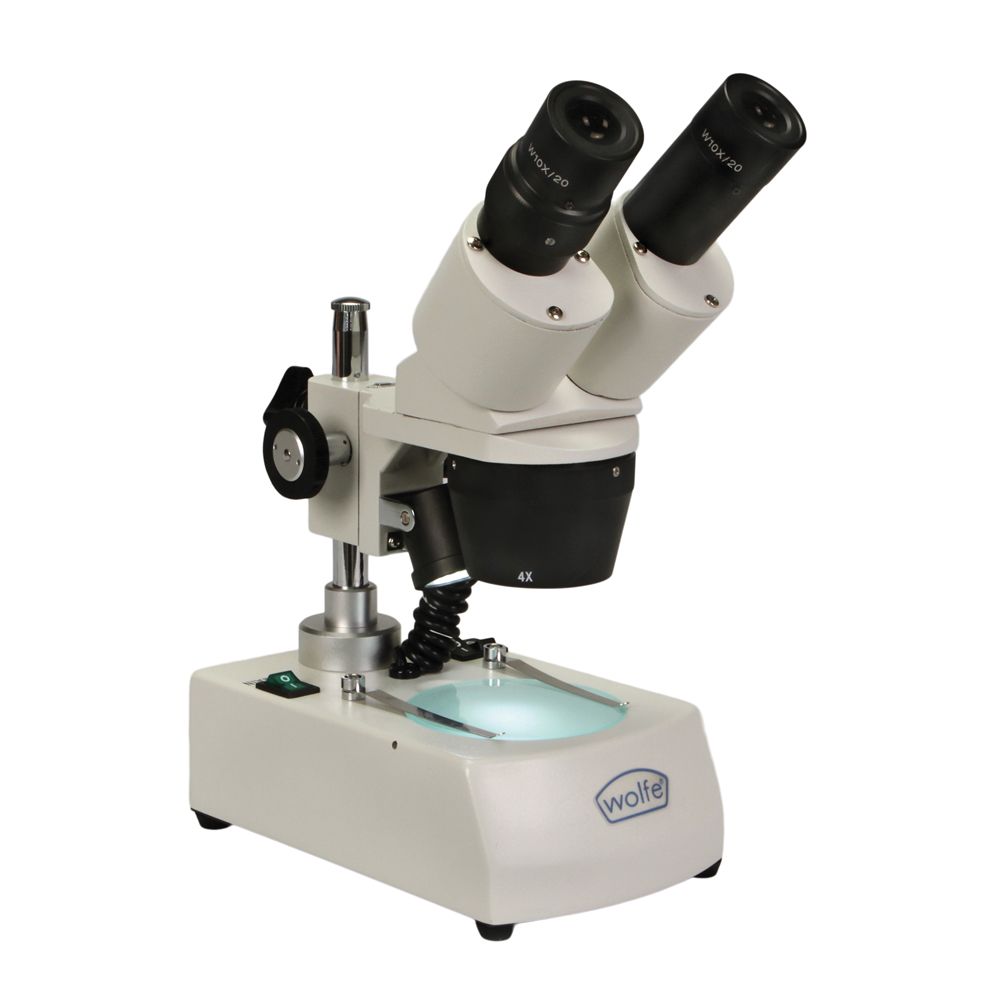
LED illumination and forward-facing head make the Wolfe® Student Stereomicroscope an outstanding performer in the science classroom. This durable, dual-magnification student microscope has built-in, rotating objectives that make changing 10x and 30x magnifications a snap.

Grade Level: 9-12
Discover a whole new dimension of learning with the Wolfe® Intermediate Tri-Power Cordless Stereomicroscope. With three powerful magnification levels — 10x, 20x, and 40x — and cool, long-lasting LED illumination, it delivers stunning 3-D views anywhere the classroom takes you. Truly cordless and fully functional even while charging, it's the versatile, go-anywhere microscope built for curious minds.

Grade Level: Advanced HS
Explore stunning 3D images of a wide range of specimens with this zoom stereomicroscope, offering an impressive 7–45x magnification range. Perfect for examining rocks, fossils, insects, plants, larger protozoa, electronics, and more. Its rheostat-controlled LED illumination—top and bottom—delivers bright, energy-efficient light without harming heat-sensitive samples.

Grade Level: K-12
This powerful scope (20x to 60x magnification; 3x optical zoom) features an aspheric lens system, which increases magnification and image clarity while reducing distortion. The built-in LED and compact size make it both functional and portable.

Grade Level: 3-12
Easily observe every detail with the Explorer’s 3.5" movable stage. Designed for simplicity and durability, this microscope also features a 5x wide-field eyepiece and a 4x DIN objective; sliding optical tube and locked-on, spring-loaded stage clips; and an adjustable arm that tilts up to 45°.
Grade Level: 6-12
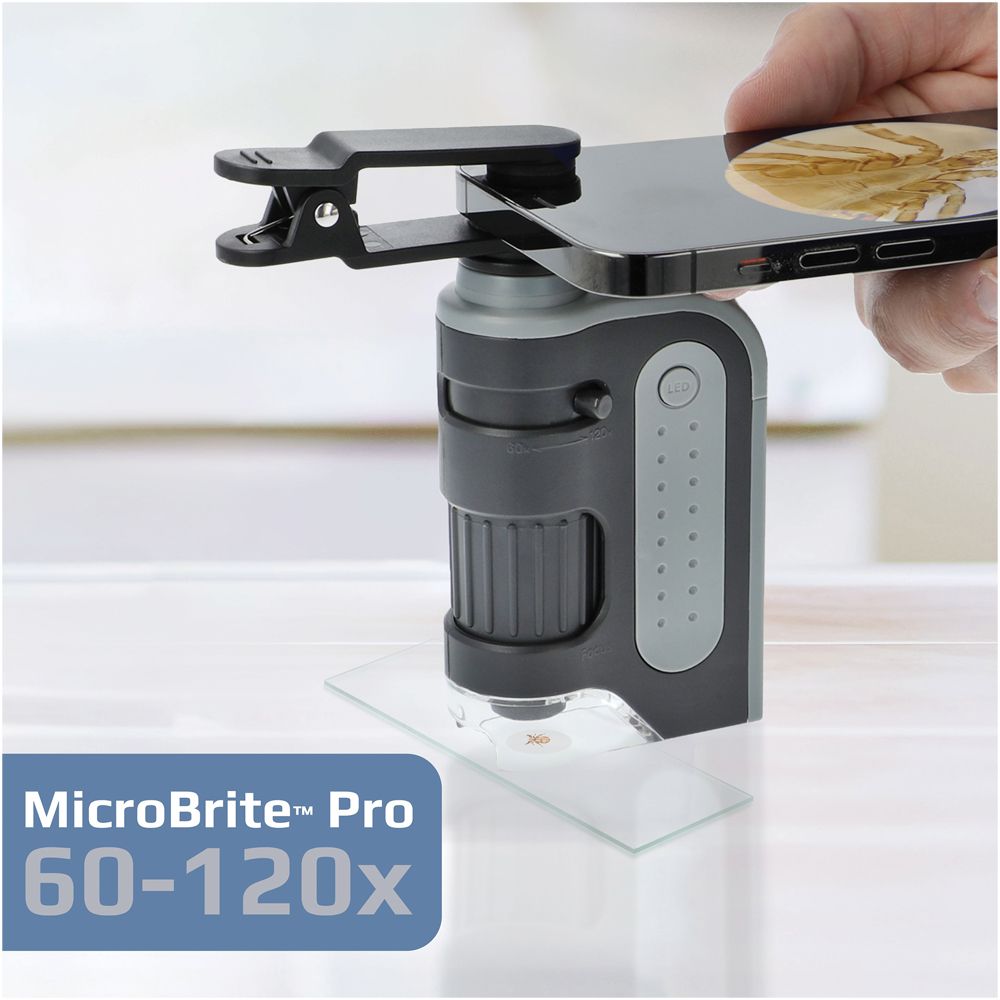
This lightweight, compact pocket microscope features 20–60x magnification; 3x optical zoom; and a built-in LED bulb that offers an interactive experience allowing students to make observations firsthand. It’s the perfect scope for those on the go.

Grade Level:6-12
Powerful, portable, and versatile, this microscope features magnification capabilities ranging from 45x to 275x, a built-in micrometer ruler, and the potential to zoom in up to 1,350x or more. Add it to a tablet or phone for lab-grade microscopic observation.

Grade Level: K-5
This scope features 40x magnification to 1,600x with digital zoom—ideal for viewing a wide range of cellular specimens on slides. The full-color 3-1/2" TFT LCD screen rotates 180°, making images easily sharable. The built-in, 5-megapixel digital camera captures high-resolution images and 30 fps SD video, which can be displayed via a television or projector by using the TV output.
Grade Level: 6-12
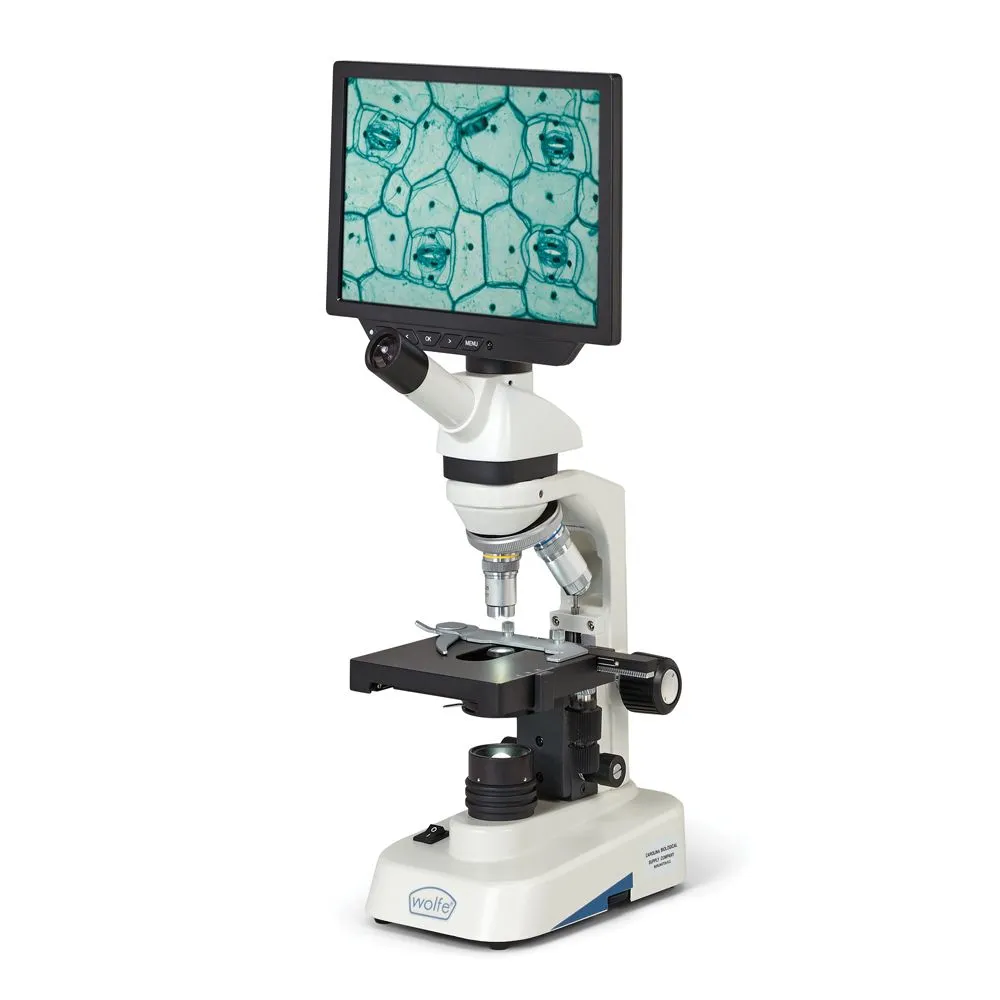
Bring specimens to life with the Wolfe® Educational V1300 Digital Microscope. Pairing trusted Wolfe® optics with a 13MP Moticam® camera and built-in 10.1" display, it delivers stunning, instant digital viewing — no computer required. Plug-and-play simplicity with HDMI/USB connectivity makes it perfect for engaging group demos and dynamic classroom learning.

Grade Level: Advanced HS
View small and large specimens in clear, high resolution with Wolfe's new generation DigiVu™ stereomicroscope. Featuring an 8" customized Android® tablet with microscopy camera, all-glass optics, bright 5-way LED illumination, and a sensible price, this digital stereomicroscope is an exceptional value.