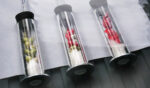
Demonstrating Fermentation with Yeast
Students observe the carbon dioxide gas produced as yeast ferments sugar. You can simply demonstrate yeast fermentation of a 10% glucose solution, or you can introduce variables and have students compare the degree of fermentation (as indicated by the volume of carbon dioxide generated) occurring under each condition. Suggested conditions to vary include the concentration of glucose, the sugar type, the temperature of incubation, and the amount of light.
Activity Details
- Prep Time: 15 minutes
- Class Time: 45-60 minutes
Materials
- Sugar(s): Glucose, Sucrose, Lactose, and/or Sucralose (artificial sweetener)
- Packet of Activated Dry Yeast
- Water (distilled or spring)
- Fermentation Tube(s) (a plastic graduated test tube and a larger glass test tube)
- Beaker or Test Tube Rack
- 2 100-mL Flasks
- 100-mL Graduated Cylinder
- Balance
- Hot Plate
Procedure
Prepare the 10% sugar solution(s) in distilled water. Yeast can ferment glucose and sucrose but not lactose or sucralose (artificial sweetener).- Prepare the yeast suspension immediately before class.
- Warm 70 mL springwater or distilled water to approximately 37° C and add 7 g of yeast (1 packet). If you are using a 15-mL conical tube for the small tube, this volume will be sufficient for 8 setups. Scale up or down depending on the desired volume.
- Activate the yeast by swirling it for 1 to 2 min. Make sure the yeast distributes evenly in suspension. The presence of clumps leads to inconsistent results. Start a fresh yeast suspension for each class period as the rate of fermentation diminishes over time.
- Dilute the yeast 1:1 with the sugar solution so that the final concentration of sugar is 5%.
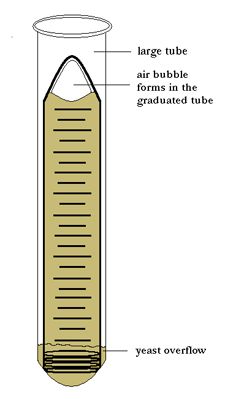
- Transfer yeast into your fermentation tube by filling the graduated tube with the yeast suspension. Invert the large tube and slide it over the graduated tube with the yeast suspension. Firmly holding the tubes together, invert the apparatus so that the large tube is upright as seen in the figure. A small amount of yeast suspension will flow out of the graduated tube, causing a small air bubble to form in its tip.
- Have students record their observations of the yeast and the amount of carbon dioxide collected in the graduated tube at regular intervals for 15 min. (They will need to subtract the volume of the original air bubble to get final measurements.) If you are using the activity as an experiment, assign each group a different treatment to observe.
Class Discussion
The volume of carbon dioxide released is proportional to the quantity of sugar fermented and is therefore a measure of fermentation. Fermentation results from the action of enzymes. In yeast cells, enzymes convert sugars into carbon dioxide and ethanol. A yeast can ferment a particular type of sugar only if the yeast cell contains the proper enzyme(s) to break down that molecule. Baker’s yeast contains the enzymes to break down glucose and sucrose but not lactose or sucralose.
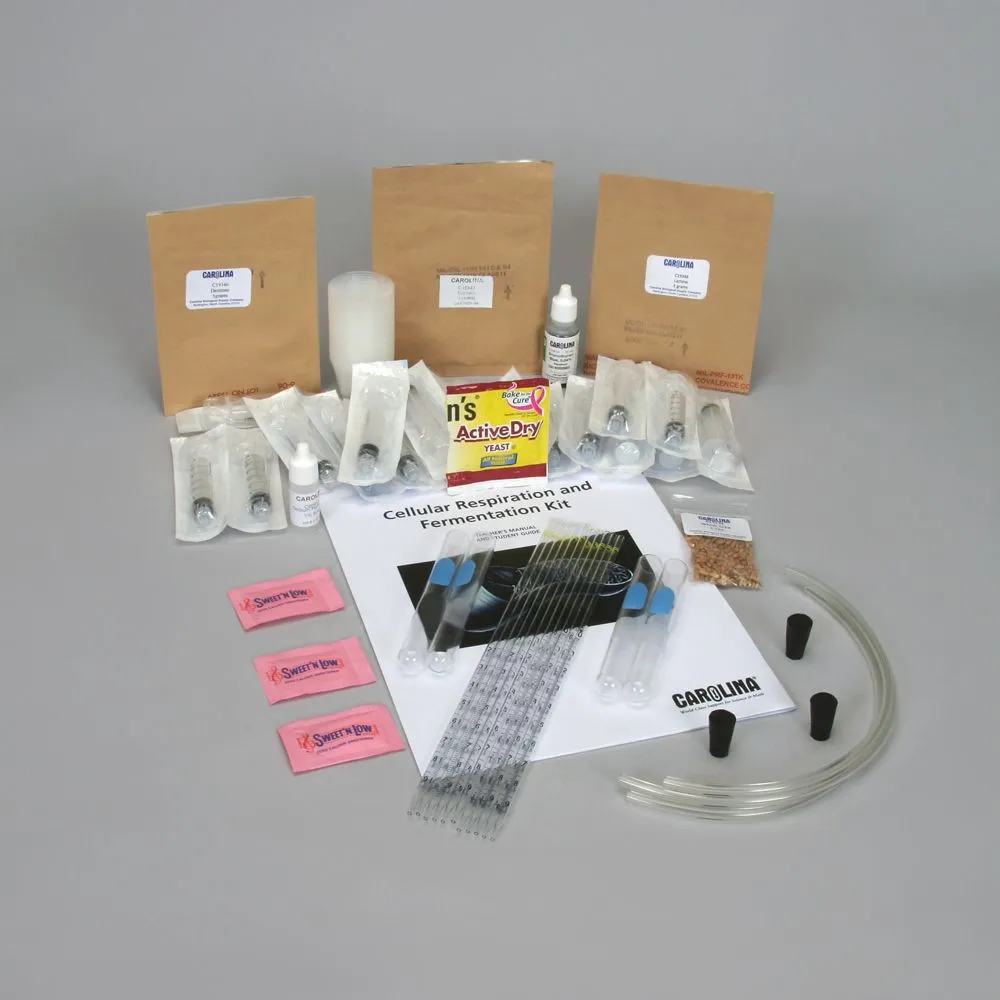
Cellular Respiration and Fermentation Kit
This kit highlights physiological differences between aerobic cellular respiration and fermentation. Students learn about the production of ATP in glycolysis, Krebs cycle, and electron transport system, and then compare these to the ATP production of both lactic acid fermentation and alcohol fermentation. They observe a demonstration of carbon dioxide production by the aerobic respiration of wheat seeds and the anaerobic respiration of yeast. Next, students apply scientific methodology to investigate yeast alcohol fermentation in the presence of different sugars. They answer questions, perform calculations, and interpret results to evaluate their hypothesis and demonstrate their learning.